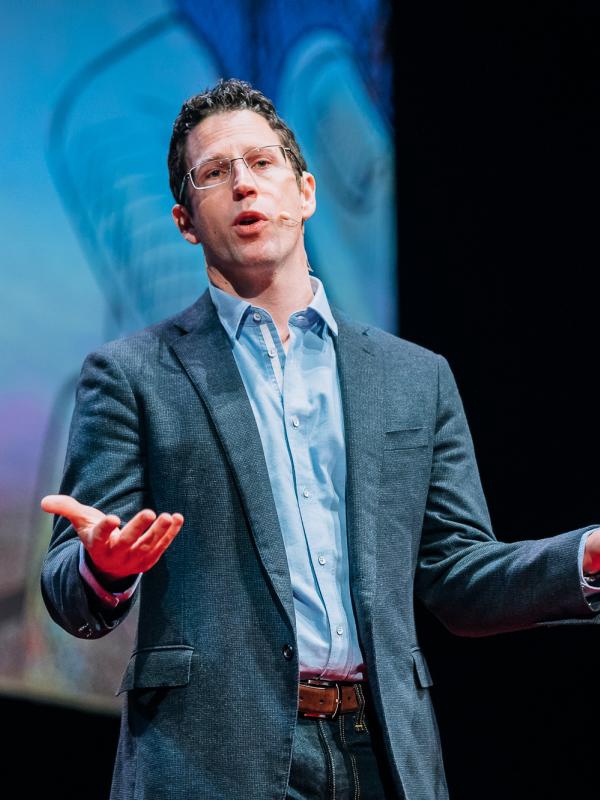
Christopher McKnight Nichols
Historian
4
APPEARANCES
4
PODCASTS
Oct 15, 2026


Dave MillerHOST
Is there a historical parallel that has a similar shift from, from the let's not get entangled in foreign wars that we heard in, in 2016, in 2017, 2018, to let's start a war in Iran, let's grab a ruler in Venezuela?

6:55
The, the 1920s are an era of very limited US commitments abroad that could be characterized reasonably as a kind of unilateralist isolationism.
7:03
Um, it never dovetailed with then a, a kind of wag the dog version of interventions abroad, which, which is what I would argue we've seen lately.
7:13
Um, and in other eras, say in the late 19th century where the US was less engaged with the world, again, there wasn't a, a turn except perhaps what we were just referring to in 1898, but that was an outgrowth of, of, um, patterns of political life and diplomacy that were already in view, not s- not an abrupt shift.
7:30
Uh, so I think, you know, one of the things that's challenged foreign policy analysts, national security people, [laughs] scholars of diplomatic history is that this is both precedented and unprecedented.
7:40
And we- historians have been asked to, to figure that out quite a bit, and I think you're putting your finger on, on exactly the question, does the Trump administration have a core philosophy, and if so, is it anything that looks like isolationism? I think it's not isolationism.
5 MINS LATER

21:29
The major arguments of the so-called large policy advocates like McKinley and Roosevelt were to gain market access in places like China.
21:40
They're also thinking about and negotiating treaties in Korea, Japan, and then market access throughout the hemisphere.
21:46
Cuba as a sugar producer, but also now getting that out of Spanish hands would allow the U.S. to import and export more of that and have a larger role in Cuba and Central and South America.
21:57
Part of that, too, in terms of trade was building a canal, an Isthmian canal that the U.S. would control, not the British, so abrogating a treaty.
18 MINS LATER

Don WildmanHOST
Did the Europeans not have their own movement in this regard? I mean, hadn't there been a lot of people saying, we don't want to do this anymore?
Unknown podcast
What Made America? Birth Of A Superpower
Jul 6 · 43m
Don WildmanHOST
Chris, it would take World War II to re-articulate this idea, wouldn't it? The, the United Nations is, is an outgrowth, obviously, of the League of Nations, but to, uh, but confronting whole other challenges.
36:03
You just arguably, with the US not joining the League of Nations, though it is stood up, it has lots of operating, um, committees, it works quite well through the interwar years in its own way.
36:12
It does not have the US there as a backstop, as par- particularly as the world crisis unfolds in the 1930s.
36:18
It's hard to know the counterfactual answer to that, but arguably yes.
36:21
It, that, the lack of a robust international organization to try to keep the peace is part of why we wind up with World War II, and it does take the Second World War to move the ball forward.
36:31
But I would note that Atlantic Charter in 1941, that FDR signs with Winston Churchill, argues for self-determination, argues for colonial peoples and groups getting some level of their own autonomy.
Don WildmanHOST
Did the Europeans not have their own movement in this regard? I mean, hadn't there been a lot of people saying, "We don't wanna do this anymore"?

Roman MartinezUNKNOWN
And if the Bay of Pigs fiasco had not been mishandled, there would have been no missile crisis.
39:18
I mean, I suppose we do have a number of Reagan-era decisions on the list.
39:24
You're hard-pressed to find the signature Reagan action that foreign relations scholars would teach, because we wouldn't choose a speech, right? We wouldn't choose at the Berlin Wall.
39:36
And you wouldn't choose, like, is rollback policy a single policy? Is it a doctrine as articulated, like the Monroe Doctrine? Would you do specific engagements? What are the pros and cons of that? What if we wind up talking about rollback and Beirut? You know, then, right, defense buildup proceeds, right? So Carter is actually pushing that forward in 79-80.
40:02
So when we're teaching the fine grain piece of that, you know, is it then the rhetoric of the Reagan administration that's not easily understood? discerned as a decision per se.
16 MINS LATER
Alexandra StarrUNKNOWN
But how do you think it's possible to sort of... disseminate, or at this particular moment, the idea that some of the most successful decisions that have been made in foreign policy have been undergirded by a very different set of principles and view of what the United States can be in the world.