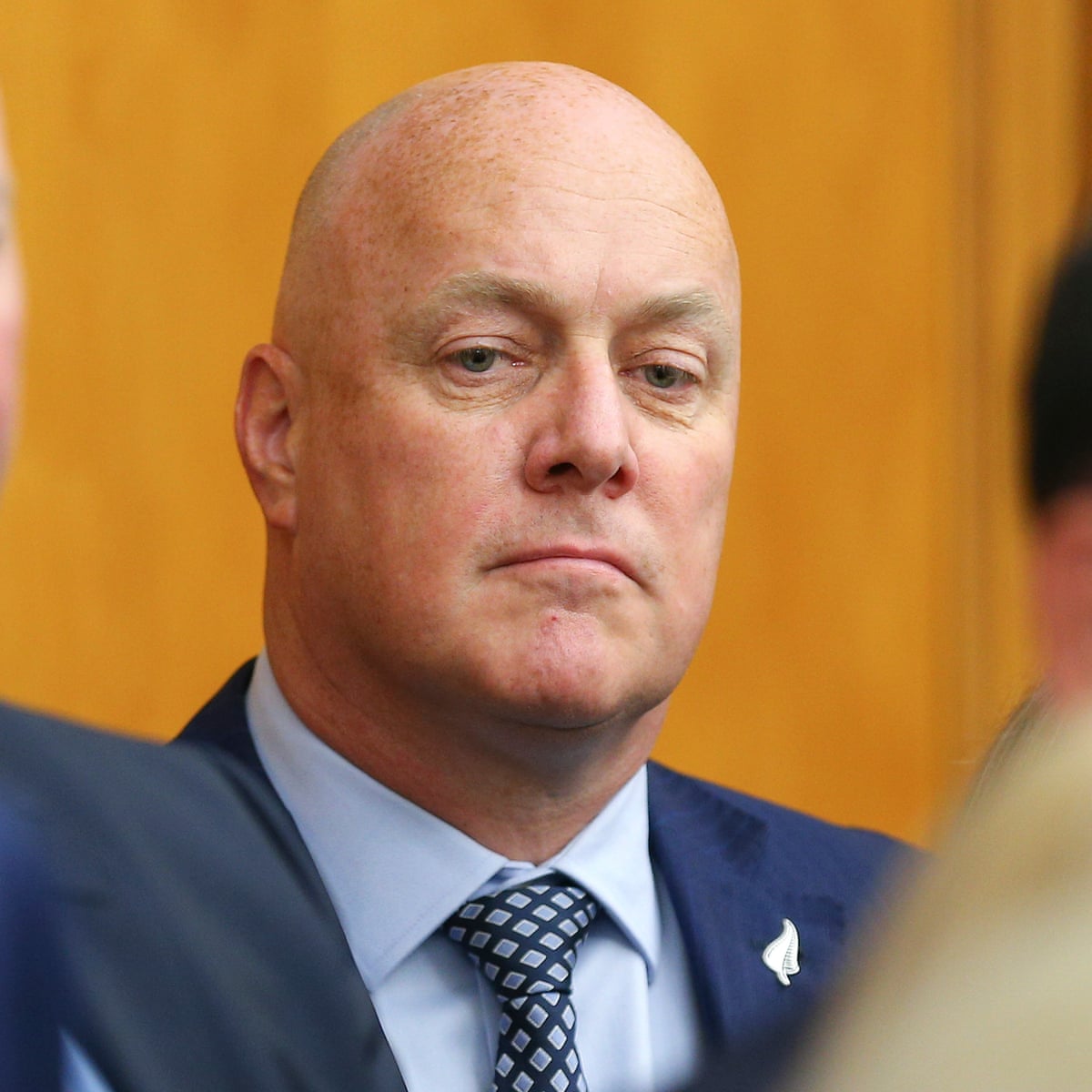
Christopher Luxon
Prime Minister of New Zealand
144
APPEARANCES
15
PODCASTS
Oct 11, 2026


Christopher LuxonGUEST
What we're saying is there's two random tests, and then there's an assessment about drug and alcohol addiction, if there's a need for us then to help that individual with more support around dealing with their addiction.
Christopher LuxonGUEST
But what's the point of having spent all that money on resumes and job readiness and getting them driver's licenses only to go to a job, get an interview, get the job offer, and then lose it because of a, of, of a drug issue? Isn't it...
Christopher LuxonGUEST
Shouldn't we be doing everything we can to help individuals to remove the barriers that gets them connected to work, particularly if we say our young people think could end up being on welfare for eighteen years on average.
Christopher LuxonGUEST
That's not a life path that we really want for them, right? So there's that part of it, as well as obviously some other components to the, to the program as well.

Christopher LuxonGUEST
Um, look, it, there, there's actually, the, the real risk with everyone increasing their military spending around the world, the real risk is you just get inflation and you don't, you just pay more for the same stuff rather than actually getting new capability or capacity.
Christopher LuxonGUEST
So I've continued to talk with, um, Ursula von der Leyen from the EU about sort of how we could join joint procurement exercises and stuff like that.
Christopher LuxonGUEST
But for us in New Zealand, we looked at it, it's not, not, not, not for us.
Christopher LuxonGUEST
But equally, we're putting a lot of money into defense, and we've, we want to make sure that's going to New Zealand defense companies.
6 MINS LATER

Christopher LuxonGUEST
The, the real risk with everyone increasing their military spending around the world, the real risk is you just get inflation and you don't...
Christopher LuxonGUEST
You just pay more for the same stuff rather than actually getting new capability or capacity.
Christopher LuxonGUEST
So I've continued to talk with, um, Ursula von der Leyen from the EU about sort of how we could join joint procurement exercises and stuff like that.
6 MINS LATER

Mike HoskingHOST
The Defence Bank, this is a prime ministerial question, the Defence Bank that we were looking at but ultimately said no to, did we look at that seriously? Yeah, that's the Canadian proposal.
Christopher LuxonGUEST
Look, there's actually the real risk with everyone increasing their military spending around the world, the real risk is you just get inflation and you just pay more for the same stuff rather than actually getting new capability or capacity.
Christopher LuxonGUEST
So I've continued to talk with Ursula von der Leyen from the EU about sort of how we could join joint procurement exercises and stuff like that.
Christopher LuxonGUEST
But equally, we're putting a lot of money into defence and we want to make sure that's going to New Zealand defence companies.
Christopher LuxonGUEST
If you think about Sios, who I visited a few months back, doing a great job actually in uncrewed drones and selling that stuff around the world, which is really good.
6 MINS LATER

Mike HoskingHOST
The Defence Bank, this is a prime ministerial question, the Defence Bank that we were looking at but ultimately said no to, did we look at that seriously? Yeah, that's the Canadian proposal.
Christopher LuxonGUEST
Look, there's actually the real risk with everyone increasing their military spending around the world, the real risk is you just get inflation and you just pay more for the same stuff rather than actually getting new capability or capacity.
Christopher LuxonGUEST
So I've continued to talk with Ursula von der Leyen from the EU about sort of how we could join joint procurement exercises and stuff like that.
Christopher LuxonGUEST
But equally, we're putting a lot of money into defence and we want to make sure that's going to New Zealand defence companies.
Christopher LuxonGUEST
If you think about Sios, who I visited a few months back, doing a great job actually in uncrewed drones and selling that stuff around the world, which is really good.
6 MINS LATER
Christopher LuxonGUEST
Yeah, so John, I just would ask you to go back and look at the five points in that policy.
Christopher LuxonGUEST
The first thing was actually we're investing a lot more in employment programs that are working to support 30,000 work-ready job seekers.
Christopher LuxonGUEST
There's a genuine commitment to say we know there's programs that we're funding that are working well.

Ingrid HipkissHOST
Didn't you put it on the back burner in July to the proceeding as funding becomes available pile? What's changed since then?
Christopher LuxonGUEST
So, as you know, we reset the roads of national significance so they can be sequenced because you can't start all the projects physically at the same time or fund them all at the same time.
Christopher LuxonGUEST
It means the construction sector's got a pipeline of work and they've got much more clarity.
Christopher LuxonGUEST
So we've basically said, look, there are projects that are in the planning stage.
Ingrid HipkissHOST
doesn't this just create a lot of white noise for voters? How do you cut through if you're looking and people are saying, well, you're lying, no, you're lying, and around and around we go, and there's economists on both sides, right?
Mike HoskingHOST
it up by? Because she claims that missing excise for three years equates only to 440 yards or meters of state highway.
Christopher LuxonGUEST
Um, um, I don't know how she'd work that out because that's the fund that we use to repair our roads, renew our roads, um, fund new roads.
Christopher LuxonGUEST
Um, And if you look at the whole three-year period, they've got, I think it's about $4.6 billion.
Christopher LuxonGUEST
And as I said, we've put aside the first year because we've topped it up.
Mike HoskingHOST
You need to be not much more than eight or nine years old to work that out, surely.
Christopher LuxonGUEST
I mean, I mean, to restore to the previous pay equity screen, you know, the Treasury said it's 11 billion.
Christopher LuxonGUEST
Um, you've actually heard, you know, the, uh, Flea Fitzsimons from the, um, PSA say, I think it's 13 billion.
Christopher LuxonGUEST
Um, they've only put a little bit aside, so they're still eight and a half billion short on all of that.
Christopher LuxonGUEST
And, um, you know, taking all of that from, say, unallocated funding for the next four budgets, you know, would mean no money for schools, police, prisons, defense, and frontline social services.
Mike HoskingHOST
up by? Because she claims that missing excise for three years equates only to 440 yards or meters of state highway.
Christopher LuxonGUEST
Um, um, I don't know how she'd work that out because that's the fund that we use to repair our roads, renew our roads, um, fund new roads.
Christopher LuxonGUEST
Um, And if you look at the whole three-year period, they've got, I think it's about $4.6 billion.
Ingrid HipkissHOST
Didn't you put it on the back burner in July, uh, uh, into the proceeding as funding becomes available pile? What's changed since then?
Christopher LuxonGUEST
Um, so as you know, we reset the roads of national significance so they can be sequenced, 'cause you can't start all the projects physically at the same time or fund them all at the same time.
Christopher LuxonGUEST
It means the construction sector's got a pipeline of work, and they've got much more clarity.
Christopher LuxonGUEST
So we've basically said, look, there are projects that are in the planning stage.
Ingrid HipkissHOST
No, you're lying," and, and around and around we go, and there's economists on both sides, right?

Jamie MackayHOST
If Trump changes his mind and stops exporting diesel, we really have a problem, Houston.
Christopher LuxonGUEST
Well, actually, just remember our oil comes from the refineries in Korea and also in Singapore.
Christopher LuxonGUEST
There's lots of source of where they source the oil from before they refine it into diesel or jet or into petrol, and it comes from lots of different sources.
Christopher LuxonGUEST
So we're well aware of conversations or thoughts that President Trump may have about export controls and all of that stuff, but we're monitoring it and have been monitoring it daily since April.
Christopher LuxonGUEST
I can reassure you that we've got supply, which is the key thing we have to do.
Christopher LuxonGUEST
It's a good reason for why we put the 90 million extra litres of diesel into Whangarei, to have a strategic diesel reserve, to make sure that we've got enough supply of diesel in this country.
Jamie MackayHOST
Are you and Nicola, as the Herald has reported this morning, are you softening your language on lifting a super eligibility age, saying political consensus is needed, but missing? We all know as long as Winston's drawing breath, it ain't going to happen, but it has to happen.

Jamie MackayHOST
If Trump changes his mind and stops exporting diesel, we really have a problem, Houston.
Christopher LuxonGUEST
Well, actually, just remember our oil comes from the refineries in Korea and also in Singapore.
Christopher LuxonGUEST
There's lots of source of where they source the oil from before they refine it into diesel or jet or into petrol.
Christopher LuxonGUEST
So we're well aware of conversations or thoughts that President Trump may have about export controls and all of that stuff.
Christopher LuxonGUEST
I can reassure you that we've got supply, which is the key thing we have to do.
Jamie MackayHOST
Are you and Nicola, as the Herald has reported this morning, are you softening your language on lifting a super eligibility age, saying political consensus is needed but missing? We all know as long as Winston's drawing breath, it ain't going to happen, but it has to happen.
Jamie MackayHOST
If Trump changes his mind and stops exporting diesel, we really have a problem, Houston.
Christopher LuxonGUEST
Well, actually, just remember our oil comes from the refineries in Korea and also in Singapore.
Christopher LuxonGUEST
There's lots of source of where they source the oil from before they refine it into diesel or jet or into petrol, and it comes from lots of different sources.
Christopher LuxonGUEST
So we're well aware of conversations or thoughts that President Trump may have about export controls and all of that stuff, but we're monitoring it and have been monitoring it daily since April.
Christopher LuxonGUEST
I can reassure you that we've got supply, which is the key thing we have to do.
Christopher LuxonGUEST
It's a good reason for why we put the 90 million extra litres of diesel into Whangarei, to have a strategic diesel reserve, to make sure that we've got enough supply of diesel in this country.
Jamie MackayHOST
Are you and Nicola, as the Herald has reported this morning, are you softening your language on lifting a super eligibility age, saying political consensus is needed, but missing? We all know as long as Winston's drawing breath, it ain't going to happen, but it has to happen.
Christopher LuxonGUEST
Well, look, I mean, we've made progress, but, I mean, we've really got to continue to drive really hard into economic growth.
Christopher LuxonGUEST
You saw last week the 2.6% growth growing faster than many of the other countries in the world.
Christopher LuxonGUEST
But, you know, our tourism numbers bounced back finally to pre-COVID levels.
Christopher LuxonGUEST
We're seeing parts of the country that are really, you know, experiencing and seeing that growth.
6 MINS LATER
Mike HoskingHOST
So you mucked a whole bunch of councils around, and once they'd done all their work on it, you then went, oh, whoops, run out of time.
Christopher LuxonGUEST
Well, the thing that I found interesting was, you know, that is tradies and truckies and nurses and teachers that are now paying tax to underwrite and write off 10% of a student loan for a lawyer or an engineer coming through school, graduate school, right, through university.
Christopher LuxonGUEST
You know, our program is to say, look, you know, we already subsidize 70 percent of tertiary education in this country, some of the highest in the world.
Christopher LuxonGUEST
And all we've done as a government is said, look, you can pay that back slower, interest free.
5 MINS LATER
Christopher LuxonGUEST
Well, look, I mean, we've made progress, but I mean, we've really got to continue to drive really hard into economic growth.
Christopher LuxonGUEST
You saw last week, the 2.6% growth growing faster than many of the other countries in the world.
Christopher LuxonGUEST
But, you know, our tourism numbers bounced back finally to pre-COVID levels.
Christopher LuxonGUEST
We're seeing parts of the country that are really, you know, experiencing and seeing that growth.
6 MINS LATER
Jamie MackayHOST
government reform, it's stalled now, probably quite rightly, and supermarkets, did you get that
Christopher LuxonGUEST
If we take the first one, local government, what happened there is that we've got, as we introduced the RMA, it's now a new law.
Christopher LuxonGUEST
As a result, we're knocking on the head the regional councils and taking them out of the picture because that's been part of the problem.
Jamie MackayHOST
Local government reform, it's stalled now, probably quite rightly, and supermarkets, did you get that wrong? Is
Christopher LuxonGUEST
If we take the first one, local government, what happened there is that we've got, as we introduced the RMA, it's now a new law.
Christopher LuxonGUEST
As a result, we're knocking on the head of the regional councils and taking them out of the picture because that's been...
Christopher LuxonGUEST
Part of the problem, too much government and too many layers of bureaucracy.


Brigitte MortenHOST
You've made a lot of changes in the education space, but do you think a child going to school at their local state school now can get a world-class education? If not, what is there still to do? What is still missing?
Christopher LuxonGUEST
Yeah, look, I think I absolutely, there's no doubt for me that we've improved.
Christopher LuxonGUEST
You know, you sit down with five and six year olds and you sit around a little table with them and that you're doing some structured literacy lesson with them, which I do quite regularly.

Christopher LuxonGUEST
It's actually about the fact that we believe in competition and making sure we've got competitive markets.
Christopher LuxonGUEST
And any way you look at the grocery sector in New Zealand, that is the one market that lots of independent experts have said, global experts have said, we know intuitively ourselves that there's just not enough competition in it.
Christopher LuxonGUEST
And, you know, as I say, I can't think of a single market that has 82% market share with two players.
Christopher LuxonGUEST
I mean, other 5 million people countries I operated in around the world would have three to five operators typically.
Ingrid HipkissHOST
I know the problem you're trying to solve, but for them, they're going to be less profitable, aren't they? So is it okay to change the goalposts for business like that?
Mike HoskingHOST
well then how do you explain having done all that and Labour having done what they did and the Greens last week that the food price comes in at 1.9%?
Christopher LuxonGUEST
Well, because also there's been a huge component around inflation, you know, generally.
Christopher LuxonGUEST
Go look at the OECD who have said every year for the last three years I've been there, there's a real problem with your supermarket sector.
6 MINS LATER
Mike HoskingHOST
well then how do you explain having done all that, and Labour having done what they did, and the Greens last week, that the food price comes in at 1.9%?
Christopher LuxonGUEST
Well, because also there's been a huge component around inflation, you know, generally.
Christopher LuxonGUEST
Go look at the OECD who have said every year for the last three years I've been there, there's a real problem with your supermarket sector.
6 MINS LATER
Christopher LuxonGUEST
It's actually about the fact that we believe in competition and making sure we've got competitive markets.
Christopher LuxonGUEST
And any way you look at the grocery sector in New Zealand, that is the one market that lots of independent experts have said, global experts have said, we know intuitively ourselves that there's just not enough competition in it.
Christopher LuxonGUEST
And as I say, I can't think of a single market that has 82% market share with two players.
Christopher LuxonGUEST
I mean, other 5 million people countries I operated in around the world would have three to five operators typically.
Ingrid HipkissHOST
I know the problem you're trying to solve, but for them, they're going to be less profitable, aren't they? So is it okay to change the goalposts for business like that?
Scroll for more appearances