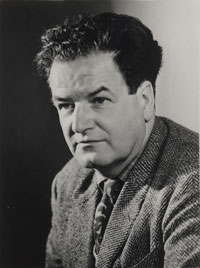
Christopher Hill
Historian and academic
9
APPEARANCES
8
PODCASTS
Aug 18, 2026


Christopher HillGUEST
We've also heard reporting that hardliners are very much in the ascendancy there.
Christopher HillGUEST
So I think he's gotta, he's gotta look at this very carefully, and I don't think he has a, a way out except to, uh, try to focus on the Straits of Hormuz.
Christopher HillGUEST
Probably he's hoping that some countries will kind of cut side deals there.

Dana BashHOST
The N- North Koreans seem to be, by US, uh, intelligence and other, uh, records or estimates, way further ahead than Iran.

20:32
now i wonder um In your experience, do these families who are enthusiastic about this kind of impact travel, do they tend to engage in it as a one-off kind of adventure, once in a lifetime adventure, or... does it become more of an ongoing approach to how they vacation together? How do families, if they want to, cultivate a lasting engagement with an interest in philanthropic tourism among all of their family members, especially the different generations who have different kind of value systems, different preferences and styles of travel?
Christopher HillGUEST
Well, I'm delighted to say that Once we get a family traveling with us, they tend to be hooked.
Christopher HillGUEST
And even immediately after their first trip, start thinking about their next adventure with us.
Christopher HillGUEST
And I think that speaks to the the quality of what's being offered, the transformational experience that there is for the family.
Christopher HillGUEST
And in terms of making it a recurring event, this is something where the keys to it is, for one, to keep in mind that the family, particularly when we're talking about intergenerational trips um isn't just one unit with one taste you know a grandfather a 50 year old parent and a 14 year old child don't want the exact same trip and i think the moment the trip starts to feel like it's something that's being imposed by the eldest generation then the younger people can disengaged and so for me the first principle is is around autonomy and really you have to give each generation a voice in shaping it, especially the youngest.
Christopher HillGUEST
And when a teenager helps to choose the cause or has a say in where the family goes and what they do there, it stops being grandpa's project and becomes theirs.
25:52
you are dedicating yourself and your work in your business to helping multi-generational enterprise families succeed and develop their family capital with family capital in all its forms so in your own view what is the importance of families of family capital and family enterprises and what is their impact on our economy our society and the world at large It's a great question to end

20:32
now i wonder um In your experience, do these families who are enthusiastic about this kind of impact travel, do they tend to engage in it as a one-off kind of adventure, once in a lifetime adventure, or... does it become more of an ongoing approach to how they vacation together? How do families, if they want to, cultivate a lasting engagement with an interest in philanthropic tourism among all of their family members, especially the different generations who have different kind of value systems, different preferences and styles of travel?
Christopher HillGUEST
Well, I'm delighted to say that Once we get a family traveling with us, they tend to be hooked.
Christopher HillGUEST
And even immediately after their first trip, start thinking about their next adventure with us.
Christopher HillGUEST
And I think that speaks to the the quality of what's being offered, the transformational experience that there is for the family.
Christopher HillGUEST
And in terms of making it a recurring event, this is something where the keys to it is, for one, to keep in mind that the family, particularly when we're talking about intergenerational trips um isn't just one unit with one taste you know a grandfather a 50 year old parent and a 14 year old child don't want the exact same trip and i think the moment the trip starts to feel like it's something that's being imposed by the eldest generation then the younger people can disengaged and so for me the first principle is is around autonomy and really you have to give each generation a voice in shaping it, especially the youngest.
Christopher HillGUEST
And when a teenager helps to choose the cause or has a say in where the family goes and what they do there, it stops being grandpa's project and becomes theirs.
25:52
you are dedicating yourself and your work in your business to helping multi-generational enterprise families succeed and develop their family capital with family capital in all its forms so in your own view what is the importance of families of family capital and family enterprises and what is their impact on our economy our society and the world at large It's a great question to end


Eric WhiteHOST
For more on how GTED is already bringing new and emerging technology to the Army, Federal News Network Executive Editor Jason Miller talked to Colonel Christopher Hill, the Director of the Global Tactical Edge Acquisition Directorate with the Army.
Christopher HillGUEST
For GTED, if you were to look into the regulation, we reside left of an actual requirement.
Christopher HillGUEST
And because of that, that allows me to use dollars to procure combat-ready prototype systems.
Christopher HillGUEST
So there are two capabilities, specific capabilities that have come directly to the G10.

Jason MillerCORRESPONDENT
And that's why GTED is there to, again, to go back to the earlier parts of our conversation, to have that flexibility and to iterate.

Jason MillerHOST
But from your perspective, what is your goal in terms of the delivery to the warfighter?
Christopher HillGUEST
For GTED, we reside officially, if you were to look into the regulation, we reside left of an actual requirement.
Christopher HillGUEST
And because of that, that allows me to use dollars to procure combat-ready prototype systems.
Christopher HillGUEST
So there are two capabilities, specific capabilities that have come directly to the G10.
14 MINS LATER

James BaysHOST
Uh, when you get involved in this sort of high-level diplomacy, one assumes you don't want to box yourself in, but President Trump left himself really with not very many palatable options, because if he'd wanted to free, uh, the Strait of Hormuz militarily, it almost certainly would involve taking islands, taking high ground on the Iranian mainland, a massive ground forces military undertaking, would it not?
Christopher HillGUEST
I mean, I wish I could disagree with anything that the, uh, professor has just said.
Christopher HillGUEST
It's not only a choi- a war of choice, but in, in a real sense it was a war of ignorance.
Christopher HillGUEST
I mean, they went in with false assumptions about the, uh, reaction of Iran, but I think more fundamentally, they went in with rather false assumptions of where Iran was in terms of its capacity to, to hit the US.
8 MINS LATER
James BaysHOST
The period since the ceasefire is actually longer.Has this been a wasted period? Could Trump have got this deal at any time during that period? And what are the consequences for the US and global economy?

James BaysHOST
Uh, when you get involved in this sort of high-level diplomacy, one assumes you don't want to box yourself in, but President Trump left himself really with not very many palatable options, because if he'd wanted to free, uh, the Strait of Hormuz militarily, it almost certainly would involve taking islands, taking high ground on the Iranian mainland, a massive ground forces military undertaking, would it not?
Christopher HillGUEST
I mean, I wish I could disagree with anything that the, uh, professor has just said, I, but I completely agree with him.
Christopher HillGUEST
It's not only a choy- a war of choice, but in, in a real sense it was a war of ignorance.
Christopher HillGUEST
I mean, they went in with false assumptions about the, uh, reaction of Iran.
Christopher HillGUEST
But I think more fundamentally, they went in with rather false assumptions of where Iran was in terms of its capacity to, to hit the US.
8 MINS LATER
James BaysHOST
Has this been a wasted period? Could Trump have got this deal any time during that period? And what are the consequences for the US and global economy?

Mohammed JamjoomHOST
When we hear so many different versions of what the rationale is for this war, what does that do to the credibility of the US in this region?
Christopher HillGUEST
I mean, there has been this kind of shifting around of what the purpose of this was, uh, and, uh, the term, uh, regime change, which is usually associated with failure, policy failure, uh, they seem to have throttled that back a little.
Christopher HillGUEST
First of all, there is absolutely no support, no sympathy whatsoever in this country for the, uh, rule of, uh, Ayatollah Khomeini.
Christopher HillGUEST
I mean, the idea of, uh, what Iran has come to represent, has come to symbolize over the last thirty-eight years is something extremely negative, uh, in terms of its, uh, position in the world.
13 MINS LATER
Mohammed JamjoomHOST
You were addressing that somewhat in your answer earlier, but I wanna know from your vantage point, do you think that is something that is on the table now that the Trump administration would attempt going forward?


Christopher HillGUEST
So, um, the organization that I run, GTED, we are a part of a l- of an organization called the Pathway for Innovation and Technology.
Christopher HillGUEST
That is the arm of the Army that was created as a response to General, to Secretary Hegseth's, uh, mandate for, uh, moving faster in acquisition.
6 MINS LATER