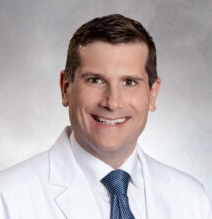
Christopher Baugh
Emergency physician at Brigham and Women's Hospital and associate professor at Harvard Medical School, known for research on ED observation medicine and clinical decision support.
2
APPEARANCES
2
PODCASTS
Sep 7, 2026


Ryan StantonHOST
So talk a little bit about how EMF decides the areas of focus, the areas of interest, and who's going to be supported.

Christopher BaughGUEST
It's a volunteer board that is quite diverse around practice, backgrounds, geography, etc., And we work with our scientific review committee to have a slate of different amounts and subject areas for the grants that we're going to put out as an RFP that we do on an annual basis.
Christopher BaughGUEST
And so we are very careful to make sure that we are putting the right number of awards at the right amounts.
Christopher BaughGUEST
We're of course trying to give more and more money away every year that we can in a fiscally responsible way.
Christopher BaughGUEST
We want to be there for our investigators who might be having challenges in the federal funding landscape, for example, in the last couple of years.
Christopher BaughGUEST
And so we see our importance as being paramount maybe today more than ever given those circumstances.
7 MINS LATER
Ryan StantonHOST
How does that idea of a targeted grant work with regard to then getting that to a researcher and making sure that that is high quality data that then comes back?


Alex SpyropoulosHOST
So how do you decide when this major bleed is there, when one should wait for the drug to clear or escalating as the right strategy?
Christopher BaughGUEST
strategy?Well, assuming that you've addressed your airway breathing circulation basics for these patients, you're then continuing to get as much data as possible, and it could be that there's some delayed input of data, right? It could be the patient's family's en route and unreachable.
Christopher BaughGUEST
You're in the process of doing your ABCs, and then a patient's family member arrives with some very certain data that really helps you out.
Christopher BaughGUEST
And so you might send off some laboratory assays if you have access to them in your institution.
Christopher BaughGUEST
But then ultimately, you have to think about what your actions may be if the answer comes back that the patient has therapeutic levels of anticoagulant on board and start anticipating that a little bit.
Christopher BaughGUEST
And some of the factors that might go into that is the bleeding that is going on considered to be a life-threatening bleed or not.
12 MINS LATER
Alex SpyropoulosHOST
And Chris, I'll ask you how the pathways differ for major bleeding or urgent surgery.