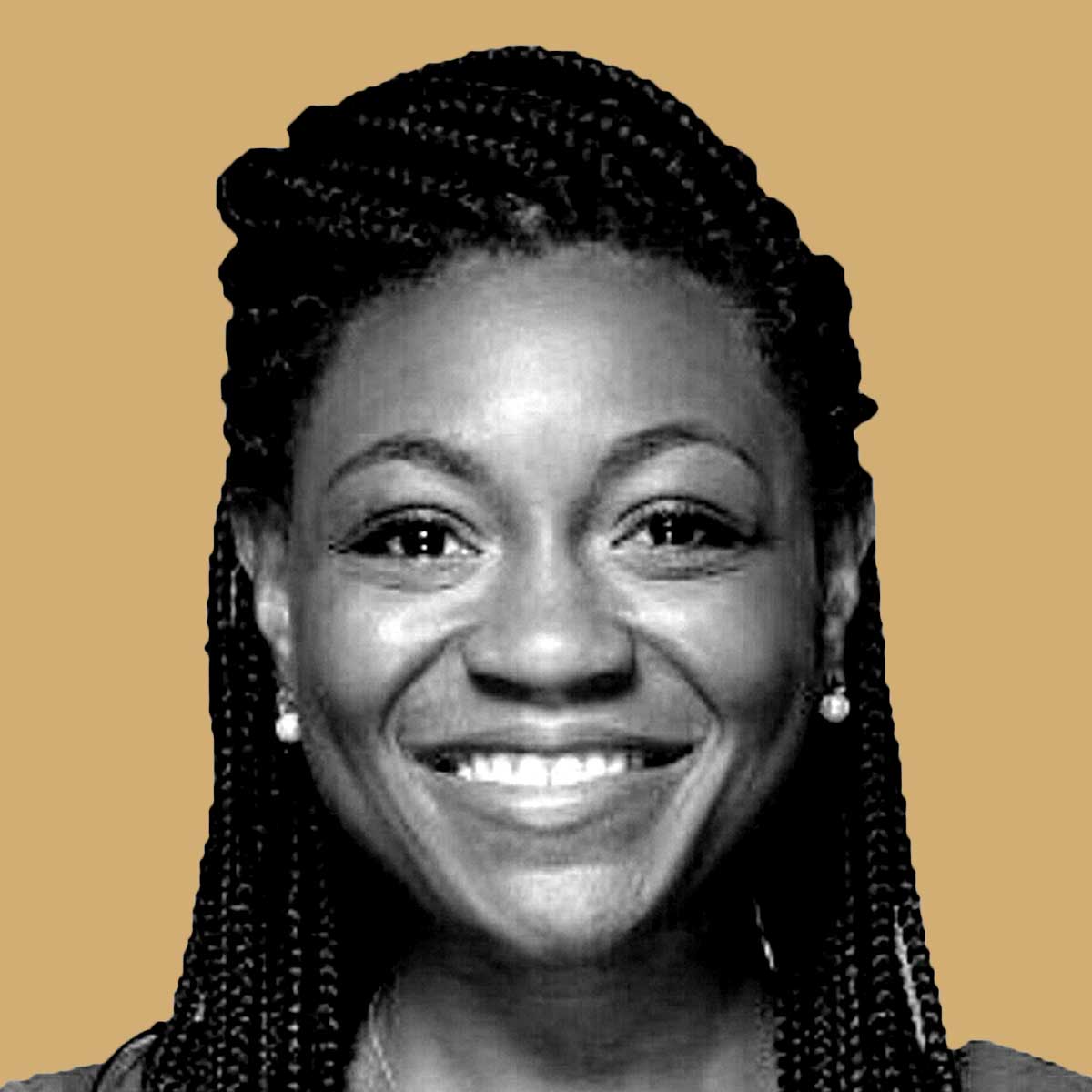
Christine Emba
Columnist and authorWikipedia
17
MENTIONS
12
EPISODES
11
PODCASTS
Search complete. 17 mentions across 12 episodes found for "Christine Emba".
Nov 1, 2026

KatieHOST
This next one is...
KatieHOST
In the New York Times, this is by a woman named Christine Emba.
KatieHOST
And the headline is, the Cornell case exposes what we can't say.
KatieHOST
Okay.
CarolineHOST
What is Christine Emba's background? Do you know?
KatieHOST
So Christine Emba wrote a book called Rethinking Sex, A Provocation.
KatieHOST
She makes a similar but even more specific recommendation in that book.
KatieHOST
I'm going to just disclaim.

Andreae SennyahHOST
Welcome listeners to another episode of Proverbs and Policy.
Andreae SennyahHOST
We're really excited in this episode to be welcoming our guest, Christine Emba, who is a senior fellow at the American Enterprise Institute, where she focuses on gender and sexuality, feminism and masculinity.
Andreae SennyahHOST
She is also a contributing writer at the New York Times and a senior fellow at the Georgetown University Initiative on Catholic Social Thought and Public Life.
Andreae SennyahHOST
Blessedly, Christine is also a contributing editor of Comment Magazine, which I am sure is the reason she is most famous to all of you.
35 MINS LATER
Andreae SennyahHOST
Okay, well, thanks so much, Christine.
Ray PenningsHOST
Thank you, Christine.
Andreae SennyahHOST
All right, Ray, well, welcome to this segment where we discuss what we heard from today's episode from our guest, Christine Emba, who was talking to us about fertility, the causes of declining fertility, particularly in the U.S., and what that means for us in public life.
Andreae SennyahHOST
I'm curious your initial reactions to what we heard from Christine.

Albert MohlerHOST
But it also brings out some very interesting things that you might not expect, and they, they may show up in places that most people don't notice.
Albert MohlerHOST
I want to point to the fact that I, I mentioned that Christine Emba wrote a, a, a very interesting piece on the moral context, uh, which is what most people don't want to touch, the moral context of the scandal and the controversy at Cornell.
Albert MohlerHOST
And as I said myself, trying to lay all of this out even more comprehensively, that when you look at this, uh, the modern secular morality can't handle it because all they can talk about is a false moral understanding, a false moral framework.
Albert MohlerHOST
Now, I just want to give you a classic example of that, because in response to the argument made by Christine Emba, the Reverend Deborah W. Haefner has written in from Newton, Massachusetts.
Albert MohlerHOST
Now, she was rather well known for decades for her involvement in the sex education movement, and she was a major figure in that and, uh, with various organizations.
Albert MohlerHOST
She says that Emba, quote, "Mistakenly presents consent as the only agreed-upon foundation for assessing a sexual relationship." She says about herself, "More than 30 years ago, I developed and began teaching a framework for a moral and ethical sexual relationship." Okay, let's just pause for a moment.
Albert MohlerHOST
The same thing is true here when it comes to the sex education movement, which has always been about sex, but a lot more than sex.
Albert MohlerHOST
It's about a total moral revolution.

Meghna ChakrabartiHOST
And that has largely been the discourse around the Cornell gang rape allegations.
Meghna ChakrabartiHOST
But what about the space between what can be proven in court and what we believe is morally right? Between avoiding criminal liability and taking responsibility for violating another person's dignity? What happens when our cultural understanding of consent is narrower than our understanding of respect? Well, Christine Emba recently wrote an essay for The New York Times headlined The Cornell Case Exposes What We Can't Say about how we're, quote, unable to recognize and critique bad behavior outside of a narrow definition of criminal sex, end quote.
Meghna ChakrabartiHOST
Christine is a senior fellow at the American Enterprise Institute and a board member at the American Institute for Boys and Men.
Meghna ChakrabartiHOST
She's also author of the book Rethinking Sex, A Provocation.
Meghna ChakrabartiHOST
What happened to Jane Doe inside a Cornell frat house isn't just testing the limits of the law.
Meghna ChakrabartiHOST
Christine Emba says it's testing the limits of decency.
speaker_1UNKNOWN
I
Meghna ChakrabartiHOST
think the modern sexual ethic has failed.

Abby McCloskeyHOST
Those who do decide to go on and have children may increasingly be designing them with embryos tested and perfected.
Abby McCloskeyHOST
So what does all this mean for society, and what does it mean for those of us parenting in the middle of a fertility crisis? Christine Emba is a senior fellow at the American Enterprise Institute.
Abby McCloskeyHOST
She's a writer at The New York Times and a senior fellow at the Georgetown University Initiative of Catholic Social Thought and Public Life.
Abby McCloskeyHOST
She's also the author of a great book called Rethinking Sex.

TedHOST
Any man of decency should recognize that the legal distinction, assuming he's aware of it, isn't a grant of moral permission, and any man with any degree of moral fiber who saw that message should have immediately acted to end the encounter, even if it cost him the brotherhood he loves.
TedHOST
Last week, Christine Emba wrote a beautiful and compelling guest essay in our pages about the inadequacy of consent as the primary moral basis for sexual intimacy.
TedHOST
It's the legal baseline, not a moral threshold.
TedHOST
But what is the moral threshold? Conservative Christians like me often respond with a pat answer, marriage.

Christine EmbaHOST
How did we get here? And can we come back? [upbeat music] Welcome to The Gray Area.
Christine EmbaHOST
I'm Christine Emba, filling in for Sean Illing.
Christine EmbaHOST
My guest today is Daniel Cox, a senior fellow in polling and public opinion at the American Enterprise Institute and so my colleague.
Christine EmbaHOST
Daniel has just written a new book titled Generation Uncoupled: America's New Gender Divide and the Crisis of Human Connection.

Auron MacIntyreHOST
There is no number of video variations on the desirability of Darjeeling that can account for the icky feeling evoked by even some ostensibly consensual sex acts.
Auron MacIntyreHOST
In 2022, the Washington Post columnist Christine Emba advocated for a moving beyond the consent-based sexual ethic on the ground that consent is necessary but not sufficient condition.
Auron MacIntyreHOST
Endless haggling for a stricter definition of consent would not answer how to conduct a relationship that affirms your fundamental personhood and human dignity.
Auron MacIntyreHOST
In the meantime, young women are left to grasp for a way to adequately express what feels in a situation... what feels wrong in a situation much more multifaceted than simple contractual claims.

Sarah IsgurGUEST
That's not what sex is for.
Sarah IsgurGUEST
There's this great book by Christine Emba, who's a columnist at The Washington Post, called Rethinking Sex.
Sarah IsgurGUEST
And it talks about how the sort of liberalization of sexual mores in the world, but the United States in particular, has really hurt women.
Sarah IsgurGUEST
And she's a left-leaning feminist who talks about porn and casual sex.
2 more episodes mention Christine Emba.
Create an account to see the whole feed, search across every transcript, and follow the entities you care about.