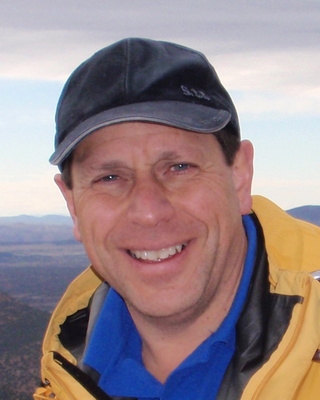
Christian Komor
Clinical psychologist, author of 26 books, and Earth systems science advisor behind the Climate Deadline Foundation; independent write-in candidate for Governor of Colorado.
9
APPEARANCES
9
PODCASTS
Nov 2, 2026

MumzibahHOST
Yeah.

Christian KomorGUEST
It takes maybe 30 people to operate one of those huge... centers because it's all automated.
13 MINS LATER
MumzibahHOST
So what's the biggest misconception people normally have about climate change that you know?


Christian KomorGUEST
Yeah, it got clear to me pretty quickly that we needed to, I've always been a believer in in searching for the win-win solutions when we can find them.
Christian KomorGUEST
And we've got only seven years to... uh, get on top of climate change in a real significant way.
Christian KomorGUEST
Um, I think we need to kind of start there by acknowledging that, that, um, uh, Americans now we're pulling, uh, like 86% of us, at least in Colorado are, have significant climate climate anxiety, but, um, along comes, these hyper data centers, which people are also very anxious about.

AmosHOST
What are that shifts in perspective change?
Christian KomorGUEST
Here is the The really dynamic part of what we wanna do if, if I'm elected governor here in Colorado, what we wanna do, bring in something ca- what we, we call the, uh, Interstate Sky Carbon Blueprint.
Christian KomorGUEST
One of the other problems that the world is facing right now is, as many people know, the, these hyper data, data centers for artificial intelligence, which have a huge footprint i- in terms of using energy and water and releasing carbon.
Christian KomorGUEST
Our plan is to site these, any data centers coming into Colorado right next to the carbon capture plants, which would in turn be right next to, uh, carbon production facilities.
Christian KomorGUEST
So we've got the data center, and they-- the reason they, they need a lot of water is for cooling the chips.
9 MINS LATER
AmosHOST
Lastly before we go, what's one thing you wish more people understand about climate innovation and the future of economy?


Christian KomorGUEST
A really, really big experience I had here in Colorado, only a few miles from where I am right now.
Christian KomorGUEST
I was out taking photographs, as I love to do, and I was along the Colorado River, and I started to notice these, what I thought were water pumping stations.
Christian KomorGUEST
But later I realized there was hundreds of of fracking installations along the headwaters of the Colorado River.
Christian KomorGUEST
Of course, the Colorado River here in the United States feeds 40 million people in five different states and then all the way down into Mexico.
16 MINS LATER

speaker_1HOST
So is it like, is it truly the predictions are happening in a way, or is it just, it's still kind of delayed in terms of what's really gonna happen?
Christian KomorGUEST
Yeah, 2009, Al Gore came out with his, he won an Academy Award for his documentary on climate change.
Christian KomorGUEST
The fossil fuel companies have been aware since then that climate change was happening and that if they continued what they were doing, we would end up where we are now.
Christian KomorGUEST
It's now been 40 years down the road and we've arrived at a place where we're getting these feedback loops that are increasing in severity and intensity.
12 MINS LATER
speaker_1HOST
Because I think the way, like people who see the term climate change, they immediately think, okay, let's regulate the entire, like the entire, let's regulate the entire economy or something like that.

Christian KomorGUEST
methane and more carbon being released, and then that heats the atmosphere further, and that further melts the permafrost and releases more gas, so We're getting these loops that are, there's about 12 of them, including two of our ocean currents, which are failing right now.
Christian KomorGUEST
So there's some really big stuff that's happening in terms of these feedback loops.
Matt HinesHOST
Are others listening to this and taking action, or are they denying? How do other states respond?

7 MINS LATER

Vince WarnockHOST
Some of them are going, wait, we have to remove carbon from the atmosphere? Can you talk us through just very quickly why that's so important?


Etu DanielHOST
What experiences shaped that perspective of yours, and when did you realize that innovation, that is innovation, not limitation, could be part of us?
Christian KomorGUEST
It's a great question, and I l- I love your theme, reminding, reminding us of ourselves and our each individual's power.
Christian KomorGUEST
It, it, it often doesn't seem like, and for many of us, we don't feel like we have much power to make our ideas happen in the world.
Christian KomorGUEST
And, uh, and I'm aware, of course, like, as a, as a, I, I was raised a, a middle-class American, so and my family owned a three-bedroom house.
Christian KomorGUEST
But for an American, and I was just, you know, an average person who, uh, first started, started with a, a strong passion, love for something, the environment, future generations, the idea of future generations having a livable world that they could experience.
Christian KomorGUEST
And that eventually led to wanting to do things to protect that environment.
6 MINS LATER
Etu DanielHOST
For, for someone hearing this concept for the first time, what exactly is direct air carbon removal, and why do you believe it could become one of the most important industries of the future?


Christian KomorGUEST
That brings us right into the center of what we're doing here or hoping to do if I get elected.
Christian KomorGUEST
And I always like to mention I'm a write-in independent candidate, so we're not playing the usual... party game that has resulted in Donald Trump's manifestation, which is dismantling our country here.
16 MINS LATER