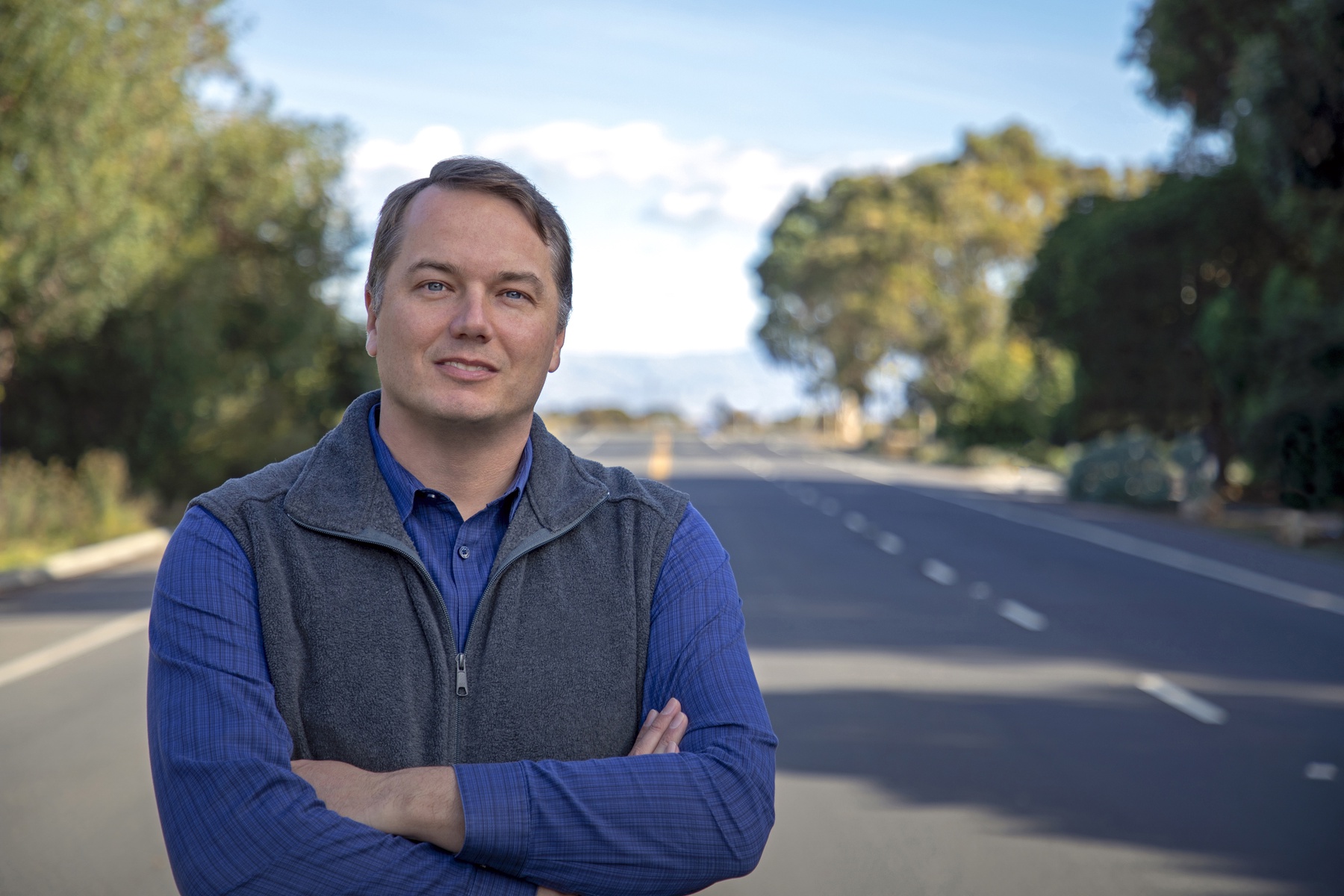
Chris Urmson
CEO of Aurora
7
APPEARANCES
6
PODCASTS
Oct 29, 2026


Chris UrmsonGUEST
And they pay us like they would pay someone else to operate that truck for them.
Chris UrmsonGUEST
But what's really exciting is next year, we're going to move to what we call drivers of service.
Chris UrmsonGUEST
And this really allows the customer to focus on what they do best in the world.


Phil LeBeauCORRESPONDENT
The point is for a trucking company, a shipping operator, the cost and the efficiency is far greater than what it would be with a driver, correct?
Chris UrmsonGUEST
It makes the road safer, makes it more fuel efficient, and allows them to move goods quicker because they don't have to wait for the hours of service limits that they have today.
Chris UrmsonGUEST
How much lower would the cost be? Well, we expect to price the Aurora driver at about 85 cents a mile, and today we think it costs about $1.18 to have a person drive that truck.
Phil LeBeauCORRESPONDENT
Chris, the main question I get from a lot of people is, when's the inflection point? When do we start to see more and more completely autonomous Class 8 tractor-trailers out on the road?
Chris UrmsonGUEST
So that'll get us to a couple of hundred this year, and then, like I said, off to the races next year.
Phil LeBeauCORRESPONDENT
How do you stop and get gas with nobody there to pull into the truck stop and say, I want gas?
Chris UrmsonGUEST
But then we're working today on pilot programs to have the truck be able to call ahead and say, I need to get fueled up.

Morgan BrennanHOST
I asked CEO and co-founder Chris Urmson about the maturity of the technology.
Chris UrmsonGUEST
For the last year, we've been operating driverlessly, but now we can actually start building a lot of these things.
Chris UrmsonGUEST
And, um, with the second generation hardware, we expect to be able to build about 1,500 of those trucks, and then we're working with Imovio, which is, uh, an incredible tier one partner, to launch, at the end of next year, a third generation of hardware that'll scale to tens of thousands of trucks.
Chris UrmsonGUEST
So i- in the not-distant future here, you can expect a lot of America being supported, uh, and enabled by autonomous trucks on the road.
Morgan BrennanHOST
Well, Urmson led Google's self-driving car project, what would eventually become Waymo, before starting Aurora, and I asked him what it will still take to fully realize mainstream autonomous driving, whether it's on the passenger side or on the freight side.
Chris UrmsonGUEST
I think it's happening, right? As Aurora, we've been at it for almost a decade now.
Chris UrmsonGUEST
We've been, um, really intentional in the way we've developed the technology, putting safety first, and we're at this inflection point where it's about to really start moving.
Chris UrmsonGUEST
Uh, and that's just an exciting moment for a- all of us, right? The roads will get safer.

PJ VogtNARRATOR
At least not until the turn of the millennium.
PJ VogtNARRATOR
When he first got recruited for the race, he was out in the field observing a robot as it crept across the Atacama Desert, training for its future deployment on the surface of Mars.
Chris UrmsonGUEST
And my PhD advisor came down and was really excited about this DARPA Grand Challenge thing, and the idea that you'd have a robot run across the desert at fifty miles an hour just sounded exciting, um, having spent the last couple of weeks walking behind a robot at very low speed.

Chris UrmsonGUEST
I was doing my PhD, and I'd been working on robots to drive across the Atacama Desert and look for signs of life.
Chris UrmsonGUEST
And this competition came up to build robots that drove across the desert at high speed for the Defense Department.
Chris UrmsonGUEST
It was this thing called the DARPA Challenge, and it was to race from Los Angeles to Las Vegas.
9 MINS LATER

Brian SozziHOST
I mean, how do you measure... or prepare for, like I mentioned, the truck blows a tire or someone runs in front of the truck, God forbid, but how are you building that into your models?


Chris UrmsonGUEST
i believe that society when something is valuable we find a way to use it right and and make space for it and It's clear the technology that we're working on has that opportunity.
Chris UrmsonGUEST
If you contrast that with air traffic, where up until very recently, it had been 10 years since we'd had a fatality in American airspace with an American flight carrier.
Chris UrmsonGUEST
Yeah, the need, right? If you think about personal mobility, that as people get older, they lose the privilege of driving, and that is an accelerated death sentence.
Chris UrmsonGUEST
People are social animals, and you take the keys away, and you control for all the other factors, you die much more rapidly when you don't have that ability to be out and be part of your community than you do if you continue to have that freedom and ability to move around.
39 MINS LATER
59:18
And was there a world where during those three to six months you were not going to do something in self-driving? Like because you're like, I've done this for too long.