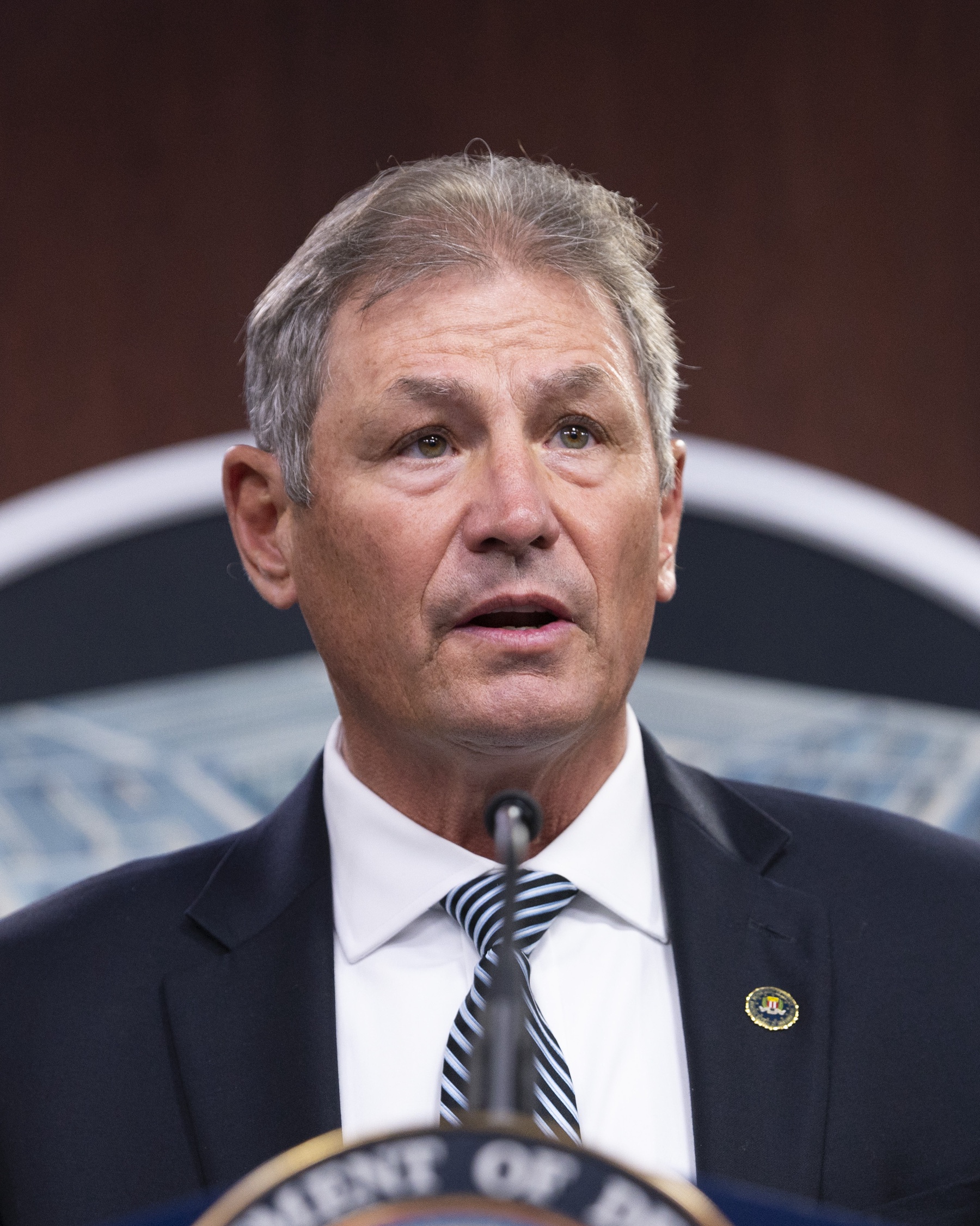
Chris Swecker
American attorney at law
27
APPEARANCES
11
PODCASTS
Oct 20, 2026


Chris SweckerGUEST
that is it is and and not uh... unheard of but unusual to see this play out so publicly when you're dealing with uh... without what i would couch uh... as possible immigration fraud but also possibly public corruption using it but you know that times using the official office uh... for corrupt purposes so they're looking at it uh... whether heard whether she's a little legal legally here as a citizen because of her age when she was when she was a refugee and first came to the united states so there i i think the uh... uh...
Chris SweckerGUEST
the u s attorney in dc uh... jimmy impero is one of the most aggressive u s attorneys of the fifty fifty fifty six or fifty seven u s attorneys out there so she is she is on it but she's also looking at for uh... congressman uh... congresswoman omars financial disclosures which have been played out publicly in the news as well where reported one about one year as you know uh... pretty may have made her appear to be very wealthy and then uh... another year she reported that she was in debt so there's a lot of smoke here uh... her dad was We believe, I think it's pretty well accepted, was a colonel in the army at the time in one of the most oppressive regimes and was an oppressor.
Chris SweckerGUEST
One of the most important tools that the federal agents have is the grand jury.

Joe PiscopoHOST
What are the facts? What do we know? Where are we in this tragic shooting, Chris? Please.
Chris SweckerGUEST
Bend, Oregon, in the heart of Oregon, a 16-year-old shoots his way into a K-5 elementary school, enters the vestibule, and misses to where he shot three young students.
Chris SweckerGUEST
And this is one of those school districts where they have a school resource officer, but they spread the school resource officer across all their elementary schools.
Chris SweckerGUEST
So he's not dedicated to one school, which is not the gold standard out there.
Chris SweckerGUEST
I do security assessments for schools and You always want a resource officer or an off-duty police officer there.
Chris SweckerGUEST
Having said that, though, a bystander, a dad who was dropping off his child at school saw him shoot his way into the school.
Joe PiscopoHOST
Anything that we could put forth that would be mandatory in all these schools, sir.

Chris SweckerGUEST
Our best shot at preventing something like this is the thorough vetting of the pilots, which is actually what's supposed to have happened here and didn't.
Chris SweckerGUEST
This was one person, as far as we know right now, who took it on himself to crash an airplane.
Chris SweckerGUEST
And I think what he intended to do was crash it in Israel and kill mainly Israelis on that airplane.
Chris SweckerGUEST
So I think this is a case where everyone is taking a look at their procedures and their processes and seeing where these vulnerabilities exist.

Leland VittertHOST
Is it time, though, to say, hey, all of these airlines right now, no, you can't have pilots or pilots from Muslim countries flying here until we get a handle on who these people are?
speaker_0UNKNOWN
Uh, Israelis and the, and the Saudis a little bit problematic, but under these circumstances I think they're gonna get their answers that they need.
Chris SweckerGUEST
need.Um, you look at the overall context here, the overall context is a, a plane full of Israelis is, is hijacked by someone who wants to take that plane down and kill everyone on board.
Chris SweckerGUEST
So you kinda start from the position of th- it's, this is a terrorist act, keeping an open mind throughout the process.
Chris SweckerGUEST
But you sorta start from that position and you dissect this guy's life, financial transactions, who does he communicate with, who did he meet with, who did, what has he posted on social media? Uh, what does his family say? What do his friends say? You gotta take his life apart and figure out what his motive was and, and did something just happen in his life that triggered this event.
7 MINS LATER
Leland VittertHOST
Again, would the F- the FBI would have to right now be thinking, uh, about aircraft coming from overseas, that this wasn't either a dry run or the beginnings of some kind of larger plot, right?
Chris SweckerGUEST
Uh, you know, we, they don't have much control over the vetting process for pilots.


Erin BurnettHOST
But if Iran is behind it, from what you saw happen and who's involved at this early stage, is that a sign of more or less organization from Tehran than you'd expect?
Chris SweckerGUEST
I mean, at this point, I think we would have some indication that it was an organized event, and I think Iran would actually be taking credit for it.
Chris SweckerGUEST
I don't think Trump's statement was very definitive, and I think Netanyahu was probably more candid in saying that there's some evidence that, and I've heard what that evidence is, something about having some animus towards Jews, that this would have been at least evidence presumptively right now, a lone wolf terrorist attack.
Chris SweckerGUEST
They're going to tear apart his social media, his contacts, his financial transactions.
Chris SweckerGUEST
I mean, this happened, they just discovered it, so they haven't really disclosed exactly when the system was infiltrated.
Chris SweckerGUEST
But what happened was they, this is a loosely organized, you know, disorganized group of young hackers, international.
Joe PiscopoHOST
You're telling me it could be some sorry soul in his mom's basement, is you're saying, huh?


Rita CosbyHOST
Who better than somebody who really is on top of... security at universities around the country he's the former fbi assistant director and special agent chris schwecker and chris thank you so much for joining us that you know what what do you think there clearly was a lot of it looks like in my mind a lot of security breakdowns things that should have happened that didn't in the charlie kirk case i saw six officers for 3 000 people they didn't have anybody on the on the rooftops they would have seen that guy
Chris SweckerGUEST
Yeah, I do security assessments for universities, and they basically did probably, they probably had one of the weakest security schemes that I've seen for an event of this size ever.
Chris SweckerGUEST
They did not do a security briefing for all those involved, although it sounds like there was only five or six.
Rita CosbyHOST
How could that be? And how could you cremate a body that could be potential evidence?

Chris SweckerGUEST
Yeah, I do security assessments for universities, and they basically did everything.
Chris SweckerGUEST
probably they probably had one of the weakest security schemes that i've seen for an event of this size ever i mean just just to run through the list they had six officers of course the department itself only has what 12 to 15 i think they didn't have a written operations plan they did not do a security briefing for all those involved although it sounds like there was only five or six and then whatever charlie kirk's team brought with them The local police department seems to have not played much of a role, and they weren't asked to for some reason, even though there were prior threats.
Rita CosbyHOST
How could that be? And how could you cremate a body that could be potential evidence? Yeah.
Chris SweckerGUEST
I mean, I think conspiracy theories abound in this country and, you know, the social media perpetuates that but uh... you know that he acted alone uh...
Chris SweckerGUEST
i think that is not the fbi's job to to critique the securities situation but i think from the fact that they've developed i mean if the security situation was abysmal i mean it was it was about as bad as they can get it was it was lackadaisical uh...
Chris SweckerGUEST
they had no communication between the locals who had spotted crooks two hours earlier and the Secret Service who sat on the podium pretty much and didn't mingle around in the crowd and sort of get elbow to elbow with the state and local police departments that were there assisting in the security.

Stephen ParrHOST
Isn't that one of the things since 9-11 that we were really supposed to improve was the coordination and the working together between federal agencies and local agencies?
Joe PiscopoHOST
And they put it online and they kind of go fishing for these people? Or did this gal take the initiative? Do we know, Chris?
Chris SweckerGUEST
Well, she initially posted, I mean, she was a prolific poster on several different social media sites and And she was popping off about converting to Islam, about swearing loyalty to ISIS, death to America, all that.
Chris SweckerGUEST
I mean, the FBI doesn't run around surfing all across social media looking for keywords and threats and that sort of thing because that's just prohibited by the Attorney General guidelines.
Chris SweckerGUEST
So I know you mentioned the watch as an authenticator, but I have not seen a reliable authenticator that we know was not ever out there in the public domain.
Chris SweckerGUEST
And, you know, there are so many different ways, reliable ways to authenticate information.
Leland VittertHOST
So Chris, if they don't have an authenticator, if there's no way to know whether these notes are authentic, why is Savannah Guthrie speaking like that?


Mary WalterHOST
It is a fantastic point, but do they need a warrant because I'm driving on a public street?
Chris SweckerGUEST
I mean, it, it's a pretty well-established legal principle that if you're in a public area, uh, that it's fair game.

speaker_14SOUNDBITE_SPEAKER
in the Olympic Games.
Chris SweckerGUEST
Between 1996 and 1998, Eric Rudolph had conducted a series of bombings in Georgia and Alabama.
Chris SweckerGUEST
Back in the day, I was the special agent in charge of the North Carolina FBI operations.
Chris SweckerGUEST
How did this manhunt start? Well, it started when a bombing took place in Birmingham, Alabama at an abortion clinic.
speaker_14SOUNDBITE_SPEAKER
town for two years.
Chris SweckerGUEST
So it would not be out of the realm of possibility that China or Russia or some other hostile foreign intelligence service would kidnap one of our scientists and try to extract information out of them or turn them, you know, in, into a double agent.
Chris SweckerGUEST
General public tends to be a little bit, uh, unaware of the prolific efforts to steal our sensitive technologies from A to Z.
Chris SweckerGUEST
And they're after it day in and day out, and they're after the people that are working on it.
Chris SweckerGUEST
It's a comprehensive, ongoing effort on the part of hostile foreign intelligence services to steal our technology.
Chris SweckerGUEST
I think we're gonna see this list grow, and it's gonna play out in the public eye because it's of great interest to the public.
Chris SweckerGUEST
You can't overstate how, how aggressive and proactive, especially China is in trying to gather up and steal our technology.
Joe PiscopoHOST
You know, walk us through that, if you would, Chris Wecker, because sometimes I know the – is this like the FBI set this up, or were there people out there ready to do this? Yes, sir, please.
Chris SweckerGUEST
I mean, when I see a plot like this, you wonder how much of it was actual capability.
Chris SweckerGUEST
And I have not found any information just yet that lays out whether they actually confiscated drones, whether there was actual movement of these people in the direction where they were going to do this action.
Chris SweckerGUEST
I mean, they arrested one person in Cincinnati and I guess four other people.
Joe PiscopoHOST
How do you set, how would the FBI set up something like that? They would hear maybe something, some chatter on some online, and then they say, well, let's get an informant in there, and the informant will, you try to snare somebody in that regard, yes?
Joe PiscopoHOST
Has there always been kind of the FBI looking at fraud, Chris Swecker? Has that always been something? Or are we just getting into it now because of what happened after COVID?
Chris SweckerGUEST
Well, Joe, the FBI has always had white-collar crime, major white-collar crime, as one of its top priority programs.
Chris SweckerGUEST
But after 9-11, it got a little bit de-emphasized as we reprogrammed about a third of our agents to counterterrorism.
Chris SweckerGUEST
So some of that sort of dropped off the radar, and I think they're rejuvenating the whole fraud program.
Chris SweckerGUEST
I mean, there's a lot of investment fraud out there, all kinds of, you know, the Bernie Madoff kind of stuff.
Leland VittertHOST
Chris, does finding this woman dead but her phone's back home answer more questions or bring up more questions?
Chris SweckerGUEST
Well, Leland, I think at this point it brings up more questions because she was one of what I think is a core group of four or five missing scientists or employees of Los Alamos or the JPL, Jet Propulsion Lab, who I think are suspicious.
Chris SweckerGUEST
I mean, these are people who were missing, went missing under similar circumstances.
Chris SweckerGUEST
All we know is that she was found with a gun nearby in the National Park, that she had been walking in that direction.
Chris SweckerGUEST
The question that I raise is, how did she walk 15 miles to get to that location? Because she wasn't in a car, apparently.
Chris SweckerGUEST
And of course, as you mentioned, she left all her belongings, her phone, her personal items at her house.


Nancy GraceHOST
Now I've got Aiden Schaefer dead of a heart attack while in law enforcement custody?To be questioned? I- it's a lot to take in, Swecker
Chris SweckerGUEST
I mean, when, when you have my background, you, you look at these, all these people, and this list has grown from nine to, what, 17 now, and I've been trying to sort of track each one of 'em as we go.
Chris SweckerGUEST
But you, when you look at 'em closely, you do see that some of 'em you can just weed out very easily.
Chris SweckerGUEST
The, the MIT professor, that was a, you know, that was a mass shooter from Brown University.
15 MINS LATER
Nancy GraceHOST
He thought someone was listening to his phone or gathering information from his phone, and at your level at the FBI, that is not uncommon.


Chris SweckerGUEST
The, the Secret Service doesn't wanna fire their weapons i- in the, in the line of duty.
Chris SweckerGUEST
They don't wanna have to confront somebody trying to bust past a magnetometer.
Chris SweckerGUEST
They wanna plan their way through these events to the point where it, they shut it down.
Chris SweckerGUEST
And I, you know, the people on the ground did exactly what they should've done.

Brian KilmeadeHOST
Chris, what are we learning now? We like the way seemingly the agents acted in the time of crisis, but leading up to it, have you seen some holes?
Chris SweckerGUEST
First, you gotta give them credit, the, the agents on the ground credit for d- taking action the way they did.
Chris SweckerGUEST
he could've, uh, he could've inflicted great damage, and so they were... acted quickly, decisively, and they stopped him.
Brian KilmeadeHOST
That seems to be what Crooks and others and what the other assassins are trying to do along the way here, three times to the president, and then of course to Charlie Kirk
Brian KilmeadeHOST
Is there something about the setup that you have questions about in terms of the perimeter right now?
Chris SweckerGUEST
Well, Brian, we live in times now where any public event that the president attends, or really any high-profile Republican or conservative for that matter is attending, that you have to have the tightest of security.
Chris SweckerGUEST
You have to red team every aspect of your security because there are so many people like this who, like the president said, are crazy but not stupid.
Chris SweckerGUEST
They can get themselves to across the country, armed to the teeth, using methods that where there is no security, on trains, for example, get to a hotel, stay in the hotel, realizing that there's a vulnerability in a back staircase, and make their way down the back staircase and come within, you know, literally feet of getting into the venue.
Chris SweckerGUEST
We have to war game every one of these events, but understand that you have to have the tightest of security for these types of events.


Kaitlan CollinsHOST
But given she had already called it domestic terrorism as quickly as she did, do you think that's an assessment they can make and a conclusion that can be drawn that quickly?
Chris SweckerGUEST
Supposedly the FBI is doing an investigation as well as the state of Minnesota.
Chris SweckerGUEST
What was ICE doing in the neighborhood? Were they actually engaged in official duties? I believe that there was a basis for an arrest here.
Kaitlan CollinsHOST
How would that have changed what we're seeing, not just from these videos that we do have, but to see it from the from the agent's body camera?

5:03

So, what is your sense of, we can be told we're a bit safer, but if we don't feel safer, does it matter?
Chris SweckerGUEST
I mean, it's crimes per capita, not the number of raw crime reports that go into th- the system.
6 MINS LATER
11:49
What does the threat level here in the US feel like heading into the holidays? How should we feel?
Brian KilmeadeHOST
Chris, from what we know, what have you, what could you tell our, our, uh, audience about the, the incident that took place about an hour ago?
Chris SweckerGUEST
Yeah, Brian, uh, it appears that, that someone dressed in black with, with possibly an AK, uh, w- shooting 223 rounds, which are high-powered rounds-... was outside a Catholic church in Minneapolis and fired inside.
Chris SweckerGUEST
By all reports, thus far, I mean the facts are still coming in, but, but thus far what we, what we think is that this shooter shot from the outside in.
Chris SweckerGUEST
That may change, but when the pr- when we hear the, uh, or see the press conference from local law enforcement.
Chris SweckerGUEST
You know, I do school security assessments, uh, in fact I did a Catholic church very recently, a pretty large one, and, and the school.
Trey GowdyADVERTISER
He has that right in Washington DC to do that, but what rules will they have to follow that might be different than what a military operation would be?
Chris SweckerGUEST
Well, they'll have to follow domestic policing rules, and they will have to, you know...
Chris SweckerGUEST
They don't get to enforce military rules in a domestic setting, so they're gonna have to...
Chris SweckerGUEST
When I, when I was in Iraq, you know, the, uh, the, uh, National Guard units that I dealt with, many of them were police officers in their, you know, regular jobs.
Chris SweckerGUEST
So some of them have that knowledge and- and in training, but they're gonna have to very quickly educate the others and tr- and sort of quickly orient the others that are not, that don't have a law enforcement background on how to do domestic policing, because the rules are very, very different.
Chris SweckerGUEST
You have Miranda, you have, uh, you know, uh, due process, you have all these proced- uh, criminal justice system procedures that they're gonna have to learn almost overnight.
Trey GowdyADVERTISER
(laughs)
Scroll for more appearances