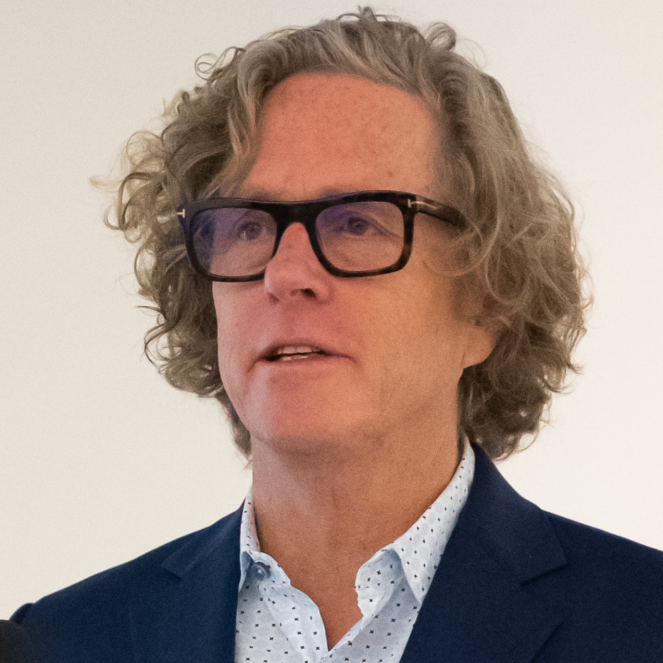
Chris Newfield
Christopher "Chris" Newfield, Director of Research at the Independent Social Research Foundation in London and Distinguished Professor Emeritus of English at UC Santa Barbara, writes on higher education and AI.
1
APPEARANCES
1
PODCASTS
Sep 28, 2026


Therese MurphyHOST
So what is it we need to know, Chris, about AI in our universities today? Is AI in our universities today? If it is, where is it? In what ways is AI in our universities? Over to you, Chris.

Chris NewfieldGUEST
Well, the first thing that I should say is that AI is an umbrella term for various kinds of technologies that we associate both with artificial intelligence in the sense that it comes from programming in some basic sense, and also that has been represented as intelligence.
Chris NewfieldGUEST
We don't have to go through the whole... history of how this term arose, but in my view, it's originally a marketing term for a set of, a whole range really of specific technologies that aren't intelligent.
Chris NewfieldGUEST
You know, you don't think your thermostat in your house that you turn up and down or that to regulate the heat or that turns it on and off for you when you're not there to do that is intelligent.
Chris NewfieldGUEST
but it is reactive to its environment on the basis of code that's been written to respond to certain, do certain things under certain conditions.
Chris NewfieldGUEST
Okay, so the kind of AI, as it's come to be called, that we're going to be talking about in the context of the university, is, for lack of a better word, a large language model.
15 MINS LATER
Therese MurphyHOST
So what's my question for you, Chris? To the extent that what I'm describing is a phenomenon that makes sense to you, you recognize it, what's your reaction to it? If we're meant to be digitally competent, but then we're also meant to hold on to, to refine, to hone these arts, humanities, social sciences skills, how do we navigate this? Over to you.