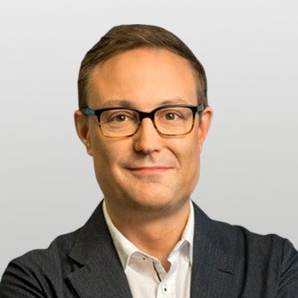
Chris Arendt
Chief Scientific Officer and Head of Research at Takeda Pharmaceuticals, overseeing global R&D labs and AI integration in drug discovery.
2
APPEARANCES
2
PODCASTS
Aug 10, 2026


Lance GlynnHOST
How do you and your team sort of stay connected to the patient perspective, and how does sort of real world decisions impact the decisions that you make?

Chris ArendtGUEST
In fact, it's so important for our ultimate success that we actually not just leverage cool science, right, but that we can bring forward something that's really differentiated and meaningful to patients.
Chris ArendtGUEST
And, and to do that, of course, we need to be at f- the frontiers of science, especially translational science, understanding well the journeys that patients take and the challenges that they have with those different, with the disease burden across the world and where-- so where...
Chris ArendtGUEST
It goes beyond that to what are the endpoints and quality of life components that are also really important to those patients.
Chris ArendtGUEST
So one thing that we do is, is interface with patient groups throughout the journey of all of our development programs.
Lance GlynnHOST
For you leading the scientific strategy, what has energized you about working alongside Julie, and how does her vision influence the way the greater team thinks about innovation, thinks about growth, and thinks about, I think, most importantly, delivering for patients?

Chris ArendtGUEST
I mean, well, I'll give you s- One, one, one of the first examples for us is we worked with a large molecule AI company out of George Church's, uh, lab called Nabla, was we had a pro- a protein.
11 MINS LATER
Simone FishburnHOST
So I wonder if you could talk a little bit about your expectations, not only of how this changes discovery, which you've talked a little bit about, but the nature of alliances and the way that you're looking at, um, at opportunities of-- that come to you.