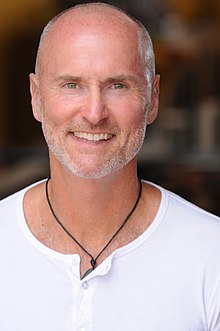
Chip Conley
American hotel manager
25
APPEARANCES
24
PODCASTS
Nov 17, 2026

Chip ConleyGUEST
I didn't think of myself as an elder at all, but I realized that I was thinking of elder and elderly as the same thing.
Chip ConleyGUEST
Elderly is the last few years of your life when often you need support and care from others.
Chip ConleyGUEST
If you are a 35-year-old software engineer surrounded by 22-year-olds, as is often true in Silicon Valley, you're an elder.
9 MINS LATER
Patricia KarpasHOST
How do we define a fluid multi-stage life with transitions and breaks along the way? Does that mean that in our trajectory that we look at this as a portfolio, as you say, or do we do sabbaticals along the way? What is the path to this?


Mark HymanHOST
Because I had to burn off a lot of the old stuff that, you know, kind of kept me from actually being in a happy place now as I've gotten older.

Chip ConleyGUEST
So there's a, you know, Richard Rohr, famous Christian mystic, is teaching at our Modern Elder Academy campus here in Santa Fe right now.
16 MINS LATER


Jaime TaetsHOST
Can you just start with telling just kind of your brief story, who you are and why you're so damn cool and what you've done?
Chip ConleyGUEST
Well, I've had three chapters in my career and each had a calling element to them.
Chip ConleyGUEST
I started a boutique hotel company, one of the first in the U.S., Called it Joie de Vivre because our mission statement was also our name, to create joy.
Chip ConleyGUEST
Based in San Francisco, 52 boutique hotels around California, each with its own name.
Jaime TaetsHOST
What would someone not know about your success and maybe a hard part of it? It looks maybe glamorous because you've done all these big things, but I think sometimes the highlight reel makes all the rest of us think we must be doing something wrong.

Chip ConleyGUEST
Slowing down would suggest... taking time, relaxing, and not having a sense of purposeful haste.
Chip ConleyGUEST
And yet when I have been faced with cancer, stage three metastatic prostate cancer, I've been on treatment most of the last five and a half of those eight years.
Chip ConleyGUEST
What it's brought to my attention is this deep sense of that I'm here for a reason.

AJ JonesHOST
What did you have to stop believing about success to actually do that? And what lessons can we share there?

Maura ConlonHOST
For our listeners, can you just tell us a little bit about your childhood neighborhood?
Maura ConlonHOST
Chip, with all that you've shared here, how do you see the through threads that emerged from your formative landscape in terms of how they shaped your sense of self?

3:00

Okay, so I know you as the kind one, the smart one, the successful one, and I also know you as the spiritual one, but I want you to take me back to, did you grow up in a faith-based environment? Did you grow up in a religion? Where did the spiritual kind of find you?
Chip ConleyGUEST
You know, I grew up in Long Beach, California, where I was the oldest of three kids, two younger sisters and two parents who were first born.
22 MINS LATER
25:57
Do you feel there is an increase in soulfulness, consciousness, spirituality, if we want to call it that word? Are you seeing that? Are you feeling that? What are you seeing as the trend in terms of the upper echelons of companies?

Chip ConleyGUEST
So my story is that in my mid-20s, I started one of the first boutique hotel companies in the United States.
Chip ConleyGUEST
And Joie de Vivre, based in San Francisco, it grew into the second largest in the US.
14 MINS LATER
Carolyn CohenHOST
What kind of wisdom are we building that enables us there? Why do you think all this happiness or contentment occurs in these later decades? Like what kinds of skills are we able to build that we didn't really have the ability to do


Chip ConleyGUEST
And because the kinds of cultural issues and social issues we're dealing with today are very different.
Chip ConleyGUEST
It's that sandwich generation of people in midlife who are dealing with caring for family members on both sides.
7 MINS LATER


Chip ConleyGUEST
Hi, I'm Chip Conley, the founder and executive chair of MEA, and also formerly the modern elder of Airbnb and the founder and CEO of Joie de Vivre, the second-largest boutique hotel company in the US.
Chip ConleyGUEST
But I can say that I've had two experiences in my life where my health forced me to simplify my life, and then I learned some new tools and practices.
Chip ConleyGUEST
When I was in my late forties, I had this boutique hotel company, Joie de Vivre, which means joy of life, that I'd started in San Francisco.

Chip ConleyGUEST
I had a long-term relationship that was meant to end, but I was just holding onto it like a life preserver.
Chip ConleyGUEST
I had a African American foster son who was an adult who was going to prison wrongfully, and I was trying to get him out on appeal.
Chip ConleyGUEST
Um, I lost five male friends to suicide, all of them 42 to 52, all of them men, between 2008 and 2010.
13 MINS LATER


Chip ConleyGUEST
Yeah, there was something in that is that in the kismet of that evening and of that summer, I still have such an affection for New York.
Chip ConleyGUEST
I mean, I really explored myself, explored this great city, explored culturally.
Chip ConleyGUEST
It also took me into my second year of business school at Stanford Business School, where Um, I did actually, I did go into reparative therapy and, you know, so because my dad wanted me to, and, and then I had a girlfriend, um, my second year of business school.
32 MINS LATER
52:34
And I highly recommend anyone nearing or at or thinking they're late in midlife to go spend time with on one of Chip's retreats.

Charlotte MasseyHOST
Yeah, well, I would love to know what is the Modern Elder Academy? How does it function? If you show up at one of these gatherings, what happens? Walk us through what people experience.
Chip ConleyGUEST
Even though the name won't tell you this, we've had people as young as 22 and as old as 95 come to MEA.

Aaron HurstHOST
would love to have you share just the design of that and why that was so important to the design.

33 MINS LATER

Lili PierrepontHOST
Do you feel like there are people within your organization who own it enough that this whole project continues even when the force of chip is not there? Yeah.

speaker_4ADVERTISER
Use as directed.
Chip ConleyGUEST
When I was feeling a little depressed and not a lot of joie de vivre, I ended up in the local bookstore around the corner from our offices.
Chip ConleyGUEST
And I initially ended up in the business section of the bookstore looking for a, a business solution.
Chip ConleyGUEST
But given my befuddled state of mind, I ended up in the self-help section very quickly.
Chip ConleyGUEST
I took one psychology class in college, and I learned about this guy, Abraham Maslow, as many of us are familiar with his hierarchy of needs.
Chip ConleyGUEST
But as I sat there for four hours, the full afternoon, reading Maslow, I actually recognized something that is true of most leaders.
speaker_7ADVERTISER
Wayfair, every style, every home.

10 MINS LATER

Blake MycoskieHOST
And that is, I think, what I'm hearing from you and so many others, is they've abandoned their own truth-for someone else's dir- you know, directives, or even directives they create themselves that no longer serve them anymore.


Chip ConleyGUEST
... long story short is, uh, it's been, it, it led me to becoming this modern elder, and what the hell is a modern elder? So, um, the traditional elder of the past was all about reverence.
Chip ConleyGUEST
You revered your elders, but a modern elder is about relevance, and so you better be as curious as you are wise.
Chip ConleyGUEST
I didn't understand the lingo, but I had to learn, and so what I had to do was be humble.
Chip ConleyGUEST
I had to be open to, like, saying, "I don't know what you fucking mean by saying you're gonna ship a feature.
Chip ConleyGUEST
Explain that to me." And I, and so I was the person who could come in and make the bridges and create the bridges to the travel industry, and I was Brian's mentor and helping him to look at leadership from a CEO's perspective.

speaker_2ADVERTISER
Hi, I,
speaker_2ADVERTISER
get
Chip ConleyGUEST
The key to thriving in today's knowledge industry isn't just what knowledge you know, but how wisely you can apply it.
Chip ConleyGUEST
And in my recent HBR article, I show how moving beyond a focus on knowledge work and embracing wisdom work helps teams to be more productive, improves employee retention, and creates a more innovative work environment.
Chip ConleyGUEST
So what is wisdom? The difference between knowledge and wisdom is that you accumulate knowledge and you distill wisdom.


Lizzie PostHOST
[laughs] Tell me, what are some of the simple ways to make someone feel genuinely welcome, e- even in a casual setting? A lot of people, you know, the casual hang I feel like is a [laughs] is so popular these days.
Chip ConleyGUEST
The number one rule, uh, and to use another-- to use rule again is to be a great listener.
Chip ConleyGUEST
Someone will feel more comfortable when they feel like they can be comfortable as themselves in the environment in which they're being hosted.
Chip ConleyGUEST
Now, when they-- I say be themselves, it doesn't mean there's not etiquette and rules and the proper dress code, et cetera, for the-- depending upon the event.
Chip ConleyGUEST
But it does mean a person feel-- can feel comfortable in their own skin and they don't feel like they're having to pretend to be someone else.
Chip ConleyGUEST
And most importantly, it means that they feel that, that someone is seeing them and listening to them, and that listening to them is an essential piece of this, is the, the sense that somebody gets you.
5 MINS LATER


Geoff NielsonHOST
Maybe to provide some context to it, though, let's back up for a second and talk about, in your view, what is the role of a leader? Where can a leader add the most value? What should they be doing? And where does this notion of soulfulness come into the mix?
Chip ConleyGUEST
One of my favorite questions to ask my direct reports at the three companies that I have helped to run, which would have been Joie de Vivre, which is a boutique hotel company that I started when I was 26 and ran for 24 years.
Chip ConleyGUEST
I became the second largest in the U.S. with 52 boutique hotels around California.
Chip ConleyGUEST
And then seven and a half years as the Modern Elder to the Airbnb founders, as the head of global hospitality and strategy, but the mentor to the founders as well.
30 MINS LATER


Simon LehmannHOST
But the standards, when I have five children, so for me, a rental is the only choice I have, right? But I need certain things that are standard.
Chip ConleyGUEST
First of all, one of the challenges we had at Airbnb was in the early days when I joined, our legal team did not want to have standards because the more we had standards, the more we were verging into having the host community be employees.
6 MINS LATER
Simon LehmannHOST
But what is the emotional blind spot in our sector with all the experience that you have? And what are we underestimating about guest psychology?

8 MINS LATER
Stan ChristensenHOST
Am I correct in my memory that New York City was tough? Were you part of that?


Chip ConleyGUEST
So, so, so when I was, uh, you, during the Great Recession when I was in my late 40s going through a really hard time, um, I lost five male friends to suicide.
19 MINS LATER


Lenny RachitskyHOST
I learned so much." Just like, what was that experience like? What did you learn from working for someone like Brian?
Chip ConleyGUEST
Well, let's start with the fact that it- I would never have gone to work for Airbnb if I didn't believe in Brian.
Chip ConleyGUEST
Because quite frankly, when Brian approached me and we started talking about it, I was like, I wasn't sure I liked the, uh, the business model all that well as a hotelier.
Chip ConleyGUEST
So I had to believe in something beyond the business model, because I wasn't sure that the s-mo- the business model would work.
Chip ConleyGUEST
Although, soon after joining, I saw the numbers, I was like, "Wow, this is working pretty well." But I believed in Brian because the thing that Brian showed up with initially was just a curiosity and an appetite for learning.
Chip ConleyGUEST
You know, I remember back in 2011 when the, you know, the big debacle happened with, um, the, the apartment getting, uh, trashed by a guest, and, and so Brian decided he was gonna go to find, you know, George Tenet, the, the f- former head of the CIA.
Chip ConleyGUEST
And so, like, Geo- Brian would go to experts and, and say to the expert, "I don't know what the hell I'm doing." And, um, he did that with me when it came to hospitality.
8 MINS LATER
Lenny RachitskyHOST
Maybe just talk about that broadly and w- then we segue into other elements of your career.

Chip ConleyGUEST
"And I can't have that with my friends or my family members." And you know, I, what I think is true a lot of the time is that you've not outgrown your friends, you've outgrown the conversations you're having with your friends.
Chip ConleyGUEST
So the question is, how do you open that up? And one of the things I learned at, at MEA was this guy Aaron Taylor.
38 MINS LATER

Rich RollHOST
Are there any kind of common traits or characteristics that you can identify like, "Oh, this person's gonna get it, this person isn't"?
Chip ConleyGUEST
Oh my god, all the people who looked at me like, what the hell are you doing when it finally was announced five months later? It's like, why would you? My brother in the hotel world had no clue what Airbnb was.
Chip ConleyGUEST
What the hell is a modern elder? So the traditional elder of the past was all about reverence.
5 MINS LATER