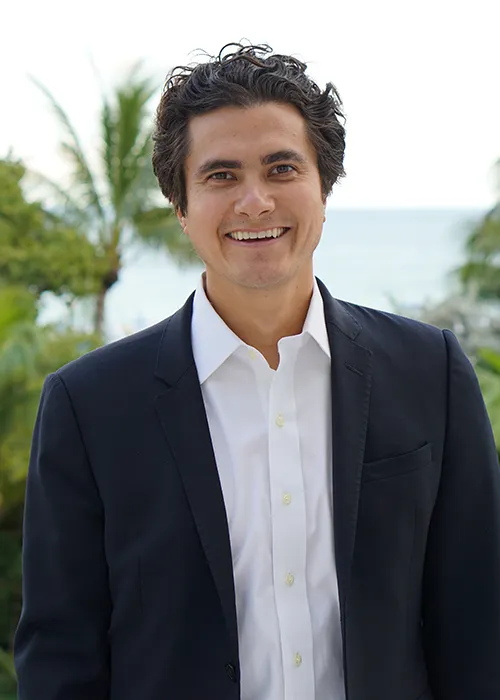
Chase Lochmiller
21
APPEARANCES
11
PODCASTS
Nov 17, 2026


Chase LochmillerGUEST
country? Look, I think Iceland, the sentiments, you know, still reasonably positive.
Chase LochmillerGUEST
It hasn't been overwhelmed in the same way, you know, I think the total grid in Iceland, something's like three gigawatts, something like that.
Chase LochmillerGUEST
But, you know, you look at the Texas grid is something like 90 gigawatts and they had, you know, 400 gigawatts of large load interconnection requests.
Chase LochmillerGUEST
You know, I think energy intensive use cases have sought out Iceland as a home in the past.


Chase LochmillerGUEST
Well, so the thing was is that I think externally a lot of people thought this was a pivot for us.
Chase LochmillerGUEST
But internally, and if you talk to any of our investors or any of our employees that have been here for a very long time, they'll tell you that this was sort of the plan all along.
Chase LochmillerGUEST
And then I was at Stanford for grad school and working in AI and doing a lot of work in computer vision and natural language processing.
26 MINS LATER

Brian HalliganHOST
I've never met someone that climbed Mount Everest, and I'm really impressed because What is it like? What is the training like? What does it feel like when you get to the top of that mountain?

Chase LochmillerGUEST
So those are all air-cooled chillers, which is basically these wound pieces of copper pipe where, where you have this giant chilled water loop in, in the data center that's recirculating water.
Chase LochmillerGUEST
And it, it, you know, basically goes from cool water on the inlet side, it goes into the rack of GPUs, and there's a thermal transfer event from, you know, the GPU that's being energized and producing a lot of heat.
Chase LochmillerGUEST
There's a thermal transfer event from the chip to the water, and then the water goes out through the, the, through these chillers.
Chase LochmillerGUEST
You basically are blowing a bunch of air over these wound copper coils to exhaust the heat out of the system, so the water temperature steps back down, and you have cold water to then cool the GPUs again.
Chase LochmillerGUEST
All of the plumbing that goes into this is really, really substantial, so we actually, we have a ton of plumbers and pipe fitters on site that are, you know, welding these big plumbing systems together.
11 MINS LATER


Harry StebbingsHOST
I don't wanna kind of really actually get into that, maybe weirdly, but I want to ask your advice, which is when asked how do you advise someone when to endure, keep going, persist versus when to change tact and go down a different route?
Chase LochmillerGUEST
It's interesting investors that you spoke to validated this claim, but, you know, from the outside it does appear to be a pivot.
Chase LochmillerGUEST
Internally, when we started the company, the goal was always to build an AI platform.
Chase LochmillerGUEST
That was what I had sort of spent my career working on with AI machine learning, you know, algorithms.
Chase LochmillerGUEST
And, you know, I've been a big user and early adopter of, of deep learning for, you know, certain tasks.
Chase LochmillerGUEST
And I felt like it was this meta science that ultimately was gonna, you know, transform every, every industry.
32 MINS LATER
Harry StebbingsHOST
When you think about that, like, what's the unit? Is it like dollars per token, per training run? What is that unit for you?

Ed LudlowHOST
Chase, w- with that, those kind of three buckets you just outlined, what's the kind of percentage of sales for each currently, and how is Crusoe's business kind of shifting of, of the m- in terms of the mainstay of what you do?
Chase LochmillerGUEST
Well, you know, each of those different businesses, uh, each of those different ways of, of, uh, sort of serving customers, they, they typically have different durations.
Chase LochmillerGUEST
So when, when folks are making data center commitments to us, um, we're typically working with very large tech companies that have in- investment-grade credit ratings, and they're typically committing to us but, you know, for somewhere between 15 and 20 years.
Chase LochmillerGUEST
Um, you know, when you think about the life cycle of a GPU, uh, and the managed compute clusters, those can range anywhere from, you know, a few months to, you know, five to six years, but they're typically don't go beyond that just because that's sort of the, uh, the life cycle of, of the chips.
Chase LochmillerGUEST
Um, and then when you think about managed inference and managed AI services, um, those are more, uh, you know, they're developer tools.
Ed LudlowHOST
You've added three important names as board members, and looking at the round, you know, the size, the participants, a lot of people asking if this is kind of a precursor, uh, to you, Chase, taking Crusoe on a path to the public markets and an IPO.

Chase LochmillerGUEST
Um, but you know, we, we sort of, even at that founding of the company, we had this ambition to build an AI cloud platform, which today is, you know, where, where, where Crusoe's at, is this vertically integrated energy first AI, uh, AI platform.
Chase LochmillerGUEST
Um, but you know, what's unique about Spark is, you know, given the small modular form factor, there's so many different... you know, there's so many unique ways you can power it.
Chase LochmillerGUEST
It can, you know, you can power it with like small gas generation things like RECiPs and, you know, smaller gas turbines like Aero derivatives.
Chase LochmillerGUEST
Um, you can also power it just in, in u- with, with, uh, with grid power.

Chase LochmillerGUEST
I, I can't disclose, like, all the specific details, uh, around the, around the site, uh, and the commercial details and the commercial constructs that were in, in place between the customer and our energy partners at the site.
Chase LochmillerGUEST
Um, but, uh, you know, the, uh, uh, you know, the, the, the work has basically paused at that site.
Chase LochmillerGUEST
Now, we are seeing tremendous demand across, you know, other locations, uh, and, you know, more than we can possibly fulfill.
Chase LochmillerGUEST
Um, and, and so we, we are continuing to see momentum in the development strategy.

Melissa LeeHOST
Can you give us a sense of what your, uh, other pipelines are? 'Cause you, in addition to building out for certain customers, you have on-demand and reserve computing as well, and I'm just trying to get a sense of the different, you know, the different demand levels across your business.
Chase LochmillerGUEST
And to me, this is a generational opportunity for society at large to basically upgrade, you know, generation infrastructure, upgrade transmission infrastructure, upgrade the grid, um, to be able to support far more capacity than we have in the past.
Chase LochmillerGUEST
And, you know, the Ratepayer Protection Pledge basically, um, I think helps create a platform for, um, companies to be investing in the energy to power these AI, you know, these AI factories.
Chase LochmillerGUEST
Um, I think the trend is gonna be, you know, a new term that I've, I've been using is, is this term called across the meter.
Chase LochmillerGUEST
... and, you know, people maybe heard behind the meter power, where you have like, you know, power gen on site behind the meter.
Unknown podcast
The Future of Everything: What CEOs of Circle, CrowdStrike & More See Coming in 2026
Jan 25 · 2h 14m
Chase LochmillerGUEST
Yeah, housing, you know, housing, you know, the market's actually fairly efficient.
Chase LochmillerGUEST
There's a lot of people that won't be long-term permanent workers there that are actually, you know, they bring mobile homes, you know, they collect a stipend.
Chase LochmillerGUEST
But, you know, long-term, we're going to have about 2,000 permanent workers at the campus.
Chase LochmillerGUEST
So there's both, you know, short-term job, you know, spike and boom in terms of demand for the construction and installation process.
12 MINS LATER

Jason CalacanisHOST
What are we doing with the minnows? You're specifically targeting up and coming startups to be their provider.

speaker_6UNKNOWN
"What are we doing with the minnows?" You're specifically targeting up-and-coming startups to be their provider.
Chase LochmillerGUEST
Yeah, so you know, uh, I really think about Crusoe, you know, being a vertically integrated business is like we offer three core things, right? We can, we can build the data centers, and we can rent those to, to customers.
Chase LochmillerGUEST
We're really only focused on a small subset, maybe five customers, these very big tech, uh, tech companies.
Chase LochmillerGUEST
Um, and that's really their key bottleneck, right? That, that's, that's their key pain point.
Chase LochmillerGUEST
They're not, you know, renting out capacity from clouds because, you know, Meta doesn't know how to run a GPU cluster.
speaker_6UNKNOWN
... your current offering, I should say.

Caroline HydeHOST
And I'm interested as to what sets you apart from a core weave and other neoclouds out there.
Chase LochmillerGUEST
I mean, we've taken this vertically integrated energy first approach kind of from the start and the founding of the business.
Chase LochmillerGUEST
I think a lot of the value that was unlocked from this first Stargate campus in Abilene was the fact that we had access to 1.2 gigawatts of power that could energize this very large cluster of NVIDIA GPUs.
Chase LochmillerGUEST
Building it very, very fast required us to have creative designs and flexibility with a lot of modular components that went into constructing this very large campus with a lot of those modular components being manufactured offsite.
Chase LochmillerGUEST
And I think we've built a very high performance software stack to enable these AI factories to work very effectively and at scale, integrating a lot of great managed services like our managed file systems and managed Kubernetes that enable innovators to do their life's work on incredibly reliable and high-performance infrastructure.
Ed LudlowHOST
Just your reaction to what the administration's doing about speed matching supply of power to infrastructure?
Chase LochmillerGUEST
So what that means is we're building, um, you know, these factories that produce intelligence.
Chase LochmillerGUEST
Uh, and we focus on all of the things ranging from, uh, cultivating the energy and helping develop the energy resources needed to, uh, power AI infrastructure.
Chase LochmillerGUEST
Um, we're building out the data centers themselves and redesigning them to fit these large-scale accelerated computing clusters.
Chase LochmillerGUEST
Um, and then we, and then we also built out this whole software platform that operates these large-scale AI factories so that they can actually be effective in producing intelligence, uh, and really enable our generation's, uh, greatest minds and entrepreneurs to do their life's work and help build, um, eh- and scale their AI applications to impact people around the world.
5 MINS LATER
Chase LochmillerGUEST
... um, you know, compared to, uh, other markets where, uh, you know, there was less da- digital infrastructure being built where, where prices actually went up substantially.


Akash PasrichaHOST
But I mean, how do you think about the level of risk in the AI ecosystem right now and the level of risk for your company, given that it's so capital intensive to build anything in this space?
Chase LochmillerGUEST
Yeah, no, it's a great question, especially when you have a business that has a tremendous amount of CapEx.
Chase LochmillerGUEST
The way we think about this is really, we are constantly doing demand forecasts in terms of how much compute demand is coming from our customers in the cloud business and how much infrastructure demand we're seeing from customers on the data center side.
Chase LochmillerGUEST
And right now, I think the, It's very broad-based and the demand, no one has enough compute, no one has enough data center space, no one has enough energy.
Chase LochmillerGUEST
The capacity for infrastructure is largely saturated right now and so we're really focused on building more to meet the demands of customers.
Chase LochmillerGUEST
When we think about GPU purchases, uh you know there is kind of a you know uh some payback math that we go through in terms of you know making the upfront investment in the capex and working with our customers to uh you know ensure that they're able to get a great service and and high performance with high reliability and we're able to earn a great return for our investors
Chase LochmillerGUEST
I think probably the biggest risk to the business is, or the biggest risk to the ecosystem, I think really is debt.

Mike SantoliHOST
And whether the profitability is going to kind of be there at that layer, how fast you have to depreciate some of the technology that you install, and whether that's just kind of a treadmill that you're going to have to run indefinitely.
Chase LochmillerGUEST
Yeah, I mean, there's a lot of different assets in this ecosystem, ranging from power plants to data centers to chips.
Chase LochmillerGUEST
I think the most uncertain question is, what is the right depreciation schedule for the chips as new releases of new hardware platforms have accelerated? The way we view it is that there's certainly a lot of demand for the newest, latest, and greatest generations of chips to help train the next generation of frontier foundational models and scale inference workloads.
Chase LochmillerGUEST
However, we still are seeing tremendous demand for historical and legacy generations of chips.
Chase LochmillerGUEST
Blackwell is sort of all the talk on the street right now with NVIDIA releasing that platform recently.
Chase LochmillerGUEST
But we're still seeing tremendous demand for Hopper, the previous generation, and even Ampere, the generation before that.

Chase LochmillerGUEST
So, um, you know, there's a lot of investment being made today, uh, for these very large clusters, these a- large-scale AI factories, um, that are bringing, you know, intelligence to the masses and, and embedding intelligence in m- in the economy.
Chase LochmillerGUEST
Um, but, uh, you know, the- a lot of that infrastructure is not used nearly as efficient- efficiently as it, as it could be.
Chase LochmillerGUEST
A- and, uh, a lot of that has to do with, like, getting the data into the right place at the right time, um, so that your GPU utilization rate can go way, way up.
Chase LochmillerGUEST
Um, and, you know, sort of our commitment in, in, uh, this Atero acquisition is, uh, you know, building both very, very large AI- large-scale AI factories, and then building the operating systems, um, and, uh, you know, the software systems to basically operate those AI factories with an incredible degree of efficiency, um, and, uh, scale.
Chase LochmillerGUEST
And what we realized in addition, like, one of our, uh, uh, members of the founding team, Ben Chess, he came out of OpenAI.
Unknown podcast
Winning the AI Race Part 3: Jensen Huang, Lisa Su, James Litinsky, Chase Lochmiller
Jul 23 · 1h 4m

Chase LochmillerGUEST
I'm Chase Lochmiller, the co-founder and CEO of Crusoe, and I'm here to talk to you about the AI Industrial Revolution.
Chase LochmillerGUEST
I'm going to start with a quote, and it's from Warren Buffett in his 2020 shareholder letter to investors.
Chase LochmillerGUEST
And he said, in its brief 232 years of existence, there has been no incubator for unleashing human potential like America.
Chase LochmillerGUEST
Despite some severe interruptions, our country's economic progress has been breathtaking.
Chase LochmillerGUEST
Buffett's words were true then, and as we enter this global race for technological dominance of artificial intelligence, they ring even truer today.
11 MINS LATER

David FriedbergHOST
And then in data centers like Texas, what's the limiting factor? Is it workforce to actually go build these things? Is it materials? Is it the cooling towers? Is it the chips? Is it the hyperscalers giving you the contracts? What's the limiting reagent?

Chase LochmillerGUEST
I'm Chase Lochmiller, the, uh, co-founder and CEO of Crusoe, and I'm here to talk to you about the AI industrial revolution.
Chase LochmillerGUEST
Um, I'm gonna start with a quote, and it's from Warren Buffett in his 2020 shareholder letter, shareholder letter to investors.
Chase LochmillerGUEST
And he said, "In its brief 232 years of existence, there has been no incubator for unleashing human potential like America.
Chase LochmillerGUEST
Despite some severe interruptions, our country's economic progress has been breathtaking.
Chase LochmillerGUEST
Our unwavering conclusion: never bet against America."Buffett's words were true then, and as we enter this global race for technological dominance of a- artificial intelligence, uh, they ring even truer today.
11 MINS LATER
speaker_6HOST
And then in like the, you know, data centers like Texas, like what's the limiting factor? Like is it like workforce to actually go build these things? Is it like materials? Is it the cooling towers? Is it the chips? Is it the hyperscalers giving you the like, you know, you know, sort of contracts? What's the, you know, sort of limiting reagent?
Ed LudlowHOST
As a means to provide power to scale data center, this is a really significant step.
Chase LochmillerGUEST
uh absolutely thanks for hosting us ed uh you know uh thrilled to be joining you here from uh from from the field where uh redwood and crusoe have partnered on uh building this uh very cool off-grid uh uh ai data center that's powered by on-site solar and end-of-life ev batteries you can see the the array of batteries behind me you can see this uh uh this mobile and modular ai data center that we've dubbed crusoe spark Each of these data centers houses about 500 GPUs, and there's going to be four of them here, all powered with this off-grid microgrid and batteries.
Ed LudlowHOST
Are you able to kind of quantify or give our audience a sense of the challenge of how much a bottleneck the energy component is when you're building out these data centers around this country?
Chase LochmillerGUEST
You know, one of the major aspects to the bottleneck for energy really is the speed.
Chase LochmillerGUEST
You know, people are applying for grid interconnections and they're finding themselves in multi-year, you know, five, ten-year queues to basically get that load approval.
Chase LochmillerGUEST
What we've done here is rapidly deployed these modular and mobile data centers alongside this solar and battery installment.
speaker_0HOST
Mm-hmm.
Chase LochmillerGUEST
Uh, so, you know-A lot of the, you know, government labs and high-performance computing communities have been experimenting with things like immersion cooling, you know, single-phase and two-phase, as well as, you know, water cooling, uh, DLC, uh, for decades.
Chase LochmillerGUEST
Uh, and the reason it's happening is because you just have so much energy density, uh, so much heat being produced by these new NVIDIA chips, um, as we move on to, you know, uh, more advanced architectures, uh, that there's, you know, simply just not enough, uh, heat capacity to basically move that heat off the chip, uh, from a t- traditional, uh, uh, aluminum heat sink.
speaker_1HOST
So I'm sure you have to be pretty...
Chase LochmillerGUEST
Uh, you know, we are, we have a couple other projects that are underway, um, that, you know, uh, hopefully we'll be able to talk about, you know, more soon, but, you know, uh, similar scale or bigger, uh, is kinda like, you know, what we're seeing.
Chase LochmillerGUEST
For this specific project, we're focused on the design, build, construction of this large-scale data center.
Chase LochmillerGUEST
I think it's worth appreciating that data centers as a product have changed very dramatically in line with the changes in computer architectures over the last 20 years.
Chase LochmillerGUEST
So if you look 20 years ago, a standard data center rack might have been 2 kilowatts, maybe 4 kilowatts.
Chase LochmillerGUEST
Today, for the GB200 and VL72 configuration, we're budgeting 130 kilowatts per rack, all with direct-to-chip liquid-cooled water cooling.
Chase LochmillerGUEST
And if you look forward to the next generation, what Jensen announced recently at GTC with the Vero Rubin Ultra, those are 600 kilowatts per rack.

Chase LochmillerGUEST
You know, Crusoe's a vertically integrated AI infrastructure business that focuses on unblocking some of the critical blockers that are preventing the proliferation and scaling of AI.
Chase LochmillerGUEST
You know, we've built out a vertically integrated data center business that does everything from land, you know, and power acquisition and procurement and production.
Chase LochmillerGUEST
all the way to data center construction, operation, engineering, and management.
8 MINS LATER
Woojin HoHOST
So just curious why Abilene outside of the power aspect of it is such a hotbed as well.