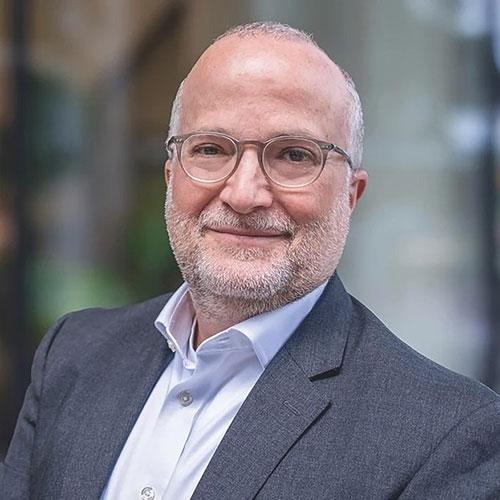
Charles Hecker
19
APPEARANCES
8
PODCASTS
Oct 19, 2026


Andrew MuellerHOST
Charles, a thought that vaguely occurs to me, not with every demonstration or civil disturbance, but certainly with a lot of them, and thinking back to the riots that sort of beset London in 2011, do we sometimes make a mistake in assuming that something that this big must be about something? Is it possible that it might be actually really entirely meaningless? Yes.

Charles HeckerGUEST
And, you know, I think a few different things probably triggered this particular flare up in civil unrest.
14 MINS LATER
Andrew MuellerHOST
the truth the whole truth and nothing but the truth but we will be talking shortly about this government's attempt to address some relatively small scale stuff how do you address the big scale stuff like that this this idea that we can't build anything because i know the obvious comeback to that is to build something really impressive but that that tends to take a

Charles HeckerGUEST
Yeah, this is really interesting because, of course, the Sovereign Wealth Fund in Norway is one of the funds that tends to set the example for investment funds around the world.
Charles HeckerGUEST
And lots of other investment funds, whether they're university endowments or pension funds, take their signals from the central bank in Norway about where to invest and where not to invest and patterns of investment and things about investment.
Charles HeckerGUEST
the ethics of investing and when to buy and when to sell, you know, a lot of those sort of signals emanate initially from Norway.
Charles HeckerGUEST
And it's also interesting to see that as Norway struggles with both the ethics of investing, number one, in general, and number two, the fact that it's making an awful lot of money out of hydrocarbons.
Charles HeckerGUEST
And what we've seen lately is it is income statement time from American university endowments, which are also major, major investment vehicles.
Andrew MuellerHOST
As far as it's possible to tell, though, and I realise it seems like a cynical slash glib question, is this not just France being France or is it something bigger than that?
Charles HeckerGUEST
We have to say that more and more these days because of all of the remarkable things that are happening both politically and geopolitically.
Charles HeckerGUEST
This is very much France being France because if you think about it, President Emmanuel Macron's term in office, roughly speaking, is being bookended by two of these sorts of outbursts.
Charles HeckerGUEST
I went back and looked at the Gilets Jaunes protest, of course, which began – over a fuel tax arrangement that Macron's presidency had proposed and brought people into the streets and then became, you know, a much, much broader, violent sometimes and loud and national protest against a lot of things that are wrong with France or that the Gilets Jaunes thought were wrong with France.
Charles HeckerGUEST
And so now we have, you know, as Macron's term draws to a close, we have the same sort of thing.
Charles HeckerGUEST
And I suppose that The reason why I say France being France without being glib is that these protests never have one sole trigger.
12 MINS LATER
Andrew MuellerHOST
Surely in mathematics and science, what actually matters is the end result, not how we got there.

Charles HeckerGUEST
Georgina, there's a, a fairly significant headline in the New York Times today, and, and perhaps some of you will have been anticipating something like this given the prominence of, of her stardom and, and, and the size of her estate.
Charles HeckerGUEST
But The New York Times tells us Dolly Parton's estate in turmoil after extortion accusations.
Charles HeckerGUEST
And so what's happened here is that apparently Dolly Parton, the late Dolly Parton's nephew, um, who's called Brian Seaver, who played a prominent role in her business and was in head, was the head of her security operations, has lashed out against other participants in her business empire.
Charles HeckerGUEST
And on the day of her death reminded these individuals, according to The New York Times, that he sent twenty-seven million dollars' worth of arms and ammunition to Haiti, to the Haitians poli- to the Haitian police, and sort of used that as a, as a threat to say, "I'm a powerful man.
Charles HeckerGUEST
I'm a killer," quote unquote in The New York Times, "and that I'm not to be messed with." Um, and as a result, um, the other members of the Parton empire, um, including one of her business managers, um, had restraining orders taken out against Mr.
Charles HeckerGUEST
Seaver, um, who is now threatening to bring the entire empire down lest anybody else in the organization try to ruin it.

Georgina GodwinHOST
Uh, but the FT is talking about Qantas pushing ahead with a new ultra-long flight despite high fuel prices.
Charles HeckerGUEST
So what happens when you mix geopolitics, oil, Javier Millet and Donald Trump? And this is what's going on.
Charles HeckerGUEST
This is the new thing swirling around the Falkland Islands in the southern Atlantic Ocean, relatively closer to Argentina than to the United Kingdom.
Charles HeckerGUEST
But still, you're right, Emma, to point out that this is a piece of territory that the United Kingdom went to war over.
Charles HeckerGUEST
But what Javier Millet is saying now... is that he is going to sanction any of the companies and any of the individuals and any of the organizations, yes, it's a long list, that gets involved in drilling oil off the coast of the Falkland Islands.
Charles HeckerGUEST
There are approximately 1.7 billion barrels of oil buried beneath the sea, and that is a fairly tempting target for drilling companies.
Charles HeckerGUEST
If this starts and if this project launches, which is which it is, you know, it's already under development and is getting close to a start date.
26:02
Can you give us a preview of Sanae Takeuchi's upcoming cabinet reshuffle? Because although these are usually expected about once a year in Japan, this one is a bit different.


Chris CermakHOST
How significant will those be from Russia's perspective, especially this closing of the Russian cultural center in Berlin? What would Russia have been using that for?
Charles HeckerGUEST
Well, that's a very good question because there are suspicions across Europe, but specifically in Germany, that the Russian cultural house on Friedrichstrasse in the center of Berlin was being used to house spies.
Charles HeckerGUEST
That's what Russia does in all of its outposts around the world, in embassies, in Aeroflot ticket offices, you know, since the Soviet period.
Charles HeckerGUEST
And so for Russia house on Friedrichstrasse to be a sort of threat to To German security and to German intelligence and to German infrastructure.
Charles HeckerGUEST
You know, it's a wise decision not to mention the fact or, you know, a wise decision to close it, not to mention the fact that it is a Russian government organization and the building is owned by a Russian government organization.
Chris CermakHOST
How will that be taken by Russia? Will that be a sign for them that things are now serious? Will it be something that stops them from engaging in further hybrid attacks? Or do they need a much clearer signal from Europe than diplomatic and cultural moves?
Charles HeckerGUEST
Number two, the second item on, on the sort of agenda for Icelanders was security.
Charles HeckerGUEST
And, you know, there was, I think i-in this very studio, it's been discussed how often President Trump would say Iceland instead of Greenland when he was talking about countries that he wanted to absorb, um, and that that put a bit of a f- of, of, of a fright on, on the, the population of Iceland.
Charles HeckerGUEST
Um, security is a very, very important, um, uh element to membership in larger organizations, and particularly for countries that are now on the edge of the Arctic Ocean, um, which I think makes security all the more important.
Charles HeckerGUEST
Um, you know, but I don't- the one thing that puzzles me a little bit about this...
23 MINS LATER
Guy DelawnyHOST
Uh, and this is in particular with the presentation of the credit card reader with, uh, yeah, the tip amounts already help-helpfully filled out for you.
Charles HeckerGUEST
Um, this story is really a trigger point for conversation everywhere you go and, and in almost every sort of daily transaction.
Charles HeckerGUEST
And so we have a story, um, in The Guardian that says, "It's absolutely criminal.
Charles HeckerGUEST
US tipping culture has reached the UK and is causing chaos." And, and this is a massive in-depth, you know, what looks like a 10,000-word article on, on w- the nightmare, frankly, and the minefield, both economic and social and cultural, that is tipping.
Charles HeckerGUEST
And, and of course, in the United States, um, basically every single economic transaction ends with somebody putting their hand out anticipating a tip, whether it's an electronic hand-

Charles HeckerGUEST
And I think that there are opportunities here for companies to engage with their host countries.
Charles HeckerGUEST
And you know, look, there will be certain things that governments will not be able to compromise on in a moment of conflict.
Charles HeckerGUEST
But governments should be, and I think genuinely, and we saw this in Ukraine, um, are interested in keeping industry open and running, um, so that, number one, the economy doesn't collapse, so that, number two, people who are not mobilized, um, have employment, um, and, and so that, you know ...
Charles HeckerGUEST
And, and there's an advantage to governments as well, um, to having companies that can offer shelter or that can look after, um, young children or that can look after the spouses of employees and, and, and employ the spouses of employees.
Charles HeckerGUEST
And I, I'm thinking in particular of a client that we had that was in, in far western Ukraine that engaged with the government and said, "Look, we wanna stay open.
Philippa LambHOST
So this is a, the kind of embedded period of long-term disruption, and that's a different phase for business, isn't it? So what happens then?

Georgina GodwinHOST
Tell us about this and how it's affected Cambridge, one of our oldest and most revered institutions.
Charles HeckerGUEST
Um, Jason Arday, who was the youngest Black professor ever appointed to Cambridge University in the sociology department where he studies, studied the sociology of education, was discovered dead in his apartment in the Battersea neighborhood of London yesterday afternoon.
Charles HeckerGUEST
Uh, and, and there are several sad story arcs, um, to Jason Arday's trajectory, both professionally and personally and academically, um, all ending brutally, um, yesterday.
Charles HeckerGUEST
So Jason Arday was, um, has a PhD in the sociology of education from Liverpool John Moores University, uh, and was later in his academic career, um, accused of plagiarism in his PhD research and in subsequent, and in subsequent work following, um, the submission and the acceptance, by the way, of his PhD.
Georgina GodwinHOST
Uh, and of course, lots of locals are like, "Well, and you're also depriving us of our own park." Just tell us a little bit more about this story.
Charles HeckerGUEST
Um, Russia has a tendency for throwing curveballs at us, um, in August, um, going all the way back to the 1991 coup against Mikhail Gorbachev, which led to the collapse of the Soviet Union.
Charles HeckerGUEST
Um, we then had the 1998, um, August financial crisis, which saw the government default on all of its debt, plunging the nation into economic insecurity.
Charles HeckerGUEST
Um, and the Kursk submarine sank to the bottom of the Barents Sea, um, in August of 2000 during the first couple of months of President Vladimir Putin's first term.
Charles HeckerGUEST
And here we are in August again, and of course, with the war on Ukraine slowly but surely inflicting increasing levels of damage on Russia, the Russian economy, and on President Putin's promise to Russians that the war would not impact how they lead their lives.
Andrew MuellerHOST
Uh, on the subject further, Charles, of matters deteriorating, a interesting subplot today, Pakistan threatening what it says lawful, what it describes as lawful use of force if the Houthis take a swing at any Pakistani ships.
Charles HeckerGUEST
Um [laughter] Th- this is just what we need is, you know, a sort of another county heard from in all, in all of this.
Charles HeckerGUEST
Um, you know, I suppose everybody is running scenarios now in governments and capitals and defense departments around the world about sort of what we call horizontal spread or escalation, or horizontal escalation rather, um, in these sorts of conflicts.
Charles HeckerGUEST
Um, you know, Pakistan might be well advised to sort of keep its powder dry in, in circumstances like this.
Charles HeckerGUEST
Um, you know, there are any number of nationalities whose ships are passing through both the Strait of Hormuz and in and out of the Red Sea.
11 MINS LATER
Andrew MuellerHOST
I mean, are we not seeing EU countries saying, "We are all for taking action, as long as it in no way inconveniences us"?
Georgina GodwinHOST
So the US military has, uh, launched, uh, missile strikes, uh, on drone sites in Iran, and suddenly it looks like we've taken ten steps backwards.
Charles HeckerGUEST
Um, and Georgina, just before we launch into the, the, the very latest news about Iran, um, y- the size of the prize in Iran is enormous.
Charles HeckerGUEST
Um, and if I go back to my sort of geopolitical risk consulting days, um, when the Obama administration signed the JCPOA, international businesses flooded into Iran.
Charles HeckerGUEST
Um, interest spiked globally, um, in market entry, market re-entry, resumption of economic relations with Iran.
Georgina GodwinHOST
Uh, at least 920 people confirmed dead, but, but honestly the estimates are many, many thousands more.
Charles HeckerGUEST
Um, this is particularly the case if you want to fill your car or your truck or, or any other sort of vehicle with petrol at the station.
Charles HeckerGUEST
Um, it is outrageously expensive and getting increasingly expensive almost by the day, um, and that is if it's available.
Charles HeckerGUEST
Uh, the rationing started outside the main cities, sort of in the hinterlands, as all bad things do in Russia.
Chris TermackHOST
I mean, to that point, Charles, could Putin even himself end this war? I, I mean, if we can get to [laughs] that kind of question, or would actually ending this war have to be agreed, frankly, by someone else, given how much he's owned this?
Charles HeckerGUEST
So you have Yuri Ushakov, who is President Putin's foreign policy advisor, though not the foreign minister of Russia.
Charles HeckerGUEST
You have his foreign minister advisor telling him that economic trade between Russia and the ASEAN nations is growing by leaps and bounds and that there's been a 60% increase in trade between Russia and this bloc over recent years.
Charles HeckerGUEST
There's a long way to go before the economic relationship between these two blocks or these two parties become significant.
Charles HeckerGUEST
There's a certain amount of trade in minerals and fertilizer and things like that.
Georgina GodwinHOST
I wonder how much the war with Ukraine has affected Russia's approach to the ASEAN nations.


Natia SeskuriaHOST
When you look at Russia's economy, how sound does it appear, and what do you consider the most significant vulnerabilities that are not yet reflected in the top-line data?
Charles HeckerGUEST
Natia, first of all, thank you very much for inviting me to join the podcast, and thank you for that very, very kind introduction.
Charles HeckerGUEST
I think before we go any further, we have to make a couple of caveats to the broadcast, and that is we should probably acknowledge that one of the big challenges in looking at Russia, particularly in looking at the Russian economy, is the reliability of the data that we can get out of the country.
Charles HeckerGUEST
The central bank and the ministries that have various economic portfolios are providing information, but Russian official statistics are not going to tell the full story of what's happening in the Russian economy.
Charles HeckerGUEST
That sort of information and analysis is highly politicized, and so we take what we can get, and then we sort of draw our own conclusions or add our own research and our own analysis.
15 MINS LATER
Natia SeskuriaHOST
What are the risks, uh, for Western companies that may be contemplating to reenter the Russian market?
Charles HeckerGUEST
Well, that's right, and so Norway will be watching the Iceland referendum, um, very, very carefully.
Charles HeckerGUEST
And, you know, should Iceland join the European Union, Norway will be surrounded by Nordic, uh, countries, um, in the European Union to its own exception.
Charles HeckerGUEST
Uh, so Norway voted twice on whether it wanted to join the European Union, once in 1972 and once in 1994, and both times it said no. Um, the FT tells us that this is over concerns about its fishing industry, uh, echoes of what was of, of the debate in the UK even though Norway's, um, seafood exports are its number two industry, of course, after oil and gas.
Charles HeckerGUEST
Um, and, and fishing is, is one of the smallest industries actually in the UK.
Charles HeckerGUEST
Um, it's a NATO member, uh, but is also what was, w- was watching what's happening with Greenland, um, with, um, uh, with sort of eyes wide open and is liking the idea of the additional level of security that EU membership might provide it and, you know, sort of, um, ganging up a little bit.
Emma NelsonHOST
I mean, clearly risks have been taken in order to portray what Russians are really talking about these days.
Charles HeckerGUEST
But, but basically what's happened is this is quite dra- quite a dramatic development because if you think about it, the May ninth Victory Day parade, which celebrates victory over Europe in World War II, which by the way is one of the sort of underpinning narratives of recent Russian history and one of the things that the Kremlin is using to keep the whole place together, this is one of the most iconic images of Russia and one of the most iconic images of Moscow, and in fact, it's one of the only impressions that anybody who hasn't been to Moscow gets of Red Square.
Charles HeckerGUEST
But it usually includes a massive amount of military hardware, tanks, missiles, goose-stepping soldiers in sparkly uniforms, and you know, it is supposed to be a display of Russian might and a projection of force across TV screens around the world.
Charles HeckerGUEST
Uh, and you know, I can't even imagine what the images and the videos and, and what they're going to project on Russian national television and on screens around the world this time.
Charles HeckerGUEST
He's, he's living-- And I sat next to him at dinner, um, [chuckles] for one of the panels.


Charles HeckerGUEST
So we made a series of assumptions about what would happen to Russia, and in the early 1990s the assumptions were a few things.
Charles HeckerGUEST
And that is that if you invest in a country, that companies can change the way a country works.
Charles HeckerGUEST
The other assumption was that this would help steer Russia towards becoming a liberal democracy, and in fact we assumed that the two had to happen simultaneously, that you couldn't have a market economy without a liberal democracy.
Charles HeckerGUEST
You know, we found out in countries like China that that's not necessarily the case.
Charles HeckerGUEST
But in early days, we thought, you know, get lots of business into Russia, they'll learn about how to run a market, and they will democratize at the same time.