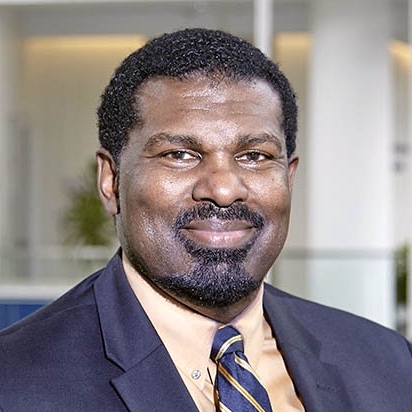
Charles Easley
Dr. Charles A. Easley IV is an Associate Professor of Environmental Health Science and Associate Dean for Research at the University of Georgia College of Public Health, researching stem-cell models of spermatogenesis and male fertility.
1
APPEARANCES
1
PODCASTS
Sep 1, 2026

Daylon JamesHOST
But I got to ask, how close are we to generating pluripotent stem cell-derived gametes, in your opinion? And whether or not we are close or not, do you think the tech will ever actually be applied on a practical level in humans? And if so, what do we need to do to make it safe?

Charles EasleyGUEST
And the short answer is I don't think we're as far away as we were 10 years ago with this.
Charles EasleyGUEST
you know, with a lot of the work that's been done in rodents, you know, it has some limitations, you know, with some of the PGC stuff, because, you know, as, as you well know, the PGC transplantations really only work in rodents for doing that.
Charles EasleyGUEST
And so I think the, that was my initial foray in this back in, you know, when I, in 2012, when I published the work, when I started that years earlier was, okay, can we make something that's transplantable? And then, you know, I'm the first one to admit that I felt, you know, ass backwards into doing a differentiation model that actually produced apple weed spermatids.
Charles EasleyGUEST
And then when we took that to the monkey, we were able to show that we could take those spermatids and fertilize eggs and make healthy embryos out of that.
Charles EasleyGUEST
Now, they're very immature spermatids, and I think with the newer technologies coming on board with 3D cultures, microfluidics, I think there's a gentleman over in Ireland that's working on some of the mechanical stressors that happen within the seminiferous tubule to help promote elongation and spermiogenesis.
6 MINS LATER
Daylon JamesHOST
What's your feeling on these NAMs? Are you incorporating them at all into your work, either with the primate embryonic stem cells or other, you know? What's your take on this movement in our field towards the NAMs and how they can be applied?