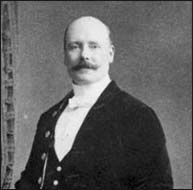
Charles Dawson
British archaeologist
6
APPEARANCES
4
PODCASTS
Nov 1, 2026

Mike HoskingHOST
Is the serious injury aspect of it, of which they are still concerned, the simple truth that cars are made better, so where you might once have died, you don't, you just get seriously injured now?

Charles DawsonGUEST
So we have 6,500 Guardian cameras out there monitoring drivers, mostly in commercial fleets, and those cameras can detect when someone falls asleep.
Charles DawsonGUEST
So we pick up 84 people every day that have fallen asleep driving on the steering wheel and the system prevents that accident from happening in that case potentially.
Mike HoskingHOST
Will driverless solve it? One, do you believe in driverless? Two, if we get driverless, will it solve it?
Charles DawsonGUEST
I'm not sure if you've driven through Mount Messenger in the last little while, but she's quite an interesting bit of road.
Charles DawsonGUEST
In some cases, we find the technology that's having the cars drive themselves is actually taking away some more of that responsibility of the drivers.

Mike HoskingHOST
Is the serious injury aspect of it, of which they are still concerned, the simple truth that cars are made better, so where you might once have died, you don't, you just get seriously injured now?
Charles DawsonGUEST
So we have 6,500 Guardian cameras out there monitoring drivers, mostly in commercial fleets, and those cameras can detect when someone falls asleep.
Charles DawsonGUEST
So we pick up 84 people every day that have fallen asleep driving on the steering wheel, and the system prevents that accident from happening in that case, potentially.
Mike HoskingHOST
Will driverless solve it? One, do you believe in driverless? Two, if we get driverless, will it solve it?
Charles DawsonGUEST
I'm not sure if you've driven through Mount Messenger in the last little while, but she's quite an interesting bit of road.
Charles DawsonGUEST
In some cases, we find the technology that's having the cars drive themselves is actually taking away some more of that responsibility of the drivers.


Nick LeggettPANELIST
And a touchscreen, because you have to look at it and focus on it, is going to do that for longer, isn't it?
Charles DawsonGUEST
And I think what we see very often when people are sort of scrolling through those menus is they'll glance back up at the road, back down at the screen, back up at the road, and they get that sort of, we call it attention sharing.
Charles DawsonGUEST
So when you're sharing your attention between the road and the screen itself, And one of the things that we know with the eyes and the brain and how we see is it's not a video camera.
Charles DawsonGUEST
So, you know, what that means is I guess if you take your nose on your face, as an example, your nose is always there.
Charles DawsonGUEST
Your brain becomes kind of used to your nose being there and decides it doesn't need to really see that.

Wallace ChapmanHOST
So this person is putting the case forward for, you know, the modern stuff, the modern interventions there, Charles.


Charles DawsonGUEST
So the Gen 3 system, which is what you're talking about, was basically made up of two components.
Charles DawsonGUEST
You had a polyethylene fiber, and then you had some sort of fill system, whether it be sand, rubber, cork, sawdust, wood chips.
Charles DawsonGUEST
What we've done is taken that spacing where the infill took and we filled it with fiber.
Charles DawsonGUEST
Now, what does that do? It isolates points of what we call recoil and contact release, but more importantly, it gives us consistency because the infill can't move.
4:29

Yeah, and then apparently worse also in August and September, which I think probably makes sense because we're getting in deep into the winter
Charles DawsonGUEST
And I mean, there's also an interesting thing around daylight savings coming in in that sort of September period.
Charles DawsonGUEST
Daylight savings is… One of the most amazing experiments that affect billions of people around the world.
5:08
But what do we do about this problem that's happening between seven and eight? Yeah.

1:54
Yeah, and then it's apparently worse also in August and September, which I think probably makes sense because we're getting in deep into the winter months there,
Charles DawsonGUEST
And, I mean, there's also an interesting thing around daylight savings coming in in that sort of September period.
Charles DawsonGUEST
Daylight savings is one of the most amazing experiments that affect billions of people around the world, and there's great stats around it.
2:33
But what do we do about this problem that's happening between seven and eight?