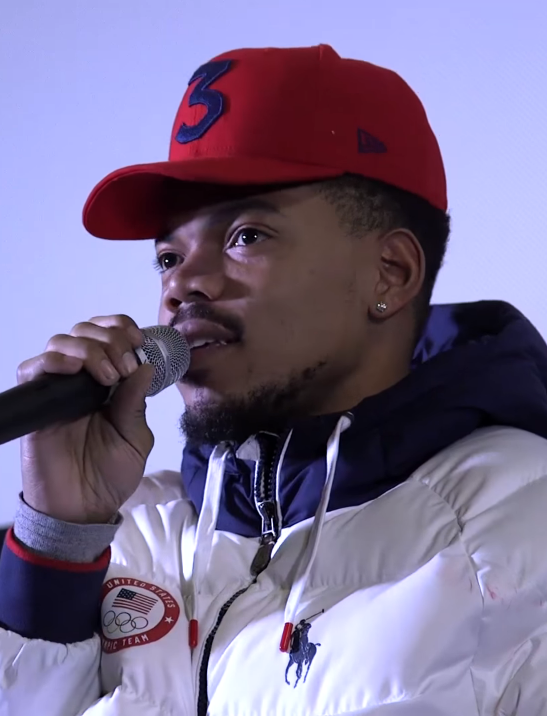
Chance the Rapper
American rapper
13
APPEARANCES
9
PODCASTS
Nov 1, 2026


Chance the RapperGUEST
I thought you'd never grow up I thought you'd never window closed Wendy got old.


Chance the RapperGUEST
There's always like certain things that are just, um, I guess paramount to...
Chance the RapperGUEST
Like I'm always, whether it's on Acid Rap or The Big Day, both of them I'm talking about family, I'm talking about my relationship with God, I'm talking about growing pains, I'm talking about Chicago.
Chance the RapperGUEST
Like, I think no matter what, I'm kinda talking about the same things, I just have different perspectives on them and different tools or resources to, uh, get those thoughts off, um, at different points in my life.
37 MINS LATER
Chance the RapperGUEST
But it had like J. Cole on it and Big Sean and Erykah Badu and like all these artists that, to your point, found me off of A$AP Rap that was down there.
Chance the RapperGUEST
But they thought it was going to be my first solo project, like official album.
Chance the RapperGUEST
So I feel like some people fell away a little bit but like you know rightfully so because maybe they just thought it was something different but then when it was time for me to make my new project I kind of had to go to other people and you know and not just those favors yeah I use those favors you know to a certain extent so I had to but but a lot of those people I also met during that time so like I did Confident with Justin Bieber.

Chance the RapperGUEST
And I think this is like a opportunity for us to check in with each other and just like, you know, reach back to this nostalgic moment, but also, you know, sing about all the changes.
Chance the RapperGUEST
There's so much music and, and so many, you know, songs that I've created that, that speak to this, or songs that were released around the time of Coloring Book that speak to it.
Chance the RapperGUEST
And so we've just been like really carefully putting together a set that like speaks to all the major themes of the project.
Chance the RapperGUEST
I wrote, I wrote it actually, yeah, I wrote it three years before Coloring Book came out.
Chance the RapperGUEST
I wrote it right around the time I released Acid Rap when I was living in Atlanta.


Tavis SmileyHOST
But as you've been in rehearsals for the tour, I assume, do the lyrics hit you differently now than they did when you wrote them a decade ago?
Chance the RapperGUEST
I mean, a lot of it is like, I think when I'm rapping on stage, that's my best talent, right? I'm a really, really good writer, and I'm an even better performer.
Chance the RapperGUEST
Recording music is not really my strong suit, but those two steps before and after it, writing it and actually getting on stage and doing it, those are my best.
Chance the RapperGUEST
And when I'm on stage, I kind of feel like... an actor in a movie that he wrote.
Chance the RapperGUEST
I get to perform it and speak it with all the fervor and action that I want to put into it, or dynamically make it softer.
20 MINS LATER

Chance the RapperGUEST
I feel like it's important to have spaces where people could just share information like that.
Chance the RapperGUEST
Uh, every, every time there's, like, a advancement in thought in any of the artistic spaces or just spaces where we share stuff, like business is slowly catching up to it, or capitalism, however you wanna look at it.
Chance the RapperGUEST
There's always, like, a catch-up thing where they're trying to figure out ways to monetize this s- shared expression that's going on, and I feel like at one point, you know, not to say that it was healthy for artists, but like even Napster, like, got a lot of people on.
30 MINS LATER

Angela YeeHOST
But Coloring Book was another level as far as the impact, too, that it had on the industry.
Chance the RapperGUEST
It changed a lot of things and it made, I think, a lot of people have more belief in themselves as, like, individuals or individuals with teams, as opposed to thinking of it how, like, you gotta get signed and you gotta do it this way and you gotta do it that way.
Chance the RapperGUEST
And I feel like it's a beautiful thing that it was able to, to come together the way that it did, 'cause it was really a lot of, like, high-level artists.
Chance the RapperGUEST
Like, we just had the studio [laughs] running 24 hours and everybody sleeping on mattresses.
Chance the RapperGUEST
And my kid's mother and Kensli as a baby were, like, in the studio sleeping basically on the floor to be with me as I finished this project, and, like, that was, like, one of the most, like ...


Chance the RapperGUEST
You know, I had put out, you know, projects that were streaming only before that.
Chance the RapperGUEST
I'm glad for the journey that it took because I got so much knowledge and I think also like my personal life changed over and over and over and over again.
Chance the RapperGUEST
I'll have a song that I'm working on and then I feel like it's done and then something happens and I'll be like, man, I knew I was supposed to talk about that.
Chance the RapperGUEST
And I'll go back and like add something or change something or pull something.
7 MINS LATER

Chance the RapperGUEST
This is where Fred Hampton is, is organizing the Black Panthers, where Stokely Carmichael and, and all these people are, are gathering and having ...
Chance the RapperGUEST
And then Harold Washington, first Black mayor of Chicago, and, like, I think the first ...
Chance the RapperGUEST
It might have been the first Black mayor of, of a major, of a metropolitan city.
44 MINS LATER

Adam FriedlandHOST
Future's like a-Was it, do you think that people are so wrapped up in, in your shit because they thought of you as like, he's the good, happy-go-go-lucky guy? I think-


Elmo LovanoHOST
I wonder what your life would be like if you didn't have the humbling tour in Europe in that moment and it was just all hype.
Chance the RapperGUEST
That's really the job of music post creating it, is performing it and presenting it to new crowds.
Chance the RapperGUEST
I used to go to this after school program at the library, it was like an open mic for poetry kids.
Chance the RapperGUEST
Vic Mensa was in the program, No Name, Saba, Mick Jenkins, Lucky, John Doe, a bunch of artists that made it big out of Chicago that are my age group.
Chance the RapperGUEST
We all were in the same program and there was this open mic every Thursday called Lyricist Loft.
38 MINS LATER


Chance the RapperGUEST
Uh, it's a beautiful, beautiful journey through these past six years, um, my travels to Accra, Ghana and West Africa, um, learning so much about my history, not, uh, you know, just here, but globally, all of the communities that we're connected to.
Chance the RapperGUEST
And it really shines through on the music, and I, uh, I named it Starline after Marcus Garvey's Black Star Line, which was a Black, uh, shipping and trading company started in the '20s that was owned and operated by Black folks in the US.