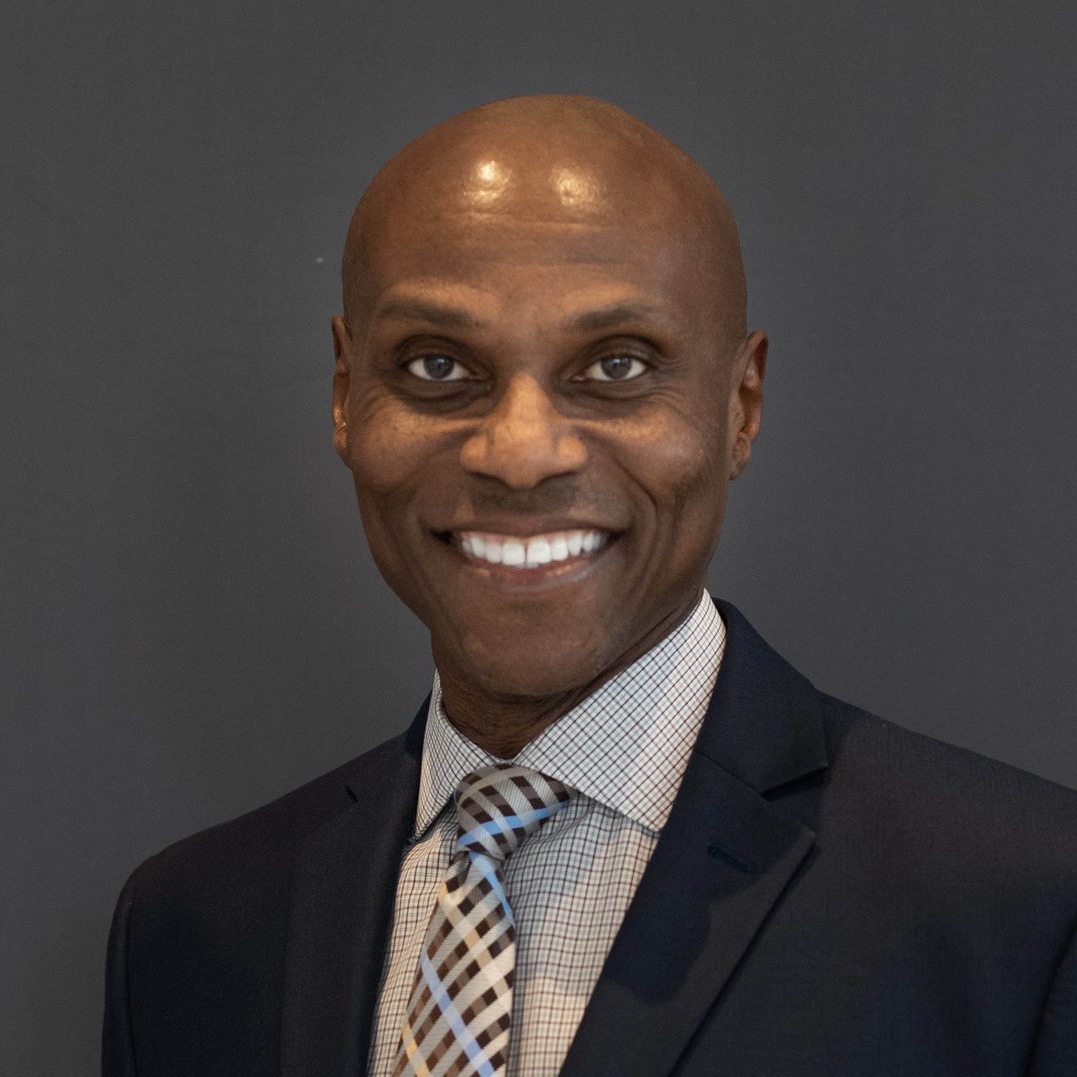
Cedric Layton
Cedric Leighton is a CNN military analyst, retired US Air Force Colonel, and former NSA Deputy Director, who leads the Cedric Leighton Associates strategic-risk consultancy.
11
APPEARANCES
6
PODCASTS
Oct 12, 2026


Wolf BlitzerHOST
Colonel Layton, if the U.S. were to join Saudi attacks on the Houthis in Yemen, what impact would that likely have?

Cedric LaytonGUEST
They themselves would be subject to probably more bombing attacks like we've seen just recently where the Saudis attacked the Sana'a airport in response to the attack on the Riyadh airport.
Cedric LaytonGUEST
So that type of activity would continue and there would be more attacks against their allies.
Cedric LaytonGUEST
headquarters against uh you know their missile emplacements and things of that nature i think an effort would also be made to go after any uh huti positions on param island which is near the or in the babal mendeb strait uh so that would be one other area and the possibility also exists that both the us and saudi arabia would try to alleviate pressure on the Yemeni city of Taiz, which is where the Houthis are trying to basically mount an offensive and capture that city.
Cedric LaytonGUEST
That would be the third largest city in Yemen, and that would open up the way to Aden, which is the capital of the officially recognized or internationally recognized government.
Unknown podcast
Trump Triumphal arch will be used for drones, snipers & ammo
Sep 29 · 9m
speaker_3HOST
How does that make sense from a strategic standpoint?
Cedric LaytonGUEST
When you look at any kind of defensive position or any reason for this, drones are in places, protective drones would be in places where they can actually do some good.
Cedric LaytonGUEST
You would be looking at them interfering with the flight patterns, for example, at Reagan National Airport.
Cedric LaytonGUEST
You would certainly be wondering where these snipers are supposed to do their work and for what purpose they would be doing their work.
Cedric LaytonGUEST
So there is no military reason that I understand for these things to be on any building of this type or any structure of this type.
speaker_2HOST
Is that real, as you see it, or is that just trying to make these controversial projects more palatable? Does it seem real?

Pamela BrownHOST
Colonel Layton, I just want to first get your thoughts on all of this, just the context around these attempted suicides and how you view this report.
Cedric LaytonGUEST
Yeah, Pamela, I think it's one of the most difficult things that any commanders have to deal with because what you're talking about here is the welfare of the sailors on board the Abraham Lincoln, but it really pervades throughout all military services.
Cedric LaytonGUEST
And one of the key things that commanders have to look at and also the enlisted leadership has to look at is how their troops are doing at any given moment in time.
Cedric LaytonGUEST
And when there are extra stressors like deployments that seem to be without end, it really makes a big difference from a mental health perspective.
Cedric LaytonGUEST
Even really solidly performing troops have a tough time when things that were once certain now all of a sudden become uncertain.
Cedric LaytonGUEST
And that, I think, is the most difficult thing that the sailors on the Lincoln had to deal with.
Cedric LaytonGUEST
And I think that's true for anyone who deploys anywhere, and especially if those deployments are extended with inadequate forewarning.
Pamela BrownHOST
Colonel, did the Pentagon have much alternative to leaving the Lincoln Strike Group in place for so long?

Cedric LaytonGUEST
One of the reasons that they did this is because there's a preponderance of American military forces in places like Kuwait, Jordan, and Bahrain.
Cedric LaytonGUEST
There are also some in the UAE, but there are some relationships that the Iranians have with the UAE and with Qatar, which also has a major U.S. military base.
Cedric LaytonGUEST
The Iranians have decided at the moment not to attack those two areas because of those relationships and the fact that Qatar and the UAE are also working on mediation with Iran.

Phil MattinglyHOST
What does that tell us about the strategy, the shifting strategy, whatever things are at this point?
Wolf BlitzerHOST
In your opinion, will Iran ever willingly cede that control over the Strait of Hormuz?
Cedric LaytonGUEST
It's going to be really difficult, Wolf, for the Iranians to cede control because what they've discovered through this war, this conflict that they've had with the US and with Israel, is that once they get that leverage over the Strait of Hormuz, it's even more profound than any other leverage that they've had in the past they have done things in the persian gulf going all the way back to the 1980s really to the beginning of the islamic republic but none of them have been as effective in terms of actually shutting down or potentially shutting down the flow of oil and the flow of liquefied natural gas from the Persian Gulf.
Cedric LaytonGUEST
And so they realize that they're in a basically a catbird seat when it comes to influencing the global global economy.
Wolf BlitzerHOST
What would those discussions be like before deciding to actually launch a major attack like this?
Cedric LaytonGUEST
yeah it you know it depends of course on the personal chemistry between the various individuals involved but the way it it seems the way president trump was describing things was that he didn't necessarily get permission from the europeans european nato members to do anything like this But they realize that this is a kind of a fait accompli.
Cedric LaytonGUEST
So they're basically waiting to potentially join things like mine sweeping operations in the Strait of Hormuz and perhaps other parts of the Persian Gulf.

Karim SadjadpourGUEST
But when he said that we're going to continue with the mission, to complete the mission, it's still not clear what that mission is.
Cedric LaytonGUEST
Look, I think Trump is on course to get a thank you card from the Ayatollahs this year.
Cedric LaytonGUEST
But the three things Americans are looking for from this president – It was three strikes and you're out.
Cedric LaytonGUEST
First of all, regime change, which is something that has been on the table, he just fudges it and says, well, we have it because we went from an old Ayatollah to a young Ayatollah with the same name.

Cedric LaytonGUEST
So these are two tanker aircraft flying together and one possibly refueling the other for further missions.
Cedric LaytonGUEST
So this is basically a gas tank, a flying gas tank that is used to refuel all the aircraft that are engaged in the operations in Iran.
Cedric LaytonGUEST
So it could not only be US aircraft that they are helping to refuel, but also allied aircraft.

Kaitlan CollinsHOST
Does this kind of aircraft have the ejection seats? Does it have parachutes, anything like that that we know of? So

Wolf BlitzerHOST
What kind of role will Europe play in shielding Ukraine from future Russian attacks?
Cedric LaytonGUEST
So it's going to be an indispensable role, especially if you look at America's national security strategy that the Pentagon just unveiled this past week.
Cedric LaytonGUEST
So the key thing here, Wolf, is that that strategy is basically talking about a retrenchment of the U.S. from Europe.
Cedric LaytonGUEST
If that comes to pass the way they talk about it in that strategy, then the Europeans are going to have to step up and they're going to have to be the ones that are the guarantors of Ukrainian security.
Cedric LaytonGUEST
And that might mean that they have to do some things like include Ukraine in an air defense identification zone, which means basically that they would be responsible for the air defense of Ukraine, or at least a portion of Ukraine.
Wolf BlitzerHOST
What kind of pressure is President Zelensky feeling from the Trump administration right now?
Cedric LaytonGUEST
And part of the problem is that the Israelis have actually, in essence, destroyed at least 70% of the actual structures and then made basically 90% of them unusable.
Cedric LaytonGUEST
And that is something where they have definitely achieved what they can achieve militarily.
Cedric LaytonGUEST
But what they haven't done is they haven't really determined what their end state is.
Cedric LaytonGUEST
And that's a real problem because they do say they want to destroy Hamas as being part of their end state.
Cedric LaytonGUEST
But that's an unrealistic end state because once you get into the psychology of a particular rival or a particular adversary, You have to understand where they're coming from.


Audie CornishHOST
But are we reliant on that kind of imagery when you can't get there physically?
Cedric LaytonGUEST
So that can be a problem actually because traditionally BDA has been done using imagery with some of the other intelligence disciplines like signals intelligence being kind of in a supporting role.
Cedric LaytonGUEST
In this particular case, we need basically everything in order to get at least the hope of an accurate assessment.
Cedric LaytonGUEST
So imagery will be primary, but you also need imagery from underground if we can get it.
Cedric LaytonGUEST
So that would mean potentially using human assets to go down there take the pictures and extract those pictures and bring them out so that they can be assessed at the Pentagon and, of course, in Israel.
Cedric LaytonGUEST
You have to have multi-source intelligence that would also include human intelligence, as the Iranians talk about this among themselves.
Audie CornishHOST
Did you actually accomplish what you set out to do? And if you didn't, what action do you have to take to get there?
Cedric LaytonGUEST
So the most at-risk pieces are going to be the aircraft carriers in the... probably in the Eastern Mediterranean.
Cedric LaytonGUEST
The B-2 bombers, which would be the most likely means of conveying the special bunker-buster bomb toward the facilities in Iran, would be pretty safe based on what we've seen the Israelis do when it comes to destroying the air defense capability of the Iranians.
Cedric LaytonGUEST
So we'd basically be riding on top of that to take care of that mission if we were to do that.
28 MINS LATER
Audie CornishHOST
So are we really questioning what we've got between us and what the U.S. is hearing from Israel?
Cedric LaytonGUEST
So one of the big differences, Adi, between the Iraq situation and the Iran situation is we have been focusing on Iran for a very long time.