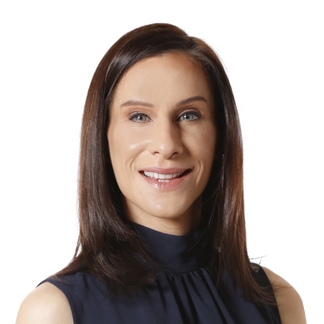
Catriona Ryan
Consultant Dermatologist and Co-Founder of the Institute of Dermatologists in Dublin; Clinical Professor at UCD
8
APPEARANCES
4
PODCASTS
Aug 14, 2026


Katie HannonHOST
Can we maybe just start with the basics? What exactly is psoriasis? What does it look like? And as you say there, how common is it?

Caitriona RyanGUEST
Um, what it usually looks like is red, scaly patches, typically in the scalp, elbows, knees, but it can be anywhere.
Caitriona RyanGUEST
You know, some patients will have up to 90% of their body surface affected by it.
5 MINS LATER
Caitriona RyanGUEST
There's never a time like this type of time in Ireland that for people getting burnt, people get burnt in Ireland far more than they ever get burnt on their holidays.
Caitriona RyanGUEST
But yeah, I think that on sunscreen, if we could address this, it would be a huge win for us.

Jonathan HealyHOST
But is there a historic thing about it being a luxury item that, you know, you wear sunscreen because you don't have to, you're choosing it?

Catriona RyanGUEST
It's just because of what you put out in your, you know, what you emit through your sweat.
Catriona RyanGUEST
So if someone sweats a lot or if they're exercising, so during or after exercise, they're more able to detect you.
Catriona RyanGUEST
Now, they do see more highly visible colours too, so wearing paler colours is helpful.
Catriona RyanGUEST
There's lots of little things that we, that they, ways that they can find you.

Anton SavageHOST
What about natural remedies? Is there anything that you can do that isn't DEET that has any impact other than staying off the booze?

Catriona RyanGUEST
Um, I actually did my training first in Ireland and then went to, um, Dallas, Texas.
Catriona RyanGUEST
I was doing translational research looking at systemic inflammation, and decided to stay, so retrained over there.
Catriona RyanGUEST
Um, you know, in private practice, people work together all under one roof, so you have medical c- um, dermatology, cosmetic dermatology, surgical dermatology, and then everything skin care.
Caitriona RyanGUEST
So these are called forever chemicals and they're types of chemicals that you see in makeup products to make them more durable, often to make things water resistant or long lasting, but they don't break down easily and they can persist in the environment and in the body.
Caitriona RyanGUEST
The reason there's a lot of concern about these is this group of chemicals has been associated with increased cancer risk in humans in the past, especially things like kidney cancer, testicular cancer.
Caitriona RyanGUEST
It can affect your endocrine system, which is your hormone system and your immune system.
Caitriona RyanGUEST
But that's typically, Anton, when these chemicals were in contaminated water.
Caitriona RyanGUEST
So when people were consuming them for a long time, over time, and contributed to cancer risk.
Caitriona RyanGUEST
So we don't actually know the risk when they're in makeup, you know, that's just going onto the skin.
Anton SavageHOST
Yeah, it seems a fairly logical inference that if there's evidence that ingestion is a bad thing, smearing them on a daily basis on your mucous membranes and possibly ingesting them through either eyeballs or mouth, there has to be some impact, no?


Andrea GilliganHOST
Do we understand what it is? Like do we as patients or as members of the public, do we know enough about skin cancer?
Catriona RyanGUEST
I think one of the things we've gotten better at as a country is recognising the more dangerous type of skin cancer, which is called melanoma.
Catriona RyanGUEST
So I think people know at this point, and hopefully they know, to look out for changes in their moles.
Catriona RyanGUEST
We call it the ABCDE of melanoma and a is for asymmetry b is for borders c is for color so if there's different shades of color within the same mole d is for diameter if you have any mold that's bigger than six millimeters especially a new new mole just get a check by your gp and e is evolving so any changes So we have gotten much better, our patients have gotten much better at catching these earlier.

Caitriona RyanGUEST
First, you know, what's happening is completely illegal and who is doing it and how do we stop them? And then the second issue is, you know, why are these 16-year-olds wanting to do it? We have huge issues with social media pressures and You know, this sort of viral culture of women trying to, or young girls actually, trying to look like this.
Andrea GilliganHOST
Do young, do kids this age, do they need to find ways to take care of themselves and to take care of their skin like this, Katrina?
Catriona RyanGUEST
And this isn't, none of this problem, I agree with everyone who's just spoken, the problem isn't skincare here, it's the beauty narrative.
Catriona RyanGUEST
It is, you know, these masks are being aimed at children from three and above.
Catriona RyanGUEST
Like absolutely terrifying that that's even brought in this focus on beauty and beauty focus messaging at such a formative age.
Catriona RyanGUEST
Like such young kids have such long term psychological impact, you know, self-esteem, body image satisfaction, all of this sort of thing.
Andrea GilliganHOST
And what damage could be caused or what could happen for young children? Like if you say a three year old, going around today with a face mask on their skin.