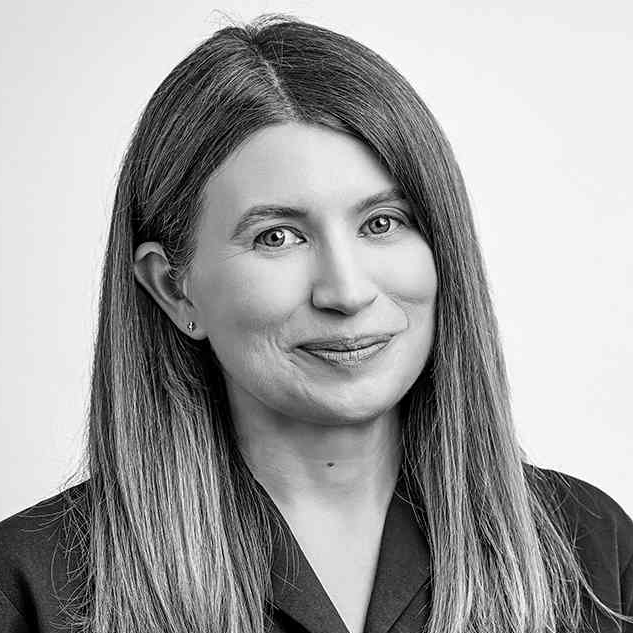
Catherine Dunn
Katherine Dunn, London-based journalist and author of "Little Blue Dot: How GPS Shaped the Modern World," covering climate, energy, and business.
6
APPEARANCES
6
PODCASTS
Sep 1, 2026


Catherine DunnGUEST
One of the people in the book who worked on it in the 80s, he said, the thing is, you really need to understand this is a computer in the space talking to a computer in your phone or wherever talking to a computer on the ground stations.
Catherine DunnGUEST
And it's pretty incredible because this concept was developed and honed in the early 70s before we had personal computers.
14 MINS LATER
32:25
What are some of the other systems, industries, places where GPS has become central for how we operate?

Mike CarruthersHOST
I, you could probably go for hours on this topic, but, but just in a nutshell, what is the story, the history of GPS?
Catherine DunnGUEST
GPS?The GPS system as we know it now is, is from the early 1970s and it essentially emerged out of the end of the Vietnam War as a tool to bomb more precisely.
Catherine DunnGUEST
Um, this had been a real issue in the Vietnam War, um, this pr- this lack of ability to really precision bomb and there were a lot of different competing systems within the US military.
Catherine DunnGUEST
Um, you know, systems that could do one thing better or another thing better.
Catherine DunnGUEST
Um, there had been a predating system that came out of the late '50s and so this was sort of a refinement of a lot of ideas that had been building and building and building.
Catherine DunnGUEST
Um, but yeah, it was essentially a, a tool to make bombing more precise and it needed to work in three dimensions because you were really thinking at that time about, you know, fighter jets or missiles or things where you were working in three dimensions.
Catherine DunnGUEST
So you have the system and it's sort of in the bowels of the Pentagon, it's designed, they're testing it, they're trying trialing it.


Leslie McClurgHOST
What was going on during Desert Storm that they went, maybe it's not so great that civilians have a worse option?
Catherine DunnGUEST
Yeah, I think they'd already realized how this dependence, this civilian dependence had just sprouted, right? And I think it had been the case from very early on in the GPS project.
Catherine DunnGUEST
It had always been open to civilians, but you really had to know what you were looking for.
Catherine DunnGUEST
And so it was adopted very early on by mapmakers, by surveyors, then by academics.
Catherine DunnGUEST
So that's why all of a sudden you have, you know, in the early 90s, you have freeways in Los Angeles.
Leslie McClurgHOST
How did it used to work? So before, how did institutions, you know, before we had GPS, what kinds of technology, how did the world function without GPS? It's like, cast your mind back.


Catherine DunnGUEST
So many people were like, oh, you're writing a book about the car sat-nav or something.
Catherine DunnGUEST
I said, well, it might be quite, it could be quite a good book, but it would be quite a short book.
Catherine DunnGUEST
Not that much of the book is actually about this consumer experience with GPS.
Catherine DunnGUEST
And even though it's so, so, so transformative to our daily experience, I mean, I've been to Oxford Circus a million times from my house.
8 MINS LATER

Catherine DunnGUEST
I used to work for Wall Street Journal and the Dow Jones, and then I was working for S&P Global.
Catherine DunnGUEST
And I was just sitting at my desk one day, and a colleague sent me a story about a weird incident in the Black Sea.
Catherine DunnGUEST
And all these ships were turning up at this Russian port, Novorossiysk, which is very close to Crimea.

Kai RyssdalHOST
Talk about where we are with those risks and how intertwined it is with the global economy and with virtually everything we do.

38:59

These are all similar operating systems to GPS, but how- how do they compare to GPS? How are they different?
Catherine DunnGUEST
It's from 2000 onwards, so they think it can be used for multipurpose, uh, for communication.
Catherine DunnGUEST
Probably all the things that it can be used for, uh, the Chinese government will definitely not be saying.
Catherine DunnGUEST
Um, the US GPS Advisory Board said, you know, it's a tool of- of hard and soft power for the Chinese government.
Catherine DunnGUEST
So there will be some variations, but, you know, when you look at GLONASS, it's kind of, it's very close comparison to GPS.