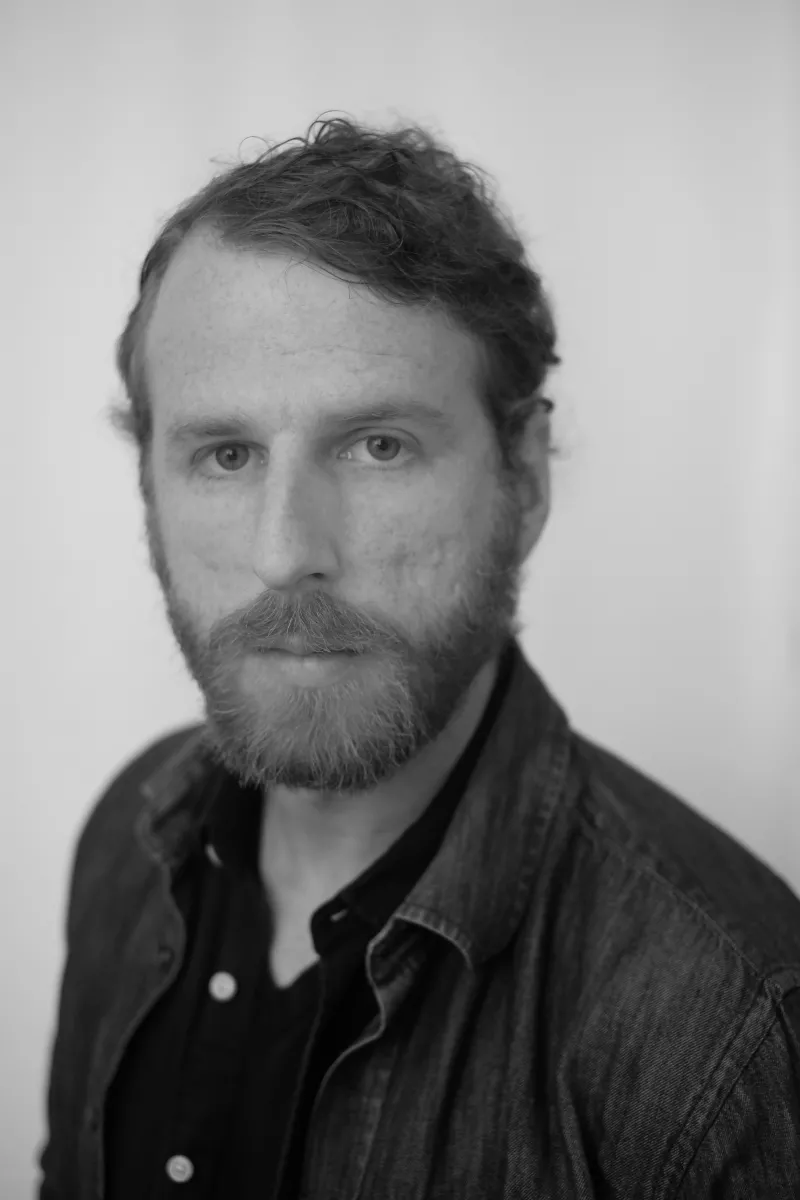
Casey Carter
Film director
8
APPEARANCES
8
PODCASTS
Sep 14, 2026


Mike WhiteHOST
Where did you hear the story of To Use a Mountain? How did that capture your interest?

Casey CarterGUEST
When I was in graduate school for architecture, I was doing some research on Yucca Mountain, which is the site in the film that's ultimately selected and then abandoned.
Casey CarterGUEST
And if you do any digging into this issue of nuclear waste, you'll immediately find plenty of writing about Yucca Mountain.
Casey CarterGUEST
But getting to the deeper, like, a backstory of the process and the other places that were also considered, I didn't have any awareness of that.
Casey CarterGUEST
And, and in the process of doing so, I came across, first, this, this big report that was produced by the Department of Energy on Yucca Mountain, but then also other reports written in exactly the same fashion on the other cand- candidate sites.
11 MINS LATER
Mike WhiteHOST
Were you editing this while you were making it, or did you save everything to the end?


Casey CarterGUEST
The first time, he taught me how to spell with him, because I held the iPad up, and I was gonna help him do it independently or try to, you know? He immediately grabbed my hand with his and pointed his finger like he was grounding himself and typed.
Casey CarterGUEST
This is great," right? So we did yes and no questions for a little bit, and then I was like, "We're gonna see how many words you know.
Casey CarterGUEST
Like, how many words can you spell?" So I, like, grabbed this thousand-word list, and we did a few words each day, and he spelled every single word correctly And I was like, "Okay, well, you know how to spell." And it was really strange, 'cause at the school everybody's like, "How does he know how to spell?" I'm like, "I don't know, but he is, so we're just gonna go with it." And after he had a way to truly express himself, I just saw, like, a change in him.

SteveHOST
Casey, where did the film come from? Why were you so passionate to tell this story?
Casey CarterGUEST
In my hometown, Kingsport, Tennessee, Northeast Tennessee, which is not far from Oak Ridge National Laboratory, which was one of the kind of three primary original nuclear laboratories established during the Manhattan Project.
Casey CarterGUEST
But growing up, you know, I didn't have so much awareness of this, but it's sort of in my bones, just this nuclear history and Appalachian landscape and history.
Casey CarterGUEST
But the real seed for the idea of the film came many years later when I was doing some research about Yucca Mountain, which was the site that was ultimately selected for this potential nuclear waste repository in Southern Nevada.
Casey CarterGUEST
And I came across this series of documents that was produced by the Department of Energy on the other candidate sites.
9 MINS LATER
SteveHOST
um i mean this is this this is a film that is so utterly heartbreaking and in so many ways um What is it that you hope audiences most take away from To Use a Mountain?

Lisa D. SmithHOST
And so do you think with all of that, that this is going to get a little crazy even further than it has been?
Casey CarterGUEST
And this is, this, you know, the process and the dynamic and the themes that we see unfolding throughout the film really resonate with the present moment at the battle for the data centers.
Casey CarterGUEST
But there's also a very direct material connection, which is that there's There's a self-proclaimed nuclear renaissance underway in the United States driven by a whole new set of technologies.
Casey CarterGUEST
And the industry and the Department of Energy are really using this kind of data center development craze and the energy required to power these things as a justification for resurgence and renewal in the U.S. nuclear industry.

Janice MaloneHOST
So what drew you to this to create a documentary about that? How did you hear about all this?
Casey CarterGUEST
I was doing some research on Yucca Mountain, which is the site that was ultimately selected in southern Nevada on the edge of the Nevada Test Site where the US tested many, many nuclear weapons over the course of several decades.
Casey CarterGUEST
If anyone knows anything about this issue of nuclear waste storage, then they probably have heard of Yucca Mountain, but they probably have not heard about the other candidate sites.
Casey CarterGUEST
And as I was researching Yucca Mountain, I came across all of these reports that the Department of Energy had produced on the other candidate sites as well.
Casey CarterGUEST
And, uh, in, in each of those 400, 500 page, you know, evaluation documents, on maybe page three, there's the same map, and it's the map of the United States with the nine candidate sites spread out across the six states I mentioned as little dots, and it says, "Candidates for the first repository." And that map just kind of was, uh, the, the, the seed for the film.
Janice MaloneHOST
And before we wrap this up, uh, what was it like talking to some of the people, uh, that this affected, who lived in this region, and getting them to trust you as a filmmaker?


Mike KasparHOST
Tell me a little bit about what put you on to doing this particular wonderful documentary film called To Use a Mountain.
Casey CarterGUEST
Yeah, I grew up in northeast Tennessee, not too far from Oak Ridge National Laboratory, which is one of the original nuclear laboratories from the Manhattan Project days, and it's still a national laboratory currently, and they do much more than nuclear science there.
Casey CarterGUEST
But there, there's still, it's a big part of the ongoing, you know, US nuclear program.
Casey CarterGUEST
So that was kind of in my backyard growing up in, in, uh, east Tennessee, but I didn't even have such an awareness of it then.
Casey CarterGUEST
Later, many, many years later when I was in grad school, I was doing some research on Yucca Mountain, um, which of course was the site that was ultimately selected, you see in the film, for this geologic repository in southern Nevada.
Casey CarterGUEST
In the course of learning about Yucca Mountain and researching documents, uh, on Yucca Mountain, I came across these reports produced by the Department of Energy on the other candidate sites in addition to Yucca Mountain, which were, you know, part of this kind of set of nine sites in, in the early 1980s that the government...
6 MINS LATER

Casey CarterGUEST
So when- the first time, he taught me how to spell with him, because I held the iPad up, and I was gonna help him do it independently or try to, you know? He immediately grabbed my hand with his and pointed his finger like he was grounding himself, and typed.
Casey CarterGUEST
This is great," right? So we did yes and no questions for a little bit, and then I was like, "We're gonna see how many words you know.
Casey CarterGUEST
Like, how many words can you spell?" So I, like, grabbed this thousand-word list, and we did a few words each day, and he spelled every single word correctly.
Casey CarterGUEST
And I was like, "Okay, well, you know how to spell." And it was really strange, 'cause at the school everybody's like, "How does he know how to spell?" I'm like, "I don't know, but he is, so we're just gonna go with it." And after he had a way to truly express himself, I just saw, like- ...