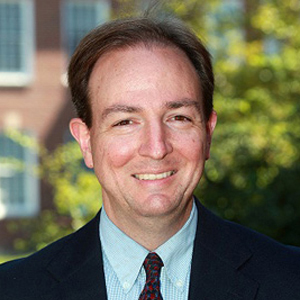
Carson Holloway
Author
8
APPEARANCES
7
PODCASTS
Sep 30, 2026


Tony BartlHOST
Uh, so yeah, they're clearly, uh, engaging with them, but engaging with this idea, engaging with the problem, but where, where we're left with, um, you know, is something that we need your help with, Carson, to see the light.

Carson HollowayGUEST
Well, do you want me to say a little bit about the, just like summarize the argument or something? Yeah.
Carson HollowayGUEST
Yeah, so I say in the chapter in this book that the movie looks nihilistic at first, both because it seems to be about the defeat of the good and the triumph of the evil, because Yeah, Llewellyn Moss is dead at the end, and then Ed Tom Bell is pretty much defeated.
Carson HollowayGUEST
And Anton Chigurh is the guy who's left standing, so to speak, walks away from that auto accident at the end.
Carson HollowayGUEST
And then I also say, you know, it seems like it kind of, the movie maybe appears to cheat a little bit to kind of shuffle the deck in his favor, which is what I first thought made it seem like an asset.
Carson HollowayGUEST
But then I think there's more to it because, well, I think Ed Tom Bell is the central character to me.
5 MINS LATER

Carson HollowayGUEST
And let me explain, w- using them, what I was hinting at just a moment ago.
Carson HollowayGUEST
These are Americans of the early republic who are great jurists and great legal commentators, wrote big, massive, learned treatises on American law.
11 MINS LATER

Scott BertramHOST
Overturning New York Times v. Sullivan, does that have the ancillary benefit of perhaps, uh, improving media's standing Am- among Americans?

Carson HollowayGUEST
The New York Times versus Sullivan is considered by practically everybody to be one of the great landmark First Amendment freedom of the press rulings of modern times.
Carson HollowayGUEST
Justice William Brennan, one of the very consequential justices, a liberal justice, wrote the opinion for the court in that case.
Carson HollowayGUEST
And the opinion is important or the ruling is important because it's it changed the libel standards that the country has for public officials and then later the court extended the new standards to public figures as well as public officials libel of course is when people sue for defamation for the publication of false information that damages their character And the court decided in New York Times v. Sullivan that libel cases involving public officials, and then as they say later on, public figures, raise a First Amendment problem.
Carson HollowayGUEST
They create a problem in relation to the freedom of the press that the First Amendment is supposed to protect.
10 MINS LATER

Carson HollowayGUEST
The New York Times versus Sullivan is considered by practically everybody to be one of the great landmark First Amendment freedom of the press rulings of modern times.
Carson HollowayGUEST
Justice William Brennan, one of the very consequential justices, a liberal justice, wrote the opinion for the court in that case.
Carson HollowayGUEST
And the opinion is important or the ruling is important because it's it changed the libel standards that the country has for public officials and then later the court extended the new standards to public figures as well as public officials libel of course is when people sue for defamation for the publication of false information that damages their character And the court decided in New York Times v. Sullivan that libel cases involving public officials, and then as they say later on, public figures, raise a First Amendment problem.
Carson HollowayGUEST
They create a problem in relation to the freedom of the press that the First Amendment is supposed to protect.
10 MINS LATER

Carson HollowayGUEST
I think a lot of the press these days think that they have privileges or rights that they don't really have under the First Amendment.
Carson HollowayGUEST
And they've been encouraged to think this way by the courts and by many, I think, in the legal profession who want to defend these privileges.
Carson HollowayGUEST
One that I'm really interested in, I've written a book about, is this kind of privilege to get away with wrecking the characters of public figures and public officials or wrecking their reputations because the New York Times versus Sullivan standard is so protective of the press that they can, in effect, get away with libeling people as long as the victim can't prove that they did it deliberately.
Carson HollowayGUEST
That's a different way than we treat other professions when it comes to negligent harm to people that they commit in the act of doing their business.

David BrodyHOST
On some of the other ones, talk to us about the intent aspect of this, whether or not it's deliberate or not, because what's the threshold there, or does it depend on the case legally, or what's the standard? Because intent seems to matter a lot here.

Scott BertramHOST
When we go back and look at our founding and originalist interpretation of this writing, what would the founders say about this idea that you need a higher standard to libel someone in the public square?
Carson HollowayGUEST
And I argue in the book that the founders understanding was simpler and kind of, I would say, more elegant and more sensible.
Carson HollowayGUEST
Basically, their understanding, which they were getting from William Blackstone, the great oracle of the English law, the American lawyers of the founding generation were trained on Blackstone's commentaries on English law.
Carson HollowayGUEST
And the view was that libel really of anybody is just simply outside the scope of the freedom of the press.
Scott BertramHOST
How did courts and were the courts able to protect public debate? And how did they act before this actual malice standard came into being?

Carson HollowayGUEST
... as long as you can, uh, make this plausible case that you didn't know that it was false or that you didn't act with reckless disregard.
Carson HollowayGUEST
You know, the reckless disregard standard really gives a lot of running room for somebody to behave in a way that I think is improper.
Carson HollowayGUEST
If you had a negligence standard or something like that, the court would be asking something like, "Well, did you have some reasonable grounds to think this was true when you published it? Was there some kind of probable cause?" Those...
Carson HollowayGUEST
Um, now interestingly, if you want to go back to really old standards, and this is worth thinking about too, um, and just kind of unpacking, it's worth unpacking as it illustrates an older kind of solicitude toward reputation, let's say, at the time of the founding.
8 MINS LATER

Carson HollowayGUEST
As long as you can, uh, make this plausible case that you didn't know that it was false or that you didn't act with reckless disregard.
Carson HollowayGUEST
You know, the reckless disregard standard really gives a lot of running room for somebody to behave in a way that I think is improper.
Carson HollowayGUEST
If you had a negligence standard or something like that, the court would be asking something like, "Well, did you have some reasonable grounds to think this was true when you published it? Was there some kind of probable cause?" Those...
Carson HollowayGUEST
Um, now interestingly, if you want to go back to really old standards, and this is worth thinking about too, um, and just kind of unpacking...
8 MINS LATER