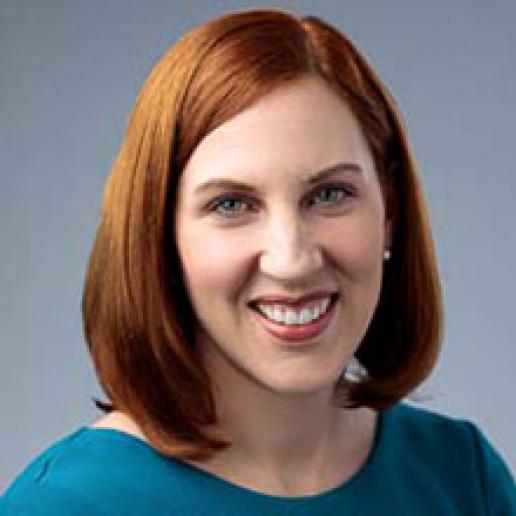
Caroline Pearson
3
APPEARANCES
3
PODCASTS
Sep 14, 2026


Todd ShryockHOST
Can you kind of explain the difference, and does the former eventually lead to the latter? I
Caroline PearsonGUEST
think in some cases it will, and in some cases we may always want to prioritize assistive AI.
Caroline PearsonGUEST
Assistive AI is really human clinicians using AI to make their job faster, more efficient, or more accurate.
Caroline PearsonGUEST
There's administrative tools to help with diagnosis or research on appropriate treatment patterns.
Caroline PearsonGUEST
And there can be management tools that extend care into the patient environment.
Caroline PearsonGUEST
They're still being deployed, overseen, and billed by the sort of supervising physician.
Todd ShryockHOST
Is there any chance in the future that AI companies could just bill payers directly and kind of cut physicians out of the revenue?


Chip KahnHOST
Now we're gonna have more data, but both sides have more digital power i-in the process.
Caroline PearsonGUEST
You know, one of the things that we're seeing in prior authorization is that layering AI on top of existing broken and adversarial processes just makes those processes go, you know, faster, longer.
Caroline PearsonGUEST
And so every appeal and every denial is cheaper to execute, and so you see more rounds of appeals and denials happening across the board.
Caroline PearsonGUEST
And it doesn't-- No, it is, again, not in anyone's incentive to deescalate that adversarial process.
Caroline PearsonGUEST
And so the question is: How do we get there, and what is the potential? If we were to try to rebuild the prior authorization system, what would it look like? This was one that surprised me as we brought together stakeholders to talk about this because everybody points to administrative waste as the place that AI is gonna help the most.
Caroline PearsonGUEST
But again, it becomes more of a systems problem than a technology problem.
7 MINS LATER
Chip KahnHOST
So how do we deal, uh, and how much of the answer on the payment side comes down to paying more for AI-related service? What, what's been your sort of way of examining this? Uh, because to me, it's even more complex than the other because here you're building from the ground up, aren't you?


Caroline PearsonGUEST
Well, I think any time that we are talking about introducing new technologies into the healthcare system, particularly on the, you know, clinical or patient-facing side, we're probably trying to accomplish one of three goals.
Caroline PearsonGUEST
We are trying to drive better health outcomes, lower healthcare spending, and improve affordability, or improve access.
Caroline PearsonGUEST
And I would say outcomes and costs have been where many of the technologies have focused in other payer segments.
Caroline PearsonGUEST
But in Medicaid, access becomes, you know, such an important issue and is really where I think some of the new AI-based technologies have a tremendous opportunity to deliver value and really expand the number of people that can get care in an affordable way.
Caroline PearsonGUEST
So, you know, when we look at things like mental health chatbots, and we can talk more about digital mental health in general, but what we are seeing is that, in fact, self-directed digital mental health care can be very effective for people with, you know, mild and moderate mental health needs, including depression and anxiety.
Caroline PearsonGUEST
And the new AI innovations are driving chatbots that are incredibly engaging, you know, they are really good at, at drawing folks in and, you know, they're relatively affordable to scale relative to trying to, to get into individual psychotherapy with, with, um, therapists.
16 MINS LATER