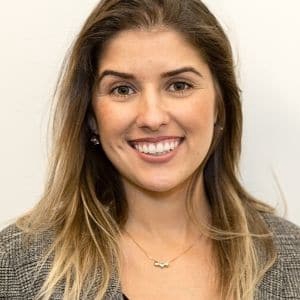
Carolina Reis Oliveira
Immunologist (PhD) and co-founder & CEO of OneSkin, a biotech skincare company targeting skin aging at the molecular level with its OS-01 peptide platform.
5
APPEARANCES
5
PODCASTS
Sep 28, 2026


Gabby ReeceHOST
And so then you go, "Come on, is this really just genetics?" So maybe we could just discuss what happens to skin naturally through hormones and aging, but then also how our lifestyle and all the things around it start to break it down.
2:38

And maybe just to give an intro of my background and how we actually got to OneSkin because interesting enough, we never set out to start a, you know, a, a cosmetic brand or create a product.
2:53
So out of our expertise, initially, we're growing skins in the lab, and we were replicating the skin aging, and then we were testing products that were already in the market claiming to be anti-aging.
3:06
And at that time, we knew that this is a massive market, but it's still there is a lack of transparency and trust.
3:13
We know that a lot of those inflated claims, they are not substantiated.
3:18
So we thought that we could validate these, uh, products from a different standpoint.
29 MINS LATER
Gabby ReeceHOST
And, uh, m- maybe you can just share what your discovery was, a- and also what happens to our skin as we get older, and what things decline, uh, so w- so we can just be more proactive.


7:51
So interestingly, retinol or retinoic acid has got this incredible, you know, fame around being the gold standard in anti-aging.
8:04
And the reason is because retinol basically is able to induce like cell renewal, right? And basically induces the upper layer of your skin to come out, to shed, and then you're going to grow a newer, fresher skin.
8:20
So it does help to smooth out your lines and it can help like build collagen in the dermal layer as well.
8:28
I think where we got wrong as an industry about retinol is that for a while we were just focusing on strength.
8:37
So the strongest, you know, strength of retinol, that's the best that what you should do.
34 MINS LATER


6:04
Uh, in the beginning when we started OneSkin, we realized that there was no product in the market focused on skin aging that was addressing cellular senescence.
6:15
Your audience is probably very familiar with zombie cells, senescent cells.
6:25
And we showed that OS1 could reduce up to 40% the level of senescent cells in the skin.
6:31
We could measure, uh, reverse in the biological age in 2.5 years, which is the first ingredient validated to actually reverse the skin's age.
6:40
And then we formulated this line of products that you've been using, uh, around OS1.
7 MINS LATER

5:21
Actually, the-- we are building senescent cells throughout our body, and so we accumulate them in our joints, and they are associated with sos- osteoarthritis.
5:30
We accumulate in our hearts, and they are associated with vas- uh, cardiovascular diseases.
5:35
And one, once we are studying this, um, and we realize, wow, there is a way that we can target the cells.
5:42
We can reduce their accumulation and basically rejuvenate, you know, our tissues with this approach.
5:50
We realized that we could do that for the skin too, and no one was using that approach.
28 MINS LATER
Vonda WrightHOST
So being more systematic, going for root cause science, separate from the, from the moisturizer that only makes it pluffy on the outside, in a systematic way makes so much sense to me.

Ekta YadavHOST
If one of you could get us started on like, you know, where did the whole idea begin for OneSkin? I know you guys spent a lot of time in the lab.
1:21
So we met, you know, more than it's going to be 20 years ago, almost when we were doing our master's and PhD in the same lab back in Brazil.
1:32
So Alessandra and I and two other co-founders, we got together because we all had this desire of translating science that we're developing in academia.
1:42
to translate into something that would impact people's lives, primarily in human health.
1:48
And so we combined our expertise in stem cell biology, skin regeneration, tissue engineering, and genomics.
1:57
And at first, we built this platform that we were growing human tissues in the lab, including skins, real human skins.
27 MINS LATER
Ekta YadavHOST
At the end of the day, what was your approach to this? Coming into that category from skin, coming into hair, how did you guys manage that?