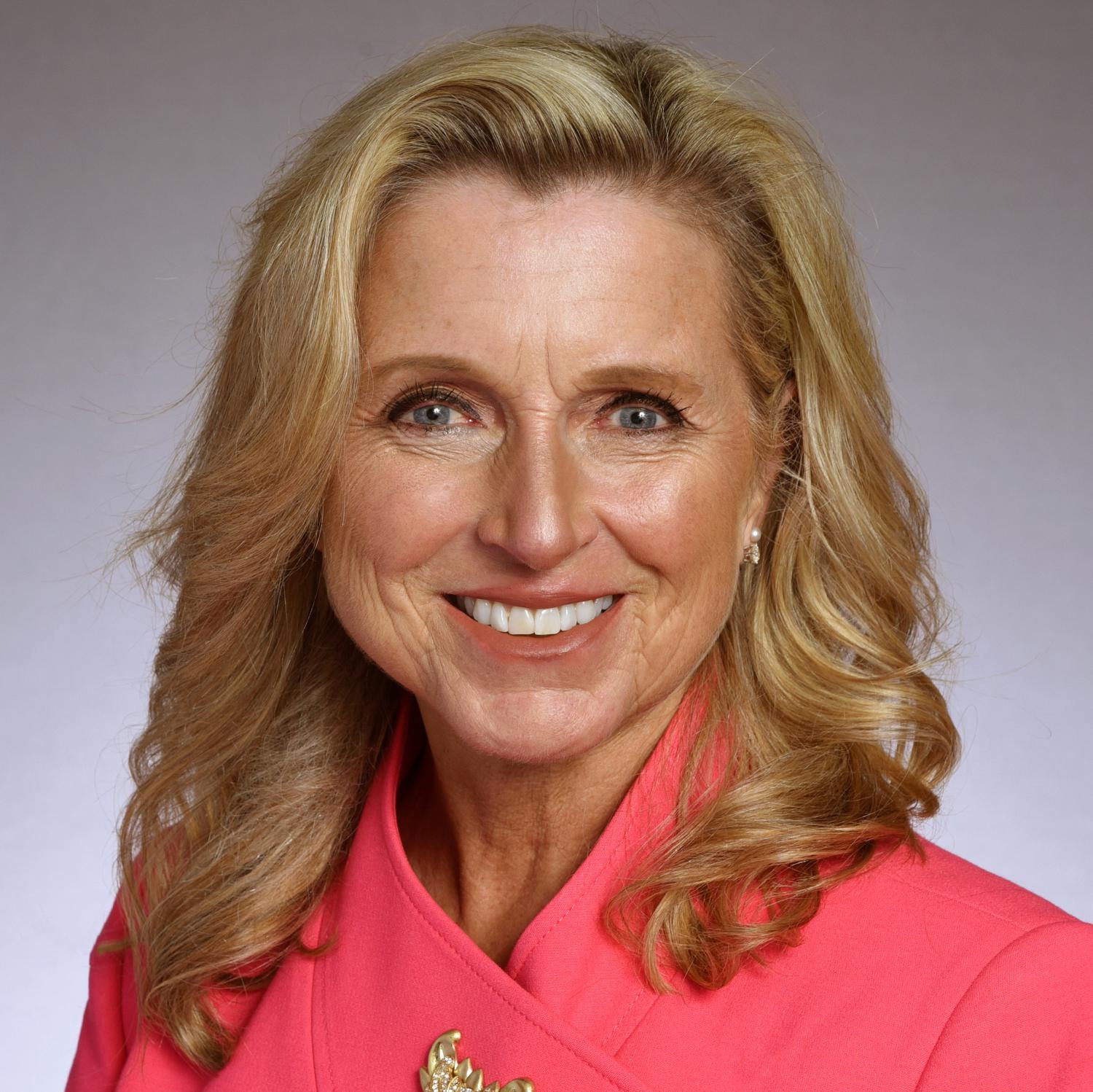
Carol Schleif
24
APPEARANCES
10
PODCASTS
Oct 28, 2026

Henray CohenHOST
How much should the midterms actually influence the way our clients position their portfolios?

Carol SchleifGUEST
It's always tempting to want to take political leanings one way or the other and figure out how they're going to be expressed in portfolios and then trade off it.
Carol SchleifGUEST
But that tends to be a pretty dangerous presumption, if you will, because there's a lot of times, and we've seen this in each of the prior two or three elections in particular, where where there was potentially big policy swings in certain categories like energy, like green energy versus oil and gas kinds of energy.
Carol SchleifGUEST
But then with the outcome of the election, the stock subsequently and the industry subsequently got treated the exact opposite.
Henray CohenHOST
You don't foresee changes in policy or new government initiatives changing the momentum around that AI trade?

Henray CohenHOST
How much should the midterms actually influence the way our clients position their portfolios?
Carol SchleifGUEST
It's always tempting to want to take political leanings one way or the other and figure out how they're going to be expressed in portfolios and then trade off it.
Carol SchleifGUEST
But that tends to be a pretty dangerous presumption, if you will, because there's a lot of times and we've seen this in each of the prior two or three elections in particular where where there was potentially big policy swings in certain categories like energy, like green energy versus oil and gas kinds of energy.
Carol SchleifGUEST
But then with the outcome of the election, the stock subsequently and the industry subsequently got treated the exact opposite.
Henray CohenHOST
You don't foresee changes in policy or a new government changing the momentum around that AI trade?


Kelly EvansHOST
So primarily, what are you doing for your kind of clients or investors? I mean, is it basically making sure that they keep exposure? Are you giving them more exposure than like just owning the S&P might give them? Are they trying to get out? Are they trying to get in?
Carol SchleifGUEST
We have leaned into the technology, if you will, by additional exposure through some of our thematic plays that we do.
Carol SchleifGUEST
It was part of last year's that will be part of this year's because this build out is really important to remember.

Ed LudlowHOST
I- is that n- the next catalyst? You know, wait for third quarter earnings season, and look for more evidence that AI is having some kind of broader impact on the US economy and beyond.
Carol SchleifGUEST
It's difficult to parse out exactly the, the, um, return on investment for a lot of us.
Carol SchleifGUEST
I read a McKinsey report here recently that talked about 100% of companies are experimenting one way, shape, or form with AI.
Carol SchleifGUEST
You can't not dabble with it, and it, it's muddy in there, but there'll be ...
Carol SchleifGUEST
This'll probably be the most important earnings season 'cause there will be a lot of parsing, not just of the AI theme, but also costs and how can companies offset those 'cause we've got a pretty stagnant or steady labor supply.

speaker_0HOST
Stand pat for how long? Do they need to make any moves?
Carol SchleifGUEST
We don't think they need to make any moves as long as the data continues to come in as it has.
Carol SchleifGUEST
Granted, the inflation isn't where the Fed has stated its long term target is.
Carol SchleifGUEST
You know, one of the big questions we have out of the newer Fed, which we don't have results from the various task force yet is will PCE be the thing that they lean on? Because obviously PCE is what 65 plus months well above what the Fed's target for that is.
Carol SchleifGUEST
Employment has been steady and it's important to parse through those employment numbers too and pull out the fact that you've got a lot of retirements going on.
Carol SchleifGUEST
We've got a lot of boomers that felt like they couldn't retire a couple of years ago and given healthy markets, Now are feeling more secure in that retirement so you're seeing accelerating rates, but the core working age populace is still pretty well employed as long as those numbers stay intact.
speaker_0HOST
What are you worried about when it comes to earnings going forward? Because it's still looking like we're going to see growth.
Carol SchleifGUEST
The, the key thing is, too, it's hard for investors to play infrastructure, 'cause technology is such a, uh, a large percentage now of the S&P, and infrastructure and manufacturing has shrunk just so small, and we are in the r- very early stages of repositioning that, especially as we reshore.
Carol SchleifGUEST
It's primarily about AI, but it's also about all of the stuff that supports AI and all of the things we can do with AI, and we need hard, hard assets to be able to do that.
Carol SchleifGUEST
You know, the interesting thing is, is there's circular financing in a lot of ways.
Carol SchleifGUEST
You look at even the earnings of some of the hyperscalers had one-time events in there from write-ups of OpenAI and their venture investments, so you've got circular financing in the equity market.
Carol SchleifGUEST
result?Well, I think markets are really trying to struggle with the fact that it looks like we've got an economic regime change, if you will, underway, and it, it, it starts as, as Mark talked about, it starts with the data centers in the build there, but it also...
Carol SchleifGUEST
You have to think through what life as a semiconductor company has been like, 'cause they go decades with very s- uh, big peak and trough.
Carol SchleifGUEST
Before they start expanding capacity, they need reassurance that that demand is going to be there.
Ed LudlowHOST
But the admission that they have no line of sight to the supply situation improving and therefore prices remaining high, how does the market model for that with everyone else in the, in the equation, the CapEx deployers, the hyperscalers?

Caroline HydeHOST
But longer term, the drive towards AI infrastructure is only a supply side issue rather than demand.
Carol SchleifGUEST
I wrote a piece last Friday talking about a brave new world and just laying out the, the case for this next phase that we're in.
Carol SchleifGUEST
Because the orders of magnitude that we're talking about investing in capital infrastructure, that tends to tee you up for very good performance from a productivity standpoint, from GDP, and we're seeing it start to creep in the numbers.
Carol SchleifGUEST
Because it's not like the markets are just floating up without s- earnings and revenue and margin support, and you're seeing very well-managed tech companies that are paying a lot of attention to, to their margin management and the way they're managing their people and their costs and their inputs.
Carol SchleifGUEST
It's not like we're gonna have dark data centers.Other than the fact that if you can't get e- energy to turn them on
speaker_5UNKNOWN
Carol, earlier you talked about riding the bus, and if we stick with that analogy, if you are, uh, an investor and you know that the biggest IPO of all time's happening in a month's time, do you put yourself into cash or, or do some kind of rejiggering in order to be able to participate in that IPO?

Dominic ChuHOST
Is it a problem for this market to have $100 per barrel oil, both on international and US benchmarks, and will it be a problem going forward, or is this something that markets can adjust to and companies can adjust to for their cost structures going forward?
Carol SchleifGUEST
We had some pretty record low, n- not record low necessarily, but inflation-adjusted low energy prices going into, into the, at the end of last year.
Carol SchleifGUEST
But it's important to remember we're a significant energy producer, not just us, but North America in general.
Carol SchleifGUEST
And even the economy, the way it's structured, is less energy-intensive, if you will, with m- multiple sources of that energy.
Dominic ChuHOST
How worried should we be about private credit and what's happening in certain parts of that market?
Carol SchleifGUEST
And when you have that sort of reconnect or reconfiguration, if you will, it takes some period of time to figure out what the impacts are.
Carol SchleifGUEST
But rolling it back and looking at company after company, country after country, reinvesting or investing for the first time in a long time in some of those really important infrastructure and capital investments, and that has long, long live and long tail to it, if you will.
Carol SchleifGUEST
But it's also important to remember from Economics 101 that a lot of the economic stats we have were meant to measure a very different society than we have now or are emerging to.
Carol SchleifGUEST
So as investors, I think part of it is stay diversified, stay long, lean into it, and don't get too, uh, don't hyperventilate too much about day-to-day, uh, activity.
Carol SchleifGUEST
So there's a piece of it where we have to create an environment where it's okay for people to experiment with it.

Carol SchleifGUEST
The small and medium-sized businesses are scratching their head trying to figure out what to do because first we had 10%, then we had 15%.
Carol SchleifGUEST
It's only good for 150 days, and actually it expires the day that Congress goes on recess.
Carol SchleifGUEST
On the one hand, you know, these small and medium-sized businesses would benefit greatly from being able to get some refund, especially if the administration would turn around and say, okay, we'll pay some refund because that gives them the opportunity then to turn around and pass some of that refund back to clients in terms of either holding prices steady or not increasing them because they're at the point where they might have to increase them.
Doug KriznerHOST
Where are you right now in looking at a company like NVIDIA and what it may say about where we are in this AI cycle right now?
Carol SchleifGUEST
I think it's a piece of all of those things because it's a natural evolution.
Carol SchleifGUEST
You know, when we first hear an innovation, take it back to when Chet GPT was first announced a couple of years ago and then the deep seek as well.
Carol SchleifGUEST
But it's really more impactful from that and getting investors, particularly our longer term oriented clients involved.
Carol SchleifGUEST
focused on the issue that we're building infrastructure in the United States.
Carol SchleifGUEST
It's putting capital investment, in which we haven't done actually in a big macro way in a very long period of time.

Morgan BrennanHOST
So when you do look to 2026, what powers stocks from here, and are those types of gains still sustainable? When have we seen this type of trajectory in history?
Carol SchleifGUEST
Well, I think the first thing to level set is when you go back and you run the numbers from, say, the 1970s forward, the average bull market runs about five years.
Carol SchleifGUEST
We published a couple of weeks ago a chart that shows you are here relative to a lot of those other markets.
Carol SchleifGUEST
other gains but fundamentally there's a lot going on too because there's a lot of the most constructive portions of the one big beautiful bill passed this summer that are just coming to fruition you've got some bits of clarity around tariff policy you've got a lot of things going on with the consumer that should help with some of the back tax refunds and you've got deregulation and a real focus from this administration on trying to drive business forward and remove the barriers, if you will.
Carol SchleifGUEST
So if companies and the markets performed as well as they did last year with all of the uncertainties in the beginning, now we've got some of that clarity and fundamental underpinnings.
Carol SchleifGUEST
And earnings supported where valuations went this year, or they supported where stock prices went this year.
Caroline HydeHOST
What spells out discerning to you? What are the financials you need to see? I think
Carol SchleifGUEST
discerning spells out somewhat if we just take the public markets and we look at, for example, when you had five of the mag seven all report in the same week and some and they all, for the most part, beat expectations.
Carol SchleifGUEST
And yet some stocks rallied and some declined because of investors listening through to the story.
Carol SchleifGUEST
So there's a piece there where investors want to participate in the industry, in technology in general, and they're trying to figure out where.
Carol SchleifGUEST
It's tough to get your head around the financials, even though a number of different entities now are trying to provide us index on private companies.
Carol SchleifGUEST
And I saw last week that that the CBOE and others are looking to want to write options and futures on private companies.
Caroline HydeHOST
Carol, is that democratization or is that frothiness and a desire to just get in on super high valuations?


Carol SchleifGUEST
We're already starting to see some of the trickle of those government statistics now that'll help us see that.
Carol SchleifGUEST
And I think the, the big linchpin here is everyone's trying to figure out will tariff impacts come through? What does that do? Is it inflationary? Is it deflationary? We're having all sorts of conversations around that.
Paul SweeneyHOST
Are you concerned, as some people are, that there's an AI bubble that may be kind of inflating this market, or over-inflating this market?

Alexandra CanalHOST
So when you look at this pullback in relation to how concentrated this market is, does that indicate how much deeper the sell-off could potentially go?
Carol SchleifGUEST
It potentially, but you've also got it's important to remember that those same companies are the ones driving the bulk of earnings and profitability.
Carol SchleifGUEST
I know there's a lot of folks that want to conflate this with what happened in the late 90s, but it's a very different environment in terms of.
Carol SchleifGUEST
What's driven the earnings and driven the profitability are real companies generating real revenues out of real businesses.
Carol SchleifGUEST
They're capacity constrained, which is part of why you've got the CapEx going on there.
Carol SchleifGUEST
One of the things we are watching is how those are being funded because you're seeing some of the funding happening in the debt markets now as opposed to cash flow.
Alexandra CanalHOST
How concerned are you of the link between the stock market gains to that higher income consumer and how that could potentially bleed through to some of the economic growth that we've been enjoying over the past few quarters?
Doug KriznerHOST
I understand the influence that NVIDIA has right now on the AI story, but the question is whether there is some risk, minor as it may be, of a sort of complacency that we need to be on alert for a potential threat to NVIDIA's dominance.
Carol SchleifGUEST
Yeah, I definitely think that's the case in terms of picking a horse to ride on or a single stock.
Carol SchleifGUEST
And so leaning into some of these other things, because the other thing is in a lot of those companies, as well as the government and other entities, are looking to invest in quantum computing.
Carol SchleifGUEST
if and when that breakthrough comes, you know, there's estimates that it could come in five years, there's estimates that might take 30, but who knows when it comes.
Doug KriznerHOST
Where are you right now in looking at inflation? And help me understand how that may influence your thinking as to what the Fed does next.
speaker_0HOST
Maybe that gives us a glimpse into what they may or may not do next.
Carol SchleifGUEST
I'm joining you today from Toronto, where we've got the BMO and Eurasia Group U.S.-Canada Summit.
Carol SchleifGUEST
So getting a lot of really good insight on tariffs and Fed policy and lots of other things direct from a lot of businesses in both countries.
Carol SchleifGUEST
feeling about policy, it'll be interesting to comb through the meeting minutes.
Carol SchleifGUEST
I'm more excited actually about the start of earnings season kicking off in earnest next week and also getting the Fed's beige book when each of those governors spends a lot of time out talking to real world companies, frontline companies and businesses in services and manufacturing and all kinds of parts of their economy, because as you've noted, we're not getting the good feet of government numbers, but the Fed never uses just one set of data.
speaker_0HOST
What's the strategy for investors? Because do you think that the AI trade, the AI infrastructure trade, are we sort of in a bubble or is there still a lot of opportunity here to invest?
Carol SchleifGUEST
I'm joining you from Toronto today where we're doing a female Eurasia group US Canada summit.
Carol SchleifGUEST
So there's a lot of discussions on AI and other things like that going on here.
Carol SchleifGUEST
We've had a China play on for quite some time, if you will, more as a secular thematic play, just because they are trying hard to rearrange that economy.
Carol SchleifGUEST
We had had a secular play for as well for a couple of years on Japan and had pulled back from that just going into a lot of what's been going on, especially with the longer bond yields there and the inflation, the sticky inflation they're having.
Carol SchleifGUEST
who haven't, you know, from a generational standpoint, they haven't lived through inflation like the rest of us have for a very long period of time.
Doug KriznerHOST
How are you feeling about the way in which the administration is is guiding some of the policies that can impact the economy and markets as well?
Carol SchleifGUEST
Well, I think a piece of it is investors have to understand what timeframe they're using and where their expectations are.
Carol SchleifGUEST
Because, you know, we've looked at a lot of these companies and you've got very active, when you step back from it and you look at the margins on these companies relative to most of the rest of the S&P, those margins are great margins, they're cash flowing businesses.
Carol SchleifGUEST
And as we all know, once you put a software system into a company, it's really hard to make a decision to change that or move that.
Carol SchleifGUEST
On an absolute basis, are these companies generating the kinds of revenues that I want, even if they didn't beat the wildest expectations that I was hoping for? Because the industry tends to run, or investors tend to run ahead of themselves, and the whisper number is always a little bit higher than where they're at.
Carol SchleifGUEST
And yet, the companies, the industry in general are generating amazing returns.
Doug KriznerHOST
Would that cause you to kind of take a closer look at a lot of the holdings that you have on the equity side?
Carol SchleifGUEST
But it's important that we don't lose sight, because I know the administration is very positive about look at all the tariff revenues that are coming in and it's important we not lose sight that those tariff revenues are coming out of either consumer or business pockets in the united states and sooner or later that's going to wear away at the margins even if it's in slightly slower growth or moderately slower growth i think the issue would be the market is not prepared for broader sectoral tariffs, and we have a shot at getting some of those, I think maybe there's partial expectation, too, that the longer we push out these full country tariffs, the likelier we are to see some sort of legal overturning because the testimony in that case starts in, I think it's July 31st.
Carol SchleifGUEST
I think it's hard not to play it, if you will, in terms of, I mean, just owning a plain old index fund and any of the technology names and you're at least market weighted, if not overweighted in that play.
Carol SchleifGUEST
And yet we do think the combination of that and some of the more pro-growth, pro-business friendly aspects of the one big, beautiful bill that was passed.
Carol SchleifGUEST
It's important to remember that the starting ground for that margin pressure is margins that, by and large, in aggregate are at all-time highs.
Carol SchleifGUEST
It was a very instructive earnings season, and then companies were trying to thread a very fine needle in trying to outline what the impact or the potential impact of tariffs were.
Carol SchleifGUEST
without waving too big of a red flag because that's obviously a politically sensitive issue.
Carol SchleifGUEST
But I think as investors, we got a lot of good read and particularly in the most recent batch of retail earnings where a lot of the retail was were outlining what their impact was, what what steps they were taking where they could to try to shift supply chains.
Carol SchleifGUEST
And they also, by and large, illustrated a lot of sensitivity because they understand this is not like in the pandemic when we had inflation for the first time and they could just simply pass it all through.
Doug KriznerHOST
What are your expectations here? What are we going to learn about the labor market that we don't already know?

Alix SteelHOST
But what do you make of the market action we've seen over the last three days? It feels like the buy the dip is sort of losing some steam here.
Carol SchleifGUEST
Well, maybe the buy the dip is, but it's important to remember, too, we hit all-time highs a week ago.
Carol SchleifGUEST
And markets have gone a very long period of time without the normal level of volatility that you'd see.
Carol SchleifGUEST
And so for markets to come a bit off that U.S. exceptionalism story and look at there are a lot of moving parts going in the economy right now.
Carol SchleifGUEST
But consumer confidence, business confidence, some of that stuff is starting to waver.