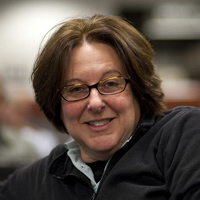
Carol Rosenberg
Journalist
4
APPEARANCES
3
PODCASTS
Oct 28, 2026


Tess BridgmanHOST
So when you look ahead to kind of if we get a jury impaneled and you've raised questions about how difficult that's going to be, You know, if we get to a point where we are actually in trial mode, what do you think are the big issues that are going to play out that you're keeping your eye on in your practice?

Carol RosenbergGUEST
So the pretrial proceedings that have been going on since 2011 have resolved at this level the question of whether they have jurisdiction.
Carol RosenbergGUEST
heard, heard the arguments and concluded they have, it's pretty widely understood that that will be teed up for an appeal because the judges who are the military judges, uh, uh, by nature, except the creation of this court and the prosecution's, um, premise that even though the court was created after nine 11 and the crimes, uh, They argue that this war began in Afghanistan in the 1990s with the rise of Osama bin Laden and his pronouncements, fatwas, against the West, the United States.
Carol RosenbergGUEST
I mean, one of the issues that I still don't understand, and you guys can probably explain it better, is if this is a... war court, and those were sailors, and they were at war, and sailors were attacked, even though they understood that they believed they were in a peace, in peace side, but retroactively, they say this was a war.
Carol RosenbergGUEST
Where's the war court? And this is, you know, this is the, these are the kind of issues that the jury may actually wonder about, because they're military officers.
11 MINS LATER
Tess BridgmanHOST
Rather than, you know, tried somewhere else where there is clearly jurisdiction to where it clearly doesn't depend on there having been an armed conflict at the time of the attack.


Carol RosenbergGUEST
They made a decision not to pick them up and move them to New York, not to charge them with crimes, uh, and not to do a federal case against them.
Carol RosenbergGUEST
They ch- sent them, well, Khalid Sheikh Mohammed, the lead defendant, three and a half years in the black sites, uh, Afghanistan, Poland, other places in Europe.
Carol RosenbergGUEST
Um, you know, people say had we given him Miranda he would have shut up, but, uh, the reality is what we learn now in the past week, two weeks is that the lack of those basic rights has made it very difficult to turn what was an intelligence gathering Brutal operation using violence into something that fits into a US j- justice system, even this new one that they created at Guantanamo that's a hybrid of the, uh, c- uh, civilian, civil, civilian criminal and military, uh, justice systems.
6 MINS LATER
Carol RosenbergGUEST
They made a decision not to pick them up and move them to New York, not to charge them with crimes, uh, and not to do a federal case against them.
Carol RosenbergGUEST
They ch- sent them, well, Khalid Sheikh Mohammed, the lead defendant, three and a half years in the black sites, uh, Afghanistan, Poland, other places in Europe.
124:42
... was that at the request of some of the 9/11 families? They went, "No, we wanna actually see this trial"?


Carol RosenbergGUEST
In fact, there's still ongoing litigation, one reason this has gone on for so many years, on whether what they said in terms of confessions and bragging to federal investigators can be used against them.
Carol RosenbergGUEST
What it involves is FBI agents coming in and saying, "I sat across a table from them four years after their capture, and they admitted to their roles in it." A previous judge has already suppressed the confessions of one of the defendants, and this judge is deciding about three more.