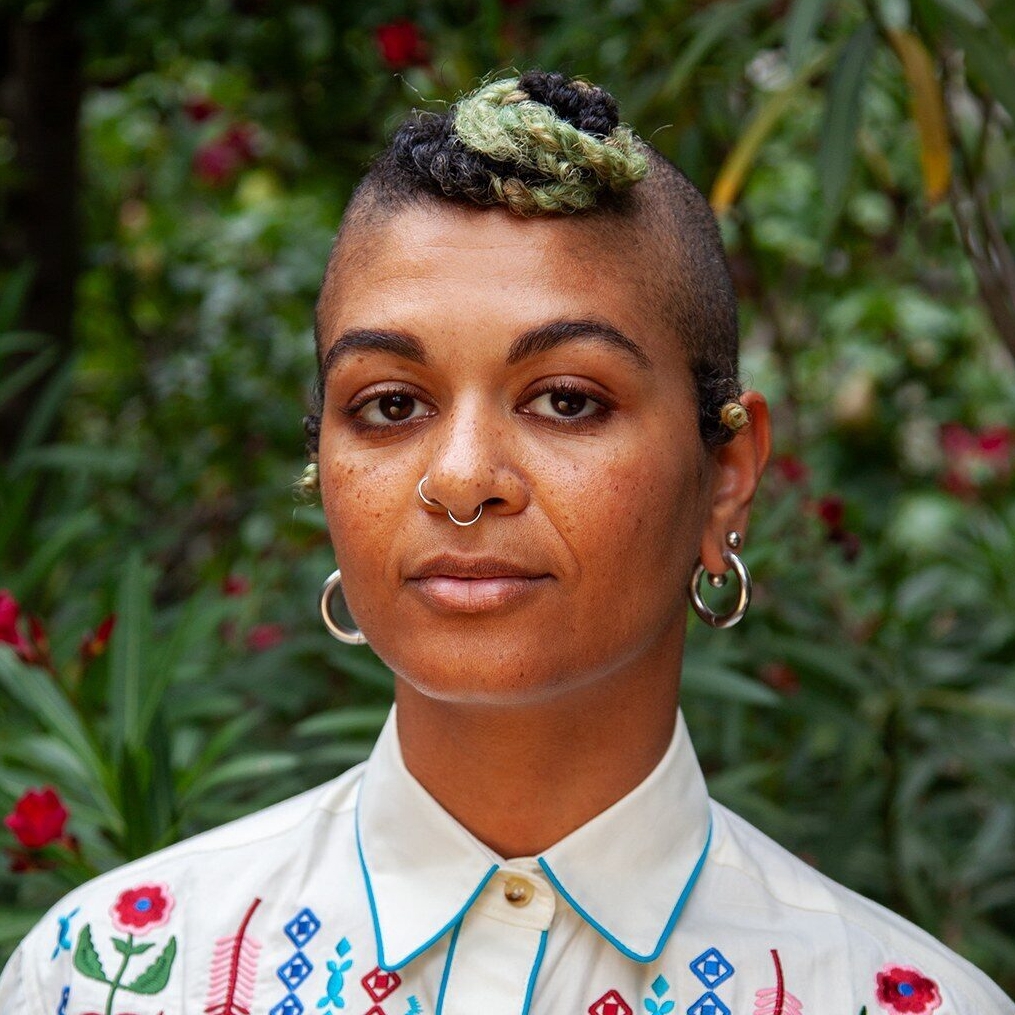
Camille Sapara Barton
Camille Sapara Barton is a writer, embodiment social justice facilitator and interdisciplinary artist based in Amsterdam, author of "Tending Grief" (North Atlantic Books, 2024).
3
APPEARANCES
2
PODCASTS
Oct 7, 2026

speaker_0HOST
... and our bodies?

1:32
So colonialism was a very multifaceted project, and we don't have much education about it in, in England.
1:44
But yeah, aside from just invasion and conquest of land and claiming of territory and imposing, um, sort of legal and political rule over other peoples and other lands, um, there were lots of systematic practices that took place to essentially traumatize and disempower people, and many of those things included the systemic use, use of rape and sexual violence, um, the prevention of people speaking their indigenous languages, banning people from practicing their indigenous traditional forms of spirituality, often banning people from working with their traditional plants, um, or accessing their kind of sacred sites.
2:26
So all the things that kind of create a culture, a worldview, a way of living, were sort of systematically broken down, and instead other things were imposed, whether that was Christianity, uh, forced labor, other things that kind of tried to assimilate people into a different way of living and existing.
speaker_0HOST
Um, when you men- when you mentioned the attacks on witchcraft in Nigeria, here in, in, in Europe, there were also systematic attacks on witchcraft here, and I was wondering where that might fit into the broader story you were talking about.


Myesha T. HillHOST
How did you come to grief as your work and as your practice? Tell us a little bit about that.
3:19
um yeah it wasn't um it wasn't a deliberate choice i feel like i just found myself in a very deep kind of grief spiral or grief portal but sometimes i call it um in 2017 after having an abortion and I felt really aligned with the choice, like rationally and in my heart, I knew it was right.
3:49
So I was quite shocked and surprised by the levels of grief that that I felt and how visceral and embodied that was.
4:07
There was just a kind of saturation to everything that made it feel, oh, I can't just brush this away.
15 MINS LATER
speaker_0HOST
... how do we address that in, in our organizations?
7:10
I mean, I will say that not everyone might be ready or willing to do this work, and that's okay.
7:18
I do think there is more and more interest and curiosity and people identifying the need for something else because they're either so burnt out, navigating so many illnesses, and just not having the ability to keep pushing.
7:32
You know, there are so many people who've been, uh, organizing in the last years against genocides, against so many forms of state violence, but are really noticing if we wanna stay in this work, something has to shift because it's just not possible.
7:49
So I think for people who are at that realization or wanting to, to try something else as a preventative strategy, then I guess speaking to them, I would say that using somatics or embodied decolonization is a way to really align your values with actions, because unfortunately, we've all been shaped by these systems of harm and these deep intergenerational cycles of violence.
16 MINS LATER
speaker_0HOST
-so that they're, uh, so that this is at the center of their, um, their projects?