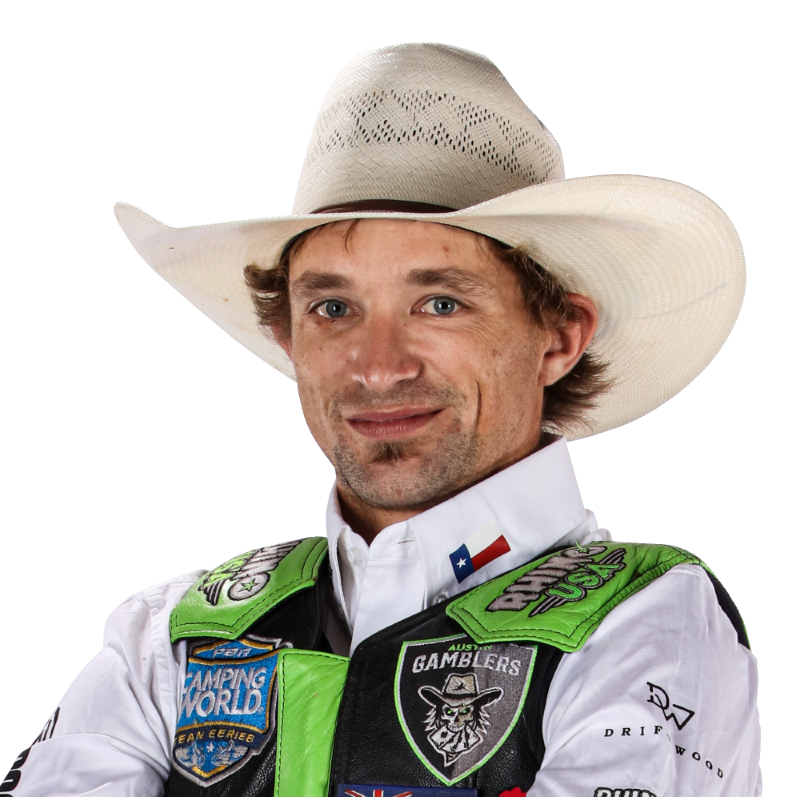
Callum Miller
6
APPEARANCES
4
PODCASTS
Nov 12, 2026

Callum MillerGUEST
Like I would say to Sarah, with all humility, Liberal Democrats, like everybody else, are deeply concerned that the last Conservative government allowed the number of people waiting for asylum decisions to get completely out of control.
Callum MillerGUEST
And we, like every other right-thinking person in our country, thinks that we should have a much more orderly and managed process for those arriving in this country.
Callum MillerGUEST
There's a lot of propaganda in social media in particular, making the argument that that Liberal Democrats are in some way in favour of unregulated migration.
Callum MillerGUEST
We've put forward sensible proposals that would actually bring down the number of people waiting for asylum.


Jordan ButlerHOST
And so in that regard, when it comes to that misinformation and then what you say is protected misinformation, what can pro-life doctors do here in the States? Is it really as simple as just speaking out or testifying or talking to the media? Just kind of what, from your perspective, would you do?
Callum MillerGUEST
And I think APLOG is the best place to jump into that to begin being part of this.
Callum MillerGUEST
And the more people are speaking out and the more you're training younger doctors to speak out is great.
Callum MillerGUEST
But I would say that there's a temptation to do something like come to an APLOG conference, hear this great content, maybe speak out in small ways, but without really thinking through, how can I affect the systems that are perpetuating this dynamic? By which I mean largely the medical boards, the professional societies, and the journals.
Jordan ButlerHOST
What have you done to kind of tackle that fear and do that research anyway? Yeah.

Iain DaleHOST
Um, Callum, given your experience of having undergone this vetting yourself and also working in the civil service, what do you make of what the Prime Minister said today?
Callum MillerGUEST
This was an attempt by the Prime Minister to take all of the energy out of the challenge in the chamber and get everybody into the minutiae of the process.
Callum MillerGUEST
And the key claim he was making today was that there was a duty on Olly Robbins to tell him that Peter Mandelson had failed a vetting process.
Callum MillerGUEST
And he wound out a couple of examples of statements from civil servants to support that.
Callum MillerGUEST
What he couldn't answer repeatedly was a number of members on all sides of the House pointed out to him that Simon Case, the then Cabinet Secretary, had told him on the 11th of November last year that he should get security clearance for Peter Mandelson before he announced his appointment.
Iain DaleHOST
But the Prime Minister has a right to know everything, or maybe not, he doesn't have a right to know necessarily the minutiae of the, the vetting and why the, the person failed, but he surely has a right to know that he failed.


James O'BrienHOST
S-scenario number one, Number Ten is leaning on the Foreign Office to the point where the Foreign Office sort of, uh, obeyed in advance.
Callum MillerGUEST
So what we know is that the Prime Minister anoints Peter Mandelson would be the ambassador on the twentieth of December, and the process then appears to have started off his developed vetting, all in a great rush to get him out to Washington by February.
Callum MillerGUEST
Um, and at some point in that process, the answer comes back to the Foreign Office to say, "Actually, he's not passed developed vetting." And this is a scenario where the Foreign Office internalizes the instruction from Number Ten, a political instruction, and decides not to tell anybody that that's happened and find a way to adjust the approval and give him his developed vetting nonetheless.
Callum MillerGUEST
And the big problem with that is that, you know, I need to emphasize this is really important national security stuff.
James O'BrienHOST
Did, did Morgan McSweeney's missing phone suddenly rear its mysterious head? I wonder, but I won't ask you to answer that question because scenario three, of course, the worst possible scenario from the Prime Minister's point of view, is that Starmer was told, and it was him that sent the Foreign Office mandarin away with a flea in their ear and instructions to, in the words of Jean-Luc Picard, "Make it so."

James O'BrienHOST
S-scenario number one, Number Ten is leaning on the Foreign Office to the point where the Foreign Office sort of, uh, obeyed in advance.
Callum MillerGUEST
So what we know is that the Prime Minister announced Peter Mandelson would be the ambassador on the twentieth of December, and the process then appears to have started off his developed vetting, all in a great rush to get him out to Washington by February.
Callum MillerGUEST
Um, and at some point in that process, the answer comes back to the Foreign Office to say, "Actually, he's not passed developed vetting." And this is a scenario where the Foreign Office internalizes the instruction from Number Ten, a political instruction, and decides not to tell anybody that that's happened and find a way to adjust the approval and give him his developed vetting nonetheless.
Callum MillerGUEST
And the big problem with that is that, you know, I need to emphasize, this is really important national security stuff.
James O'BrienHOST
Did, did Morgan McSweeney's missing phone suddenly rear its mysterious head? I wonder, but I won't ask you to answer that question because scenario three, of course, the worst possible scenario from the Prime Minister's point of view, is that Starmer was told, and it was him that sent the foreign office mandarins away with a flea in their ear and instructions to, in the words of Jean-Luc Picard, "Make it so."
Callum MillerGUEST
We believe strongly in open trade, and the question is, how do we best get back to a world in which there is more open trade? When you've got this unpredictable president who seems to believe that throwing his weight around and launching a tariff against his neighbors in Canada and Mexico, with whom the US has had this free trade agreement for a long period of time, is the right way to proceed, you don't know what he's going to do next.
Callum MillerGUEST
And therefore, you can't bank on the fact that being nice and just absorbing the cost of his tariffs will result in them being taken away or stepped back.
Callum MillerGUEST
So we think you do need sometimes to stand up to bullies and show them that that's the right thing to do.
Callum MillerGUEST
After all, if he feels there's a cost to the US, and all the evidence suggests there will be a genuine cost to US consumers from his tariffs, never mind whether there's retaliation or not, then hopefully he will step back from it and we will go back to having more open trade.