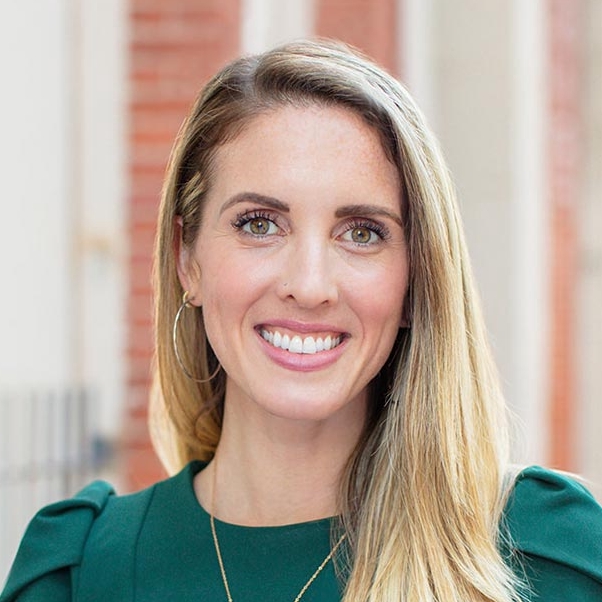
Caitlin McBride
Caitlin McBride, CFRE, is a Canadian fundraising executive and founder of Further Together, a fractional fundraising consulting firm, and cohost of the Small Nonprofit podcast.
9
APPEARANCES
1
PODCASTS
Sep 15, 2026

Maria RioHOST
What do you think about that? Have you seen that in your work, and how have you noticed it?

Caitlin McBrideGUEST
It's almost a little bit of a surprise that half of people are not feeling burnt out.
Caitlin McBrideGUEST
This doesn't feel like a surprise to me at all, and the way that I've seen it play out in my work and the work that I do with organizations and executive directors is, you know, executive directors showing up to calls, especially those initial calls, and you can just see it.
Caitlin McBrideGUEST
And I think you had talked to another executive director, one of our clients, who kind of shared that some of our fractional fundraising work feels part implementation and fundraising, and sometimes part therapy as well, 'cause this can almost be one of the only safe spaces where executive directors can talk freely.
Caitlin McBrideGUEST
Like, you can't talk to your staff because you're kind of at a different level than them.
Caitlin McBrideGUEST
You can't talk to your board because that can sometimes be really challenging as well.
11 MINS LATER
Maria RioHOST
So those are the strategic decisions that you have to make with clarity and probably sooner rather than later if you're in this situation.
Maria RioHOST
What do you think makes a good funder? So how would you know that there's alignment when you're doing research or when you're starting to build a relationship with someone?
Caitlin McBrideGUEST
The first thing that I do whenever I hear about a new funder- Or a new funding opportunity, I will jump onto their page on the CRA website.
Caitlin McBrideGUEST
'Cause if they're a registered charity or foundation, you can look at their giving history.
Caitlin McBrideGUEST
So I wanna look for funders that have historically given to similar organizations, given in similar size, in similar geography, in similar missions.
Caitlin McBrideGUEST
They might say, "Oh, you know, we fund health and social services, and community food banks," and then you look at their giving, and actually for the last five years, like, 70% of their donations have been to arts organizations.
Caitlin McBrideGUEST
So I wanna see what is the actuality and what is happening in practice, rather than what they're just saying on their website.
8 MINS LATER
Maria RioHOST
And it's something that we just say, like, "It's okay to put our values aside for now," right? But you just end up in a situation where you just do that little by little, and then you end up seeing like, oh actually, we're completely removed from where we thought we were gonna be because we've given up our values here, and here, and here, and little by little, right? Until you're literally partnered with Amazon.
Maria RioHOST
So it's a pretty interesting problem, and I often see organizations stick to grants because you're kinda scared to connect to people.
Caitlin McBrideGUEST
Yeah, I think that number that you quoted, the seven to 10%, is the success rate for a cold application.
Caitlin McBrideGUEST
So if you have had no communication with the funder or the foundation, they don't know who you are at all and you just chuck in an application, yes, your success rate is going to be around seven to 10%.
Caitlin McBrideGUEST
And you know, with that warm introduction, that warm relationship, that bumps up closer to about 20%, which is still, you're like, "Oh my God, 80% of these warm applications are not being funded" And yeah, that is the truth.
Caitlin McBrideGUEST
You know, if you're applying for so many grants, and I've seen this a lot too, where organizations will just, like, make up a project in order to get the funding, and then if you do get the funding, sometimes that project can actually be a real drain on your resources and your organization.
Caitlin McBrideGUEST
I remember I spent, like, 18 months trying to get a grant for an organization.
Caitlin McBrideGUEST
The ED had asked me to develop a program that would fit, and I finally got it and went to the program coordinator, and she was just, like, crestfallen because they didn't have the infrastructure to actually do that project.
Maria RioHOST
There's someone over their shoulder looking to see that the investment was a good one.
Caitlin McBrideGUEST
And I think things like the fractional fundraising model is so amazing for work like that, 'cause often organizations are in the position where they can only afford a junior fundraiser, but they also don't have all of these things in place.
Caitlin McBrideGUEST
Like, you need, you need a case for support, you need somebody to train your board, you need somebody who's really good at grant writing, and you can only afford somebody who is maybe, like, one to two years out of school, and you don't have that time and capacity or even knowledge sometimes for the executive director or anybody else on the team to hold hands to be able to train them, to be able to upskill them to the level that you really need.
Caitlin McBrideGUEST
If you're in that position, fractional might be something that you wanna explore.
Caitlin McBrideGUEST
It does give you access to a more senior-level fundraiser who can really set up those systems, develop those things for you.
Maria RioHOST
If you're in the situation kind of assessing, like, am I ready to hire a fundraiser? Should I go fractional? Should I do something completely different? Should I do, like, professional development and try to continue doing it myself? This is kinda your episode to kinda assess where you're at now and where you can be in a year or two years, right? So Caitlin, for the executive directors listening, what is something that you'd say, "Start here"?
Maria RioHOST
So this is money that should be coming to nonprofits, but it's usually just being held in trust.
Caitlin McBrideGUEST
Okay, let's talk about funding restrictions, 'cause that is huge, and I see so much frustration all the time, and I get so frustrated every time I hear it.
Caitlin McBrideGUEST
So incredibly frustrating for organizations because they're constantly trying to raise those operating dollars, and funders seem to just want to fund those, like, shiny, new things, and you can't keep making up new projects every year.
Caitlin McBrideGUEST
Our level one funders are awarding mainly those restricted grants and those project grants that cannot go into any operating funds.
Caitlin McBrideGUEST
They only fund the launch, but they will not continue to fund after that, which is so hard, especially when you build a program that people rely on.
9 MINS LATER
Maria RioHOST
But before we leave you today, Caitlin, what has made someone an A+ funder for you?
Caitlin McBrideGUEST
And I love that this was one of your predictions for the future of nonprofit work.
Caitlin McBrideGUEST
And I really hope that it comes true because as somebody who's been in the nonprofit space for 15, 20 years, I've never worked in an organization that had HR.
Caitlin McBrideGUEST
And that is crazy because it is something that feels like a luxury sometimes in nonprofit organizations.
Caitlin McBrideGUEST
So to be able to have access to these experts and access to these resources and this support at a cost that is going to work for smaller organizations is amazing.
Caitlin McBrideGUEST
If I find something where I'm like, "Okay, this feels like a really good fit," I'm gonna reach out to my board members, and I'm gonna ask, "Okay, does anybody know anybody or can make a warm introduction to this foundation?" And like, I don't care how tenuous that link is.
Caitlin McBrideGUEST
If I can get some kind of a connection and some kind of an intro, I'm gonna go for it.
Caitlin McBrideGUEST
So that is like my first stop, like that warm connection is ideal and like that is your best chance at getting a meeting.
Caitlin McBrideGUEST
And I have gotten meetings with organizations and foundations that have very clearly said on everything that they publish, "We don't do meetings," because I had that warm connection.
5 MINS LATER
Caitlin McBrideGUEST
So sharing those personal stories that really create that emotional connection and like share the human element of the impact that your organization has.
Caitlin McBrideGUEST
And it doesn't have to be a story that is like this organization changed my life forever and now I am successful and I have no problems anymore.
Caitlin McBrideGUEST
You can have a personal story about an impact that your organization made in one day of a person's life or one aspect or one moment.
Caitlin McBrideGUEST
I personally used to work in organizations that provided resources for people recovering from addiction.
Caitlin McBrideGUEST
Yeah, and this is definitely a reason, you know, we try to, in our practice and the work that we do with our clients, we try to have things like this, this kind of getting something in return as like an added benefit.
Caitlin McBrideGUEST
Like it's an added, it's an extra, but really like you want the donors who give relationally rather than transactionally.
Caitlin McBrideGUEST
This is very much a kind of, yeah, you get an event ticket, you get recognition, you get something else.
12 MINS LATER