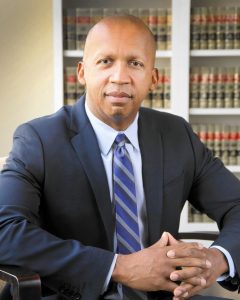
Bryan Stevenson
Executive director of the Equal Justice Initiative
28
APPEARANCES
22
PODCASTS
Oct 15, 2026


Bryan StevensonGUEST
I want to invite anybody and everybody who is in philanthropy who thinks about using their resources to make a difference in the world, to increase the justice quotient, to come spend time in our space, because I do think it helps you become more informed, more tactical, more strategic, and more aware.
Bryan StevensonGUEST
We've never done a very good job of educating people about the history of racial inequality.
Bryan StevensonGUEST
Racial injustice is so pervasive, I think most people feel like they know a lot about it because it, it is everywhere.
Bryan StevensonGUEST
But the truth is, very few people commit to the kind of engaged and focused learning that I think is required to root this work in a way that allows it to be the most effective.
21 MINS LATER

Phil BuchananHOST
"Oh, we have to do this 'cause legal counsel said there's some risk here." What would you say to them? [chuckles]

Bryan StevensonGUEST
Yeah, I think what's particularly tragic about this is that we have known for a very long time that executing people through lethal injection is not reliable.
Bryan StevensonGUEST
There have been many botched executions over the last several years in Oklahoma and Arizona and Alabama and Tennessee.
Bryan StevensonGUEST
And yet the court continues to allow the states to try to carry out these executions that Tennessee had a failed execution just a few months ago.
Bryan StevensonGUEST
It says something about the way in which we're just not responding to the inhumanity of subjecting people to torture and cruelty in this way.
Bryan StevensonGUEST
We had an execution similar to this one in Alabama, a man named Kenneth Smith, where they poked and prodded him for several hours.

Ali VelshiHOST
I mean, because this really does help the counter argument, right? It helps people who do not want to see the death penalty by saying you don't even do it right.


Gavin NewsomHOST
I mean, just all this in the open and everyone moves on to the next news story and this weekend's football game.
Bryan StevensonGUEST
No, I think it's important to highlight exactly what you're saying is that there is this indifference.
Bryan StevensonGUEST
And I mean, there were a lot of communities that didn't think it would matter that some people were talking about just rounding up all of the immigrant populations and communities.
Bryan StevensonGUEST
And now I think they're seeing things and they're like, so I think getting past that indifference is a really important challenge.
Bryan StevensonGUEST
And again, I think the more you know about the past, the more prepared you are to see the threat to the future.
55 MINS LATER
Gavin NewsomHOST
And then we have war, invasion, Ukraine, and supply chain shocks, stock market collapsing, massive deficits, Trump 1.0 to 2.0. know uh now you know they're rewriting history again censor historic facts they're you know the voter id i mean this is what uh and you're sitting here all this hope optimism stuff um you're saying hope still matters i mean what so what what's the message to the person listening going i can't even believe i got through this whole podcast they're thinking that why the hell i don't need all this there's hope you're feeling good stuff what do you what do you honestly what do you say to them i

Lisa ArmstrongHOST
Why do we still have a system that allows for a child to or certain children to not be seen as children? And then the follow up question is, how do we change that?
Bryan StevensonGUEST
Our policies in so many areas have been shaped by politicians and elected leaders who trafficked in fear and anger.
Bryan StevensonGUEST
And what happens when a society or a community allows itself to be governed by fear and anger, we start to tolerate things we should never tolerate.
30 MINS LATER

Bryan StevensonGUEST
There were 10 million Black people enslaved for 246 years in what became the United States, and their sweat nourished and, uh, fed and nurtured, uh, the wealth for many plantation owners.
Bryan StevensonGUEST
And then after enslavement, we had this period of brutal violence, uh, lynching violence, where racial terror was ignored.
Bryan StevensonGUEST
Many Black people were pulled from their homes, tortured, uh, murdered, lynched, sometimes on courthouse lawns.

Kirsty WarkHOST
Advertisements of people who were being sold as slaves, texts which makes clear just how many women and children suffered and died, identities obliterated.


Amy GoodmanHOST
Um, a massive number of people who owned, and particular families who owned 10,000 slaves.
Bryan StevensonGUEST
When you look at the American South today, you absolutely see the footprint of Scotland and Scottish immigrants who occupied that region and enslaved, as you said, thousands of people and created, uh, this institution that was so resistant to emancipation, so resistant to freedom.
Bryan StevensonGUEST
And what's interesting for me is when I think about Douglass, I also think about my own struggles with my American identity, and this has been something [laughs] I've been thinking more about in this 250th year.
Bryan StevensonGUEST
Um, I've often struggled with my American identity because I am not the child of immigrants.
Bryan StevensonGUEST
My foreparents did not come to this country, uh, seeking greater opportunity.

Amy GoodmanHOST
A massive number of people who owned and particular families who owned 10,000 slaves.
Bryan StevensonGUEST
When you look at the American South today, you absolutely see the footprint of Scotland and Scottish immigrants who occupied that region and enslaved, as you said, thousands of people and created this institution that was so resistant to emancipation, so resistant to freedom and.
Bryan StevensonGUEST
And what's interesting for me is when I think about Douglass, I also think about my own struggles with my American identity.
Bryan StevensonGUEST
And this has been something I've been thinking more about in this 250th year.
Bryan StevensonGUEST
I've often struggled with my American identity because I am not the child of immigrants.

Amy GoodmanHOST
Um, a massive number of people who owned, and particular families who owned 10,000 slaves.
Bryan StevensonGUEST
When you look at the American South today, you absolutely see the footprint of Scotland and Scottish immigrants who occupied that region and enslaved, as you said, thousands of people and created, uh, this institution that was so resistant to emancipation, so resistant to freedom.
Bryan StevensonGUEST
And what's interesting for me is when I think about Douglass, I also think about my own struggles with my American identity, and this has been something [laughs] I've been thinking more about in this 250th year.
Bryan StevensonGUEST
Um, I've often struggled with my American identity because I am not the child of immigrants.
Bryan StevensonGUEST
My foreparents did not come to this country, uh, seeking greater opportunity.

Amy GoodmanHOST
Um, a massive number of people who owned, and particular families who owned 10,000 slaves.
Bryan StevensonGUEST
When you look at the American South today, you absolutely see the footprint of Scotland and Scottish immigrants who occupied that region and enslaved, as you said, thousands of people and created, uh, this institution that was so resistant to emancipation, so resistant to freedom.
Bryan StevensonGUEST
And what's interesting for me is when I think about Douglass, I also think about my own struggles with my American identity, and this has been something [laughs] I've been thinking more about in this 250th year.
Bryan StevensonGUEST
Um, I've often struggled with my American identity because I am not the child of immigrants.
Bryan StevensonGUEST
My foreparents did not come to this country, uh, seeking greater opportunity.

Bianna GolodrygaHOST
Uh, just tell me, Bryan, about your involvement here and what you're hoping to accomplish.
Bryan StevensonGUEST
He came to Montgomery last October and, uh, did an extraordinary event with us here at our legacy sites, and then we were together in Davos, uh, to have a conversation with young people who were very focused on creating more peace in the world.
Bryan StevensonGUEST
And so, um, I think Yo-Yo has really built these extraordinary bridges between the arts and communities that allow everyone, no matter what their, uh, orientation, their level of interest, their skill, to participate.
Bryan StevensonGUEST
And that's very exciting at a time when we are thinking about what democracy requires across the globe.
Bryan StevensonGUEST
Well, I, I don't think there's anything poisonous or unhealthy about just the truth of our history.
Bryan StevensonGUEST
Um, you don't have to be perfect, uh, to be something moving toward, uh, what can be better.

Bianna GolodrygaHOST
Just tell me, Brian, about your involvement here and what you're hoping to accomplish.
Bryan StevensonGUEST
Well, I do agree with Yo-Yo that music and art has a way of tearing down borders and boundaries and allowing people to see the beauty in one another, the beauty.
Bryan StevensonGUEST
And it's been such a privilege spending time with Yoyo, who's not only one of the world's most extraordinary musicians, but he's a humanitarian with a fantastic heart and a brilliant mind.


Lara DownesGUEST
... not that it got left behind as a relic of slavery or something that we were, would be allowed to forget.
Bryan StevensonGUEST
Well, I think the burden we have inherited in America is this false narrative that was created to justify so many of the harms that took place as we were emerging, and we created a false narrative that Black people aren't as good as white people, that Black people are less capable, less human, less evolved, less worthy.
Bryan StevensonGUEST
And the challenge to that narrative was the brilliance of these early African American composers-
Bryan StevensonGUEST
From 1955, when Rosa Parks refused to give up her seat, to 1965, a decade later, when Dr.
Bryan StevensonGUEST
King marched into Montgomery followed by 25,000 people and marched across the Edmund Pettus Bridge, and then a few months later, the Voting Rights Act is passed.

Bryan StevensonGUEST
You know, well, first of all, I so appreciate you giving voice to that dynamic where the South feels like home and the humidity embraces you.
Bryan StevensonGUEST
When I think about the Black experience in America, it is predominantly a Southern experience at the end of the Civil War.
Bryan StevensonGUEST
It's only during the 20th century, in response to mass violence and terror, that we begin to see this exodus of 6 million black people going to the Midwest and the West and all of these different places.
7 MINS LATER


Bryan StevensonGUEST
To know that someone escaped and then did these remarkable things, that's an achievement narrative.
Bryan StevensonGUEST
Um, but I think it's misleading to reduce slavery to the story of abolitionists or to reduce slavery to the success of Frederick Douglass, because what that does is actually allows you to avoid the pain and the harm and imagine that it created this opportunity for this great man to emerge.
Bryan StevensonGUEST
What you need to know about slavery was how cruel it was, how horrific it was, how, how painful it was, the ways in which it distorted.
23 MINS LATER

Al LetsonHOST
So I guess my question is, how did you make what has happened here in Montgomery happen?
Bryan StevensonGUEST
You know, well, first of all, I so appreciate you giving voice to that dynamic where the South feels like home and the humidity embraces you.
Bryan StevensonGUEST
When I think about the Black experience in America, it is predominantly a Southern experience at the end of the Civil War.
Bryan StevensonGUEST
It's only during the 20th century, in response to mass violence and terror, that we begin to see this exodus of 6 million Black people going to the Midwest and the West and all of these different places, but they carried a cultural awareness.
7 MINS LATER

speaker_3ADVERTISER
Faraday, adelante
Bryan StevensonGUEST
And mass incarceration, in my judgment, has fundamentally changed our world.
Bryan StevensonGUEST
In poor communities, in communities of color, there is this despair, there is this hopelessness that is being shaped by these outcomes.
Bryan StevensonGUEST
Uh, one out of three Black men between the ages of 18 and 30 is in jail, in prison, on probation, or parole.
Bryan StevensonGUEST
In urban communities across this country, Los Angeles, Philadelphia, Baltimore, Washington, 50 to 60% of all young men of color are in jail or prison or on probation and parole.
6 MINS LATER
speaker_4ADVERTISER
So go on, pick up a bottle of all free clear for your next laundry day.


Bryan StevensonGUEST
Well, I think it's an important question, and I'm glad you pose it, Adam, because I think we haven't asked that question enough of our policymakers, of our elected officials, of the people who manage our legal system.
Bryan StevensonGUEST
They're never questioned about how fair it is, how reliable it is, and the absence of any questioning means that they don't think much about creating a more reliable system.
Bryan StevensonGUEST
Number one, we have, throughout our history, given in to what I call the politics of fear and anger from time to time.
24 MINS LATER
20:39

Tell me about that moment, remind us all, and why you chose that image and that sculpture.
Bryan StevensonGUEST
I, I, I think in some way it's an invitation to learn what we don't know, and I think most people in this country don't know that buses in Montgomery were an unavoidable space of racial humiliation.
Bryan StevensonGUEST
This community was just segregated and deeply, deeply organized around race.
Bryan StevensonGUEST
Black people couldn't go to public libraries, couldn't use public schools, couldn't go to public pools, couldn't do anything that c- allowed them to be in the presence of other white people.
Bryan StevensonGUEST
It was even against the law for Black and white people to play checkers together in this city.
Bryan StevensonGUEST
The one place where there was this forced, um, uh, sharing of space were the buses, and what people don't know is that even there, Black people were being humiliated on a daily base.
25:29
Um, you know, it just goes to show that even breaking it doesn't end it.


Juana SummersHOST
As the country celebrates its 250th anniversary, NPR's Debbie Elliott went to Montgomery to see what it can teach us.
Bryan StevensonGUEST
We will not get where we're trying to go in this country if we don't have the courage to face its history.
Bryan StevensonGUEST
I talk about slavery and lynching and segregation, not because I wanna punish America.
Bryan StevensonGUEST
I think there's something that feels more like freedom, more like equality, more like justice, and it's waiting for us.
9 MINS LATER

Debbie ElliottCORRESPONDENT
Stevenson says this park and other public spaces EJI has created here are an attempt to change the narrative at a time when those in political power are trying to curtail the national conversation about racial injustice.
Bryan StevensonGUEST
We will not get where we're trying to go in this country if we don't have the courage to face this history.

Bryan StevensonGUEST
Yeah, it's called Elevation, and it's a space that tries to create a sanctuary so that people who are seeking this knowledge, who are on this pilgrimage, who are doing this journey can be sheltered and comforted.
Bryan StevensonGUEST
And we have a restaurant and this amazing soulful cuisine, and we have a library where people can dig even deeper into the content.
Bryan StevensonGUEST
We have the creativity of the Black women in Wilcox County, Alabama, in Gee's Bend, who created these amazing quilts.
Bryan StevensonGUEST
You know, Black women in that region were told, the only way you survive is to make yourself invisible.
23 MINS LATER

Sarah JonesHOST
Maybe not us, but Brian, thank you for sparking the fire in me that burns brighter than, you know, the dark places that we can go in a time like this.


Terry GrossHOST
How did it remain in the Constitution, the state constitution, after the Supreme Court outlawed it?
Bryan StevensonGUEST
You know, I think it helps for people to understand that there is a narrative struggle that is fueling the legal work, and I think that gives you insight.
Bryan StevensonGUEST
See, I think the great evil of slavery in America was the narrative that was created to justify enslavement.
Bryan StevensonGUEST
People who enslaved other people didn't want to think of themselves as immoral or indecent or un-Christian.
Bryan StevensonGUEST
And so how do you feel decent and moral when you're pulling away a, a mother from her screaming children, knowing that that mother will never see those children again because you're treating her as property? Well, you need a narrative.
Bryan StevensonGUEST
And we created this false narrative that Black people aren't as good as white people, are less capable, less worthy, less decent, and that narrative survived the Civil War, and it's what defeated our Constitution.
Bryan StevensonGUEST
A-and in the same way that we're talking about Brown, this happened a century earlier.
Terry GrossHOST
So how did it make you feel when you knew that the majority of voters in Alabama voted to keep mandated school segregation in the state constitution?


Bryan StevensonGUEST
I'd done some work at a, at a low-level prison in, in the Boston area, but first time in any kind of secure maximum prison, and I just started to feel completely unprepared, and I parked my car, and I went into the prison.
Bryan StevensonGUEST
They sent me to the back in this visitation room, and I was so anxious that I tried to rehearse exactly what I was [chuckles] going to say, and then they brought this condemned man into the room.
29 MINS LATER
speaker_3UNKNOWN
Hmm


Bryan StevensonGUEST
You know, at the end of the Civil War, four million Black people were emancipated, and there was a moment where we believed we were gonna have this new, beautiful America.
Bryan StevensonGUEST
Those four million enslaved people chose reconciliation, they chose citizenship to build a better America.
Bryan StevensonGUEST
And for a short period of time, they voted, they built churches and schools.
Bryan StevensonGUEST
The US Supreme Court, uh, preferred state's rights over the constitutional rights guaranteed by the 14th Amendment of equal protection, or the 15th Amendment, and they were disenfranchised for a century.
Bryan StevensonGUEST
When you think about the glory and the hope of emancipation, and the collapse of all of that, and then this era of terror violence sweeping through the country that would force millions of Black people to leave lands that they own, it was a period of greater retrenchment than what we are seeing now.
speaker_30UNKNOWN
Mm-hmm.

Bryan StevensonGUEST
I think in the 1990s and the first part of the 21st century, if we went to court and we had the right evidence and we had the right legal claim, even if courts were resistant, they would be obligated to respond, to enforce the law.
Bryan StevensonGUEST
One of the issues that I spent a lot of time on the '90s was the exclusion of Black people from capital trial juries, wh- you know, throughout most of the 20th century, Black people didn't serve on juries and a lot of prosecutors got very comfortable presenting cases to all-white juries.
Bryan StevensonGUEST
When the Supreme Court in 1986 said it's illegal to exclude people on the basis of race with peremptory strikes, these discretionary strikes, they were very resistant to that and found new ways to justify these exclusions.
Bryan StevensonGUEST
So we would go to court, show this evidence about how all of the Black people were excluded, and the courts would grant relief, and that happened throughout the '90s.
Bryan StevensonGUEST
We won like 24, 25 reversals in death penalty cases because of racial bias.
6 MINS LATER

Jeffrey ToobinHOST
Tell me specifically, wh- where are those stress points gonna be? What issues do you think are gonna be tough for, f- for even this conservative Supreme Court?


Katie CouricHOST
And how do you balance those two things, Brian, the need to understand, value, appreciate, accept, and and learn from your past mistakes, but also taking that and moving forward and not focusing on it so much that the moving forward part is difficult to do.
Bryan StevensonGUEST
Well, I do think it's important to understand the differences between America and most of the places that we now acknowledge as having gone through transitional justice.
Bryan StevensonGUEST
And so you had a truth and reconciliation process because that Black majority realized it was important to create space for the victims of apartheid to give voice to their harm.
Bryan StevensonGUEST
In Rwanda, there was a military intervention, and so the victims of that genocide became empowered.
24 MINS LATER
Scroll for more appearances