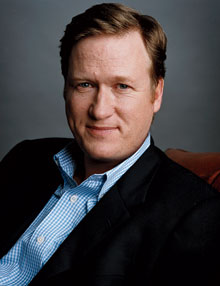
Bryan Burrough
American journalist and author
9
APPEARANCES
8
PODCASTS
Oct 14, 2026


Bryan BurroughGUEST
hotelYeah, this was one of the great s- you know, the greatest gunfighter to ever come out of Texas was John W- was John Wesley Hardin.
Bryan BurroughGUEST
And the craziest story about him was he was actually popularized in an ad for a Time Life book in the 1970s called The Gunfighters.
Bryan BurroughGUEST
It was a TV ad, and the ad was, "Can you believe John Wesley Hardin was, you know, ult- uh, killed a man for snoring?" And of course everybody said, "Oh, that's just Texans.
8 MINS LATER

Joseph Scott HatleySOUNDBITE_SPEAKER
I'm gonna go straight up ask you, did you kill her?

Brian BurroughGUEST
her?[tense music] So Don is going down into the reports, and there in Shannon's report she talks about being raped violently.
Brian BurroughGUEST
And Hatley said, "You mind me, because if you don't, I'm gonna kill you." And then Don read the words that changed everything, 'cause Hatley said, "I've killed before." And Don leaned back, he thought, "Gotcha."
16 MINS LATER
CindySOUNDBITE_SPEAKER
That's it.

Randall WilliamsPANELIST
So, um, give folks a taste of what this podcast is all about, The Gunfighters.
Bryan BurroughGUEST
The, this is a nonfiction, historical- ... narrative, really the first narrative history of what I call the Gunfighter Era, which is a period from 1865, when the first kind of nationally known gunfight was widely reported, until the end of it, which I put an arbitrary date on, but I feel like it, it's, it's right to end the era in 1901 when Butch and Sundance, uh, got on a freighter in Brooklyn and headed down to South America.
Bryan BurroughGUEST
At that point, um, the, you know, the, all the major gunfighter figures from Wild Bill Hickok to Billy the Kid to Wyatt Earp had pretty much moved on-
Randall WilliamsPANELIST
Yeah, so this, so you published a book last year by the same name, and then this podcast is sort of an adaptation, an expansion of that material for-
Bryan BurroughGUEST
I came on and we all talked about it, and I know my sales numbers certainly went up, and I gather y'all's, y'all's numbers looked a little bit better.
Bryan BurroughGUEST
So Steven reached out at some point and said, "Hey, could we turn this into a conversational, uh, podcast, uh, where we tell the stories, the accurate stories of history, um, in a fun way?" And that's, we are in the process of, of making those.
Bryan BurroughGUEST
We're- I'm in, I'm in Montana this week doing 10 of them, and we've got two already out.


Cole SmeadHOST
I mean, as your book lays out, a lot of this is just kinda classic stupid things that run amok.
Bryan BurroughGUEST
When you, when you look at, at why duels happened, it was always One guy insulted another guy.
Bryan BurroughGUEST
I, I spend a lot of time in the book, I won't bore you with all this right here, uh, talking about the Southern honor code, the way men, you know, i- in the South, and I, and, uh, I think evidence shows in, in, on the, in the frontier.
Bryan BurroughGUEST
Um, you know, part of, a key component of that, of that code, in addition to bravery and courtesy and all that, was that you had the obligation to respond to an insult with violence, even deadly violence.
Bryan BurroughGUEST
That was expected of men in the South and the Old West, and I think those behaviors flowed from the South out th- into Texas, and then from Texas across the Old West.
Bryan BurroughGUEST
I, look, Texans don't have a monopoly on Old West violence, but if you read the literature, they're in, like, 67, se- 60 or 70% of, of every significant gunfat- fight from Tombstone to Dodge City to everywhere.
8 MINS LATER


Bryan BurroughGUEST
Well, you're right that the first thing you have to th- realize and remember is that Texas is first and foremost, uh, especially then, a Southern state, so it inherited a lot of the Southern behaviors around male honor.
Bryan BurroughGUEST
Principally, for our purposes, the idea firmly held in the 19th century that if you are insulted, if somebody disses you, you would not only have the, the right, you had the obligation to push back with violence, even deadly violence.
Bryan BurroughGUEST
Then what happened in Texas, Texas was a martial society, one very comfortable with guns because it had to be, not only because of snakes and critters and such, but because, uh, they had...
Bryan BurroughGUEST
You know, they were the only Southern state with two violent frontiers throughout much of the 19th century, the Mexican frontier and the Native American, the Comanche frontier that cut the state in half it-- well into the 1870s.
Bryan BurroughGUEST
So it was an extraordinarily violent place, and then came the decade after the Civil War in which Texas pretty much revolted against federal occupation.
Bryan BurroughGUEST
It was a very nasty, often racist type of violence that permeated kind of the male, you know, the male genes in Texas, if you will.
11 MINS LATER


Bryan BurroughGUEST
... all I ever knew is that I wanted to get out into the world away from Temple.
Bryan BurroughGUEST
And in sixth grade, they had a little sixth grade newspaper, and for some re- reason, I got to be the editor.
Bryan BurroughGUEST
I got to assign stories and write stories and, and I just thought it was intoxicating.
24 MINS LATER


Bryan BurroughGUEST
That a lot of the behav- in fact, all the behaviors that I saw in the Antebellum South gravitated to Texas, which was every inch a Southern, uh, state, you know, 40% of its early settlers just from Alabama and Tennessee.And what you saw and what kind of supercharged this phenomena, what made it explosive, was the decade after the Civil War in Texas, which underwent a spasm of civilian-on-civilian violence that some academics still say was the single most violent period, uh, in American history.
Bryan BurroughGUEST
The first wave basically being a rebellion that the state and many of its inhabitants all, you know, rebelled against, uh, the occupation by, by Union soldiers, especially those of color.
Bryan BurroughGUEST
And so for about five years there, much of Texas, especially North and East Texas, was engulfed in a series of the, the worst feuds in American history.
Bryan BurroughGUEST
And, and around 1870, a second wave of violence, um, entirely unrelated, developed around the state's dominant industry, which was open range cattle ranching.
7 MINS LATER
Phil TaylorPANELIST
(laughs)
Bryan BurroughGUEST
You know, uh, you know, I wanna, I wanna talk about the Colt pistol, but I wanna back up to a min- to the man that doesn't belong in the book, but he's in there.
Bryan BurroughGUEST
Jes- yeah, can you explain to folks, like, who was Jesse James? Like, like, what did...
Bryan BurroughGUEST
That world that he came out of, right? 'Cause that, that winds up having a little bit of an impact on a number of these people.
18 MINS LATER
