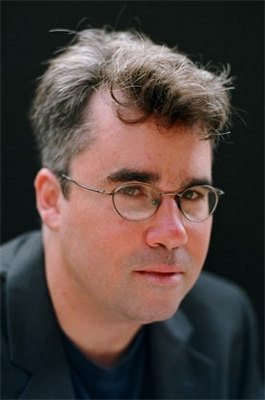
Brian Doherty
American journalist and author
28
APPEARANCES
8
PODCASTS
Nov 6, 2026


Michelle RookCORRESPONDENT
It seems like there's an outflow of some of this speculative money pretty much across the board, right?

Brian DohertyGUEST
The outflow of the speculative money has been in place for, this is the ninth week of it.
Brian DohertyGUEST
So, so what does that mean? That just means when you have a lot of money that's flowing out of a market, as it pushes prices downward, uncovers sell stop orders that uncovers more selling and accelerates the market downward.

Mark MagnusonHOST
Brian, what's happening with the trade in the grains as we get ready for the WASDE report at the end of the week?
Brian DohertyGUEST
Corn seemingly is holding the $5 area pretty well, especially with today now reaching its highest level in looks like 6 sessions.
Brian DohertyGUEST
Uh, 100 day moving average, um, is something that, you know, some had targeted potentially that would have been near 4.85, but prices seem to hold closer to 4.95 this week and now showing some signs of life.

Jesse AllenHOST
What's your thoughts when you look at the broader economy and a dollar index at 102, for instance, and how that is affecting impacting the commodity trade right now, Brian?
Arlan SudermanSOUNDBITE_SPEAKER
you know,
Michelle RookCORRESPONDENT
Quarterly stocks came in higher than expected and higher than what we saw in the September WASDE, right?
Brian DohertyGUEST
Well, they did, and by the tune of just a little over 170 million bushels, and that's a big number.
Brian DohertyGUEST
So if you want a number that has meaning of supply and demand, I've always gone by the rule of thumb that if you have a change in projected carryout, or in this case, if you apply this number directly to carryout of more than 100 million bushels, it begins to have meaning on supply and demand.
Brian DohertyGUEST
But today was sort of a blow that I don't know of anybody who was looking for that.

Bryan DohertyGUEST
The thing that worries me is the amount of managed money that has been parked on the long side of the market and really hung in there very well over the last month.
Bryan DohertyGUEST
You think about the market when it peaked, peaked early September, and then it just kind of went flatline.
Bryan DohertyGUEST
Maybe we had some kind of warning shots across the bow here early in the week with a dropout, but prices came right back.
Bryan DohertyGUEST
There are a lot of contracts after a day like today that may have been tripped or triggered, and there could be a lot more to go.
5 MINS LATER
Jesse AllenHOST
Then it felt like we'd kind of been taking some profit jockeying position ahead of this Trump-Xi meeting where a lot of folks in agriculture, they're hoping something comes out of it, but also they're hoping that – If anything, the status quo is preserved, so we don't have a massive sell-off in this grain market here, Brian.
Bryan DohertyGUEST
Yeah, I think it's funny because when you started to say this, I'm thinking what comes out, hope something comes out of it.
Bryan DohertyGUEST
It's really hoping really maybe nothing comes out of it that's different, which would imply that China's on task to continue their soybean purchases and to buy a lot of other agricultural goods.
Bryan DohertyGUEST
Maybe, hopefully, maybe a little more definition of what that actually might look like in other agriculture goods.
Bryan DohertyGUEST
But I think on Monday, to your point, when the market kind of blew up, there were a number of variables you could have pointed to, not one in particular.
Bryan DohertyGUEST
So there wasn't one headline, one news event, but kind of reading between the lines from what we could gather online.
13 MINS LATER

23:09
Kind of kick it off, talk a little bit about the stall we're seeing within this marketplace.
Bryan DohertyGUEST
If you look at the price of corn where it is today, down about $0.04. You're looking at December corn near $4.30 a bushel.
Bryan DohertyGUEST
If you look on a chart, all you got to do is look back about three weeks and it's at the same price.
Bryan DohertyGUEST
So the big surge from mid-August through the early part of September and now a real consolidation pattern.
Bryan DohertyGUEST
So yesterday is an example where earlier in the day, the market's got some pretty good gains going for it.
Bryan DohertyGUEST
And you gosh, you look and go, boy, it wouldn't take much to break out of this resistance and just continue to extend it up trend.
11 MINS LATER
34:52
We continue that conversation with Bryan Doherty at Total Farm Marketing as we look at the export numbers, those weekly numbers that came out today.
7 MINS LATER
Jesse AllenHOST
Talk about the short side of what a strangle is and what this could do for producers.
Bryan DohertyGUEST
As I think about my response to the last question, I want to throw something else in there about this new crop corn, new crop beans.
Bryan DohertyGUEST
Remember, as a farmer, you have access to, so if you, let's say, sign a hedge to arrive or even a forward contract, you're not necessarily, people look at this and go, well, I can't afford to buy call options up to next December or whenever.
Bryan DohertyGUEST
They start in October of this year and they're based off of December corn for next year, November beans for next year.
Bryan DohertyGUEST
I try to encourage producers to, to buy this ratio call spread for a couple of reasons.
Bryan DohertyGUEST
So, so what happens is if, if, if, and I'm gonna use 2012 and sort of cherry pick that as my example, but I had a number of farmers come to me in, uh, let's say early June, and they're like, "The market's broken.
6 MINS LATER
Jesse AllenHOST
I would imagine some of the same here with a, a more advanced Brian and, and leveraged positions and, and things of that nature that you were just talking about.
Jesse AllenHOST
I just wonder if maybe wheat's maybe not leading, but giving us some baseline support underneath this entire grain complex here, Brian.
Bryan DohertyGUEST
So if you want to argue that we're in the stage of a bull market or starting a bull market on grains, that's a fair argument right now.
Bryan DohertyGUEST
Rarely do we get corn and beans to move up without wheat participating or leading.
Bryan DohertyGUEST
Wheat's a world crop produced around the world, so it's very important that the world continually have good crops, produce good crops, if you're going to, let's say, feed the world without concern.
Bryan DohertyGUEST
Well, you've got some concern now, and you've got concern out of this corridor in, let's say, the Black Sea corridor, both Russia and Ukraine.
Bryan DohertyGUEST
Can you get wheat that's there to the world? So absolutely, it's a logistical issue, but...
Jesse AllenHOST
Talk about first just, you know, how does a fence strategy work here, Brian? Yeah.
Michelle RookHOST
Talk about why last week, seeing that after the WASDE was so important for the market.
Bryan DohertyGUEST
You went into this August report, I think, Everybody held their breath to see what kind of numbers might come out on the acreage and the yield.
Michelle RookHOST
Do you think the idea here is that yield is going to keep going down or is really price determinant more factored on demand going up going forward?
Brian DohertyGUEST
that? So let's compare it to last year, almost the exact opposite scenario where we have a firm market right now.
Brian DohertyGUEST
You've got higher input costs and you've got a market that is holding together very well in this past year has really brought a lot of speculative money on price dips as well, recognizing some of the big picture perspective.
Jesse AllenHOST
And, uh, I've kind of felt like a quiet day, maybe some pullback overall after all the surprises from the WASDE report that came out on Wednesday, Brian.
Bryan DohertyGUEST
Yeah, you know, interesting session because when you break down the WASDE report, sort of the launch pad prior to the report was the much higher wheat market early in the session that carried through right through the report yesterday that I think helped provide support for corn.
Bryan DohertyGUEST
So We could spend an hour breaking down the numbers, but basically the bottom line is corn carryout narrows in for old crop, new crop.
Bryan DohertyGUEST
My feel of that is as I talked to producers throughout the session and this morning, they were selling some of that remaining old crop on hand, selling a little bit more new crop.
Bryan DohertyGUEST
There's a really good corn crop coming, not a really, really good corn crop coming.
11 MINS LATER
Jesse AllenHOST
Could the momentum in stocks, in the outside markets, could that translate over to the grain and, and livestock trade potentially, or are we seeing some disconnect there right now, Brian?
Bryan DohertyGUEST
I, I'm gonna say you're probably seeing some disconnect in that I, I'd probably lean more toward the livestock to, to point that out.
Bryan DohertyGUEST
Now, the stock market is off today some, but after four really Good updates and just a blow up to the top side, right? And the cattle market seemed to follow suit and then tipped over today maybe for various reasons.
Bryan DohertyGUEST
Are we looking at a s- scenario though where, where demand is just gonna hold up this time of year, so we get a few updates and then the market sort of gets itself slapped back down? There's that potential.
Bryan DohertyGUEST
We saw about a $9 to $10 increase in the cutout values coming into yesterday and then again today.
Jesse AllenHOST
Maybe you can walk folks through some of the, uh, the basics and the ins and outs of what is a short call, Brian.
Bryan DohertyGUEST
So, so this is just a graphic that's, uh, pretty standard, but this represents that when a person purchase a put, uh, you have a fixed risk.
Bryan DohertyGUEST
Uh, and then there's another line that slopes from the upper left to the, uh, under the dotted line then, then to the right.
Bryan DohertyGUEST
And then on the bottom, the key to watch there is futures price, right? So, so as the, uh, as the market moves, what a put does it, it establishes a price floor.
Jesse AllenHOST
So talk about what we're seeing on the geopolitical front, because I think that's one of the legs of the stool, so to speak, here this week, Brian.
Bryan DohertyGUEST
Well, for several weeks or months, we've heard about the Strait of Hormuz, and then also we hear about the Strait of Kerch, right? I guess it's pronounced Kerch.
Bryan DohertyGUEST
And it's like, where's that? And you start looking at a map and that is a really, really important marketplace, port, channel, straight, whatever you want to call it, to move wheat from Russia to the world.
Jesse AllenHOST
And so talk about this, because I'm not going to say that it's a massive problem yet, but if the forecasts hold and the trend continues and some of these areas that are not getting rainfall don't get rain and continue to get heat, I think that's some of what the trade is maybe grasping onto as well here
Michelle RookHOST
Have we found some support here, especially going into these reports coming up on Friday? Because cash market so far has already been lower for the week.
Bryan DohertyGUEST
We thought that three days ago maybe we were seeing that, and then it fell over again.
Jesse AllenHOST
So, uh, we'll pick this up with our first lesson here, Brian, and maybe walk us through, uh, some of what your thinking is here, and we could dive in and talk about long call options today.
Bryan DohertyGUEST
The, the first thing I'd like to, to just mention is that, that as, uh, this will be, um, predicated, or it'll be talked about in the sense of the producer, okay? But I'll bring in the b- you know, the user of grains, too.
Bryan DohertyGUEST
But the timing on this is really good for us because if you look at June 30th, this...
Jesse AllenHOST
good to have you with us as always sir and uh let's start with this cattle complex for a change you and i were talking about this a bit off air that uh it's been a rough go here as of late the cattle trade feeders and fats on the day thursday kind of collapsing a bit into the close your perspective on what's kind of a struggle all of a sudden here in the cattle trade brian
Bryan DohertyGUEST
Um, just because you're past the 4th of July and what does the market really have in front of it from a, let's say a holiday perspective, right? You kind of get into the dog days of summer and our people, when it gets really warm or they're going to eat, eat as much that type of thing.
Bryan DohertyGUEST
Looks like the money flow has probably been a little bit more sort of cautious in the cattle complex.
Bryan DohertyGUEST
Tough for them to buy in the 240s, 250s to expect to make what, as we now seem to be learning over time that since at least the beginning of the year, that when we see live market in that upper 240s, 250s, sometimes a little better, it hasn't held.
11 MINS LATER

Michelle RookHOST
You said a strong close today, but you've got, I think, the 100 and 200 day moving average yet to take out to keep going here, don't you?
Bryan DohertyGUEST
And if you really think about a moving average, it's the average price over a certain period of time, right? So if you talk about a 100-day moving average, which the beans pushed on through, it's above the average price.
Bryan DohertyGUEST
So it tells me where the momentum is in the market, right? So you get what I'm going to call a quick bounce in the corn market, but has it really changed the momentum, which is still maybe overall down? And the moving averages would say not yet.
8 MINS LATER
Michelle RookHOST
Do you feel like this market is, is this a healthy correction or is this market starting to roll over technically?
Bryan DohertyGUEST
So, and that's what goes back to when I was looking or mentioning kind of the forecast.
Bryan DohertyGUEST
Uh, what's the perception in the, in the crop season right now? Well, it's maybe, you know, not the best start, but it's pretty good.
7 MINS LATER
Jesse AllenHOST
I mean, thinking about the dollar and some of the outside market moves this week and more inflation data and things like that, How much is the dollar going to play a role here potentially as we near the 4th of July?
Bryan DohertyGUEST
I did some analytics on it yesterday, which that's code for I took a paper and pencil and tried to figure a few things out.
Bryan DohertyGUEST
Okay, the dollar's kind of the swing boat, but let's just assume with the dollar up 6%, we export 6% less corn.
Bryan DohertyGUEST
I think that might be a path of assumption that has some merit and, in essence, what that would do is add about 200 million bushels to the US carry out.

Dan AhlstrandHOST
Tell me a little bit about the Celtic Festival underway and what is it designed to do, Brian?
Brian DohertyGUEST
There are six main Celtic nations of Ireland, Scotland, Wales, the Isle of Man, Cornwall, and Brittany in France.
Brian DohertyGUEST
Now, Galicia in Spain could be classified as an honorary member of that group.
Jesse AllenHOST
And it just makes a guy wonder, you know, could farmers sit on the sideline for some time here until we have a better understanding of what the crop is looking like here later in the growing season, Brian?
Bryan DohertyGUEST
But selling new crop down here, given that a lot of farmers probably, what I'm going to say, kind of measured up on the insurance, there's just not a lot of risk from here.
Bryan DohertyGUEST
And while farmers did, I think, a great job of selling corn at a higher level because we did see $5 corn.
Bryan DohertyGUEST
It just didn't feel like a win this year because fertilizer and more so energy prices were moving up at such a pace that it felt like, oh, now the board's rallying, but I can't keep up faster than what these other inputs are flying at me.
5 MINS LATER
Jesse AllenHOST
And, I mean, talk about your view of this cattle market here ahead of Father's Day.
Scroll for more appearances