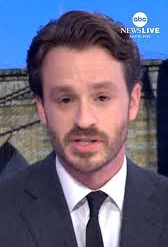
Brian Buckmeyer
Trial Counsel at Hamilton Clarke, LLP and ABC News legal contributor; former Legal Aid Society homicide defense attorney and author of "Come Home Safe."
12
APPEARANCES
6
PODCASTS
Oct 19, 2026


Gio BenitezHOST
Let's talk about this McDonald's thing because this lawsuit is alleging, what is this lawsuit alleging about how the fast food giant is using AI to help set prices?

Brian BuckmeyerGUEST
Yeah, so Michael Thomas, an Illinois man, is making the allegation that he frequents McDonald's and he orders his typical quarter pounder with cheese, french fries, and Coke, and that over time he's seeing that prices have been going up and up, as many of us are seeing in other areas as well.
Brian BuckmeyerGUEST
But he's accusing McDonald's of using AI to control prices throughout the country of their 14,000 locations.
Brian BuckmeyerGUEST
95% of which are franchises, in order to raise prices to affect not only competing McDonald's, but within communities themselves, harming the customer and making their burgers and fries and also milkshakes cost more and more over time.
Brian BuckmeyerGUEST
So McDonald's is saying that they do use AI technology in order to help franchises understand the best prices within their communities.
Brian BuckmeyerGUEST
Of course, we all know that a Big Mac and french fries might cost differently than in Detroit, Michigan, than it might in parts of California.
Morgan NorwoodSOUNDBITE_SPEAKER
Brian, I do want to start with you because this DNA evidence the defense will now test wasn't necessarily a major factor in the first trial, right? How is the defense likely to use this in their advantage this time around?
Brian BuckmeyerGUEST
So first understand the defense's argument, and they made this argument actually the first trial, and they abandoned an argument that they could have had in front of the jury because they didn't get the evidence that they wanted.
Brian BuckmeyerGUEST
But the prosecution was the only one that had the opportunity to test that DNA.
Brian BuckmeyerGUEST
And their argument for not turning over that information around the first trial was that to test more of that DNA, because think about it, we're talking about... skin cells under the fingernails.
Brian BuckmeyerGUEST
That's not a lot, right? But when you test something, you consume it as well.
9 MINS LATER
Morgan NorwoodSOUNDBITE_SPEAKER
What is being alleged here?

Brian BuckmeyerGUEST
It's one, this on-again, off-again, is there consent, is there no consent? And he looked at it, and as all prosecutors and defense attorneys do, they look at it in the context of, if I was to present this to a jury, what does our current society think of when it comes to consent? What does our current society think of when it comes to rape? What do the current laws also say as well? And when we have the laws and determination of consent we have up there, the two that probably fit the best when we're thinking about whether or not this Jane Doe consented is the idea of was she mentally incapacitated or was she physically helpless? By definition, mentally incapacitated often refers to someone else giving you a drug or intoxication, and that's why it could be considered rape.
Brian BuckmeyerGUEST
It's one, this on again, off again, is there consent, is there no consent? And he looked at it, and as all prosecutors and defense attorneys do, they look at it in the context of, if I was to present this to a jury, what does our current society think of when it comes to consent? What does our current society think of when it comes to rape? What do the current laws also say as well? And when we have the laws and determination of consent we have up there, the two that probably fit the best when we're thinking about whether or not this Jane Doe consented is the idea of was she mentally incapacitated or was she physically helpless? By definition, mentally incapacitated often refers to someone else giving you a drug or intoxication, and that's why it could be considered rape.
Brian BuckmeyerGUEST
And here's where the loophole and the issue is that I think the prosecutor's hanging their hat on.

Bernarda VillalonaGUEST
Because it was definitely a conversation that was taking place that she wasn't privy to because how all of a sudden we have multiple males coming inside of that room.
Perry RustemSOUNDBITE_SPEAKER
So Brian, if we stay on this topic then of local news coverage, or even just people reading on social media, whether it be Reddit, Twitter, X, whatever you want to call it, what would make you dismiss a potential juror about what they've been following coverage-wise?
Brian BuckmeyerGUEST
So first and foremost, we've got to talk about dismissing jurors from like a 30,000-foot kind of view.
Brian BuckmeyerGUEST
It is a game between defense attorneys and prosecutors, right? I want to potentially mitigate or lessen those people who I know I want so that the prosecutor doesn't get rid of them, and maybe highlight something that would poison the entirety of the group to make them use up their challenges.
9 MINS LATER
Perry RustemSOUNDBITE_SPEAKER
So, Brian, how much has to go wrong for a woman to spend six months in jail before everybody realized the mistake has happened?
Byron PittsMODERATOR
attempt
Brian BuckmeyerGUEST
so i would say my bias and probably lance as well as defense attorneys were not fans of it but clearly from this case it wasn't enough of an impact because it was an acquittal i think for the most part it was circumstantial evidence and it wasn't enough to carry the prosecution's case they're saying hey look he wants this person dead hey look he's rapping about it in his music and And the prosecution wasn't able to put enough of, there's a meeting of a mind, there's affirmative steps towards this goal to actually show that this conspiracy for a murder for hire plot actually happened for not just Little Dirk, but the other two co-defendants, right? And so the rap lyrics, I think, should be something that prosecutors should maybe put aside and try focusing on actual cases.
Brian BuckmeyerGUEST
And maybe if there wasn't so much fluff, they might have had a better result here.
9 MINS LATER

Brian BuckmeyerGUEST
I think the reality is it might be similar to being a journalist, might be similar to being a nurse or a doctor.
Brian BuckmeyerGUEST
But for attorneys, nine times out of 10, when you've come to meet us, you didn't have the best day of your life, especially in a criminal setting.
Brian BuckmeyerGUEST
And so for us, it's about how do we take the worst day of your life and try to make it incrementally better? Can we reverse it completely? Probably not, because the crime is a crime.

Brian BuckmeyerGUEST
I was not surprised at the tactic, neither was I surprised that it didn't work.
Brian BuckmeyerGUEST
I think defense attorney Reddington made the right choice in asking for an emergency stay, going to the Supreme Court of Massachusetts and seeing if an appellate judge, even within an hour, which was a little bit longer than that, would stop the proceedings and compel the judge to remove this one juror, fill in a new one, or at least inquire as to what's going on so they can figure out a way to proceed forward.
Brian BuckmeyerGUEST
But it wasn't surprising that that motion was denied and we're now stand here with a mistrial.

Juju ChangHOST
And Brian, what kind of a plea deal might the defense be looking for? I mean, people feel so strongly about this case online, especially there's so much debate about mental health and postpartum.
Brian BuckmeyerGUEST
I think the first deal that the defense attorney might entertain would be that she was found to lack criminal responsibility and she'd be placed in a mental health facility, probably in the same one that she's at, Tewksbury Hospital, that does contain people who have mental health issues or psychiatric issues who are incarcerated because of a crime.
Brian BuckmeyerGUEST
And I think in the mindset of this jury, I think they're getting to the point, if they're not already there, somewhat frustrated.

Brian BuckmeyerGUEST
There's a big difference between retaliation and orchestrating it, right? Understanding as Bernardo is articulating well, and then the prosecution as well, This is a family.
Brian BuckmeyerGUEST
If someone in your family got hurt, would you all need to come together and be like, hey, my little sister got picked on at school.
18 MINS LATER
Mike AjaciHOST
What do you think of the defense's strategy of not really arguing whether or not she killed the children and instead focusing on her state of mind? I think it's

Ashan SinghHOST
What are the plaintiffs demanding in this lawsuit and who would get paid if they actually win?
Brian BuckmeyerGUEST
So part of the reason why they're saying it's so disproportionate is because currently, Meta's market capitalization is $1.4 trillion, about the same amount that they're asking for in here.
Brian BuckmeyerGUEST
And I understand that we've seen this case or a very similar case both in New Mexico as well as California, and they were successful, those states, in suing Meta.
Brian BuckmeyerGUEST
Well, in practice, the state would get the money, but the idea is that the money would go to different programs or initiatives to help individuals who are harmed by these programs.
Brian BuckmeyerGUEST
so you'd expect that in new mexico and california and potentially in the four other states that are leading this charge representing 29 other states that if they're successful against meta we should see initiatives and programs for young people helping them with social media addictions
Ashan SinghHOST
brian before i let you go help me get back to basics here why would meta or any company be responsible for anyone becoming addicted to their products do we have laws that say anything about this


Brian BuckmeyerGUEST
But specifically in Idaho, the standard is that there needs to be a manifest injustice.
Brian BuckmeyerGUEST
And that's extremely difficult to do in a situation like this where judges, prosecutors, and defense attorneys are all trained on how to make sure that a defendant is properly informed, that they know they're taking a plea voluntarily, and that they're knowledgeable in the conditions of that plea.
Brian BuckmeyerGUEST
But when you talk about trying to take back a plea after a year, it adds even more layers to the difficulty of what Brian Kober is attempting to do.
Unknown podcast
Judge declares mistrial in Palisades Fire suspect's federal trial
Jun 27 · 6m
DavidHOST
All right, Brian, what
Brian BuckmeyerGUEST
do you think? This is interesting, and I think it's also interesting for the defense, what will happen to the defense and what will happen from now on.
Brian BuckmeyerGUEST
We hear that it is a mixed case in terms of guilt, or innocence, or that it cannot be reached a conclusion, or that it cannot be.
Brian BuckmeyerGUEST
But hearing that 10 jurors said that it was not guilty, I think it would give an air of confidence to the defense to say that if they decide to judge this case again, because it makes sense.
Brian BuckmeyerGUEST
Why go ahead? Because in any case, a prosecutor must prove that he believes that he can obtain a guilty verdict.
Brian BuckmeyerGUEST
With a result like this, it becomes difficult for the prosecution to go ahead with the conversation.
DavidHOST
¿Y qué crees que pasó aquí que sembró dudas en la mente de los 10 jurados?