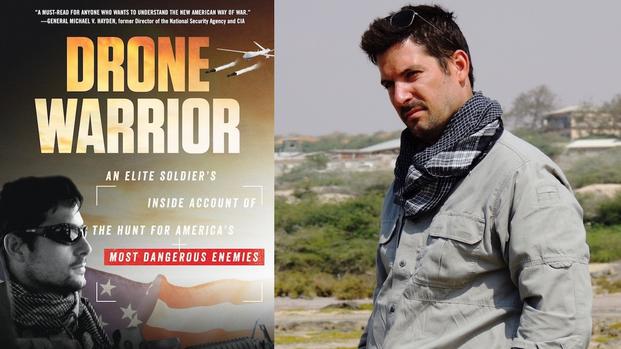
Brett Velicovich
Soldier
20
APPEARANCES
7
PODCASTS
Oct 9, 2026

1:44

[whooshing sound] So Brett, can you start with an introduction to who PowerUS is, including a brief history of the company, where you're based, and some of the primary technologies you provide for aerospace and defense applications?
Brett VelicovichGUEST
So PowerUS is a American defense technology company that focuses on autonomous systems, drones, counter-drone technology.
Brett VelicovichGUEST
Uh, we're really focused on building, uh, a American manufacturing base around the technologies that are defining the next generation of warfare, and that's, that's drone technology.
Brett VelicovichGUEST
And we, we really see, uh, the company as one of the very few first movers in revolutionizing, uh, America's industrial base as it relates to building drone defense technology.
Brett VelicovichGUEST
The, um, you know, build- being able to build systems at massive scale, which has been very difficult, I think, for, for many other companies, uh, because they've focused on these, you know, very large, exquisite, very expensive systems.
Brett VelicovichGUEST
And, and our focus is on exquisite systems that can be built, um, um, at, at massive scale.
9 MINS LATER
12:01
And before we wrap up, Brett, are there any just additional thoughts you'd like to share with our audience on lowering the cost of US-based manufacturing drones or counter-drone interceptors? And are there any upcoming initiatives, projects milestones or even events that PowerUs will be at that our audience should keep an eye on?

Brett VelicovichGUEST
Well, Ron's been playing this game for decades, and this is all part of the playbook.
Brett VelicovichGUEST
And I think the Trump administration's made it very crystal clear lately that we're not going to let the world's most critical shipping lane be held hostage to them.
Brett VelicovichGUEST
And so if the order was given by the president to guarantee freedom of navigation, I think the military could rapidly suppress Iran's ability to openly challenge commercial shipping.

Larry KudlowHOST
Can we clear the Iranian part of the Strait of Hormuz, Brett Belikovich? How difficult is that?


Steve SimoniHOST
And you guys were, like, over there and were like, I don't have any good products.
Brett VelicovichGUEST
So so a couple of days after the full scale war in in Ukraine kicked off, I was on the ground there with a couple ex JSOC colleagues of mine, and we were out there doing humanitarian rescues and extractions of Americans because the State Department left.
Brett VelicovichGUEST
And it had zero drone premise, even though I spent my whole world with drone technology.
Brett VelicovichGUEST
When I was over there, there was really, the premise was just to help get Americans out.
Brett VelicovichGUEST
And then what turned into sort of bringing Americans out of the country turned into providing humanitarian aid.
Brett VelicovichGUEST
So we were bringing everything from medical kits to these tactical IFACs that you use when a soldier gets shot and it has everything from uh tourniquets to to all kinds of medical equipment that a soldier would need when they get shot the ukrainians didn't have any of this equipment i mean their ifacs looked like you know band-aids and elmer's glue like it was bad and we supplied i would say a couple hundred thousand ifacs at the time and so we were moving medical equipment all around Well, eventually, you know, most soldiers, you know, each individual soldier had one of those kits.

Brett VelicovichGUEST
I think that we've had a, a big issue in the US specifically when it comes to the bureaucracy of what it takes to be able to create the protection that's needed around these locations.
Brett VelicovichGUEST
I think in a lot of ways there's been different agencies who have gotten involved when they haven't needed to.
Brett VelicovichGUEST
I think the FAA has been causing a bit of problems for our federal law enforcement agencies in terms of being able to test equipment that's needed.
Brett VelicovichGUEST
I mean, we need to really start employing more counter-drone systems, and we need to employ kinetic solutions.
Unknown podcast
Extra: World Cup Security And The New Drone Threat
Jun 6 · 43m
Brett VelicovichGUEST
I think that we've had a, a big issue, um, in the US specifically when it comes to the bureaucracy of what it takes to be able to create the protection that's needed around these locations.
Brett VelicovichGUEST
I think, um, in a lot of ways there's been different agencies who have gotten involved when they haven't needed to.
Brett VelicovichGUEST
I think the FAA has been causing a bit of problems for, uh, our federal law enforcement agencies in terms of being able to test equipment that's needed.
Brett VelicovichGUEST
I mean, uh, you know, when you, when you see some of these other countries and the, the sophisticated equipment that they have to be able to counter a drone attack, a lot of that stuff they can test very frequently.
6 MINS LATER
Brett VelicovichGUEST
I think that we've had a, a big issue, um, in the US specifically when it comes to the bureaucracy of what it takes to be able to create the protection that's needed around these locations.
Brett VelicovichGUEST
I think, um, in a lot of ways there's been different agencies who have gotten involved when they haven't needed to.
Brett VelicovichGUEST
I think the FAA has been causing a bit of problems for, uh, our federal law enforcement agencies in terms of being able to test equipment that's needed.
Brett VelicovichGUEST
I mean, uh, you know, when you, when you see some of these other countries and the, the sophisticated equipment that they have to be able to counter a drone attack, a lot of that stuff they can test very frequently.
6 MINS LATER

speaker_8UNKNOWN
Mm.
Brett VelicovichGUEST
Iran would love nothing more than to provoke a response that fractures our international support, it spikes oil prices, and it creates political division at home.
Brett VelicovichGUEST
Instead, we've been very methodical, and, and kudos to the president for that.
Brett VelicovichGUEST
And that's frustrating for people who want immediate action, but m- methodical pressure often produces better outcomes than emotional decision-making.
Brett VelicovichGUEST
And the reality is that reopening Hormuz isn't just as simple as sending a carrier strike group through the strait, but a lot of people need to understand that we have already imposed a significant cost on Iran.
Brett VelicovichGUEST
Iranian oil exports have collapsed to some of their lowest in, uh, levels in years.
Brett VelicovichGUEST
Tehran is facing growing economic pressure, and that's the kind of leverage you want before making any major military decisions.
speaker_8UNKNOWN
I don't want them to have the control over any part of it, Brett.


Brett VelicovichGUEST
I think that we've had a, a big issue, um, in the US specifically when it comes to the bureaucracy of what it takes to be able to create the protection that's needed around these locations.
Brett VelicovichGUEST
I think, um, in a lot of ways there's been different agencies who have gotten involved when they haven't needed to.
Brett VelicovichGUEST
I think the FAA has been causing a bit of problems for, uh, our federal law enforcement agencies in terms of being able to test equipment that's needed.
Brett VelicovichGUEST
I mean, we need to really start employing more counter-drone systems, and we need to employ kinetic solutions.
Unknown podcast
The New Drone Threat: Keeping The World Cup And Summer’s Mega-Events Safe
Jun 3 · 33m
Brett VelicovichGUEST
I think that we've had a, a big issue, um, in the US specifically when it comes to the bureaucracy of what it takes to be able to create the protection that's needed around these locations.
Brett VelicovichGUEST
I think, um, in a lot of ways there's been different agencies who have gotten involved when they haven't needed to.
Brett VelicovichGUEST
I think the FAA has been causing a bit of problems for, uh, our federal law enforcement agencies in terms of being able to test equipment that's needed.
Brett VelicovichGUEST
I mean, we need to really start employing more counter-drone systems, and we need to employ kinetic solutions.
Brett VelicovichGUEST
But right now, Larry, look, missiles, they grab headlines, but economics decides wars, and right now Iran is fighting f- on both fronts.
Brett VelicovichGUEST
Tehran has spent years portraying itself as economically sanctions-proof, but the reality is, is that even workarounds have limits.
Brett VelicovichGUEST
Their smuggling networks, their shadow oil fleets, and this discounted exports that sort of keep a regime alive, they don't create prosperity in the end.
Brett VelicovichGUEST
There's a difference between surviving and functioning, and what's striking is that Iran's economy right now is the battlefield.
Brett VelicovichGUEST
The sanctions, the blockade pressure, shipping disruptions, they're slowly squeezing the regime from the inside out, and history shows authar- authoritarian governments can withstand military pain for a very long time.

David AsmanHOST
But, uh, but now, a- and, and particularly when you hear Brian's suggestion that maybe they want another strike, I mean, these, these are- people are real lunatics, aren't they?
Brett VelicovichGUEST
Yeah, you're exactly right, and what's getting overlooked here is how much internal pressure Iran is under right now.
Brett VelicovichGUEST
The internet blackouts that they've had, that tells you the regime is worried about instability in its own country.
Brett VelicovichGUEST
Governments do not cut off tens of millions of people from the global internet for months because they feel strong and secure.
Brett VelicovichGUEST
They do it because they fear unrest, economic anger, and, and loss of control.
David AsmanHOST
I'm, I'm just wondering, Brett, is it possible that this is stirring up discontent to the point where people may g- may go out, you know, "Damn the internet, uh, damn the, the possibility of snipers, uh, we just, we just can't take this anymore"?
Brett VelicovichGUEST
And you're seeing, you know, China and Iran maybe coordinating in the Gulf, but the bigger story to me is the world still depends on American strength to keep global commerce alive, and even China just exposed its real priority, energy security above everything else.
Brett VelicovichGUEST
When the seas get dangerous, every country, including China, eventually looks to the United States to restore order.
Brett VelicovichGUEST
But what's really interesting to me is that China's trying to play both sides right now at once.
Brett VelicovichGUEST
On one hand, Beijing wants to maintain close economic ties with Iran and keep discounted Iranian oil flowing to them.
Brett VelicovichGUEST
But on the other hand, China absolutely does not want a, a wider regional conflict that sends oil prices skyrocketing and destabilizes their own trade.
Brett VelicovichGUEST
China wants cheap Iranian oil, but it also wants American stability protecting the shipping lanes delivering it.
Brett VelicovichGUEST
You have reports of collapsing currency, shrinking oil exports, internal warnings that the regime cannot sustain prolonged pressure, all point to the same conclusion.
Brett VelicovichGUEST
Tehran's leadership can issue these threats and the propaganda all they want, but behind closed doors, they understand the trajectory.
Brett VelicovichGUEST
They've got tens of millions of oil barrels stuck on tankers that can't go anywhere.

Brett VelicovichGUEST
Well, it's not hypothetical anymore, and I think the recent warning from the FBI proves that the threat of drone attacks on U.S. soil are, are real.
Brett VelicovichGUEST
Someone out there had real intelligence information that this was a threat, otherwise the FBI wouldn't have issued this statement.
Brett VelicovichGUEST
And I've been talking about that on, you know, your program for years, that we do have some vulnerabilities.
Brett VelicovichGUEST
Uh, you know, that being said, uh, you know, we do need to fix some of our defenses here in the U.S. We need to also catch up to the Iranians' level of drone production as well.
Brett VelicovichGUEST
We just saw recently the sort of this show of force by the Iranians where this large supply of naval suicide drones were shown off in these underground missile, uh, locations.

Brian KilmeadeHOST
How important has been the advances in drone technology in the Ukraine war, and how vital has Ukraine's knowledge been to our Gulf States? Despite Ukraine being under nonstop barrage from Russia, they are helping the U- the Gulf States protect themselves against the Shahed drones because they're dealing with the same drones against Russia.
Unknown podcast
Extra: The Evolution of Drone Warfare
Mar 8 · 29m
Chris FosterHOST
What do you make of the criticism that they should have been better protected, that this could have been anticipated?
Brett VelicovichGUEST
Uh, I've seen-- I, I've been one of the most vocal advocates on the Fox network for years.
Brett VelicovichGUEST
I think literally my first show ever on Fox, I t- I warned about this because ISIS was using, uh, Chinese drones in Syria to strike our forces.
Brett VelicovichGUEST
And, uh, I've been a little upset in the last week because, uh, you know, this is not the first time that we've, we've brought this up to people.
Chris FosterHOST
What do you make of the criticism that they should have been better protected and that this could have been anticipated?
Brett VelicovichGUEST
Um, I've seen-- I, I've been one of the most vocal advocates on the Fox network for years.
Brett VelicovichGUEST
I think literally my first show ever on Fox, I t- I warned about this 'cause ISIS was using, uh, Chinese drones in Syria to strike our forces.
Brett VelicovichGUEST
I see what's being used every single day, and, uh, I've been a little upset in the last week because, uh, you know, this is not the first time that we've, we've brought this up to people, and I think, I don't know who for years inside the Department of War has been in charge of procurements for counter-drone systems, especially abroad, to intercept drones, protect our embassies, but, uh, it's my personal opinion somebody dropped the ball.
Brett VelicovichGUEST
Well, that's the problem, right? Iran really, in my opinion, has just about perfected the art of low-cost, one-way attack drones.
Brett VelicovichGUEST
That was because they had to put these things in the hands of their proxy forces, uh, that were running around the world trying to kill Americans, trying to kill Israelis, uh, sow chaos, and those proxy forces didn't have access necessarily to, to big budgets, so Iran started creating drones that were capable of reaching significant distances.
Brett VelicovichGUEST
And they, in my opinion, in terms of being able to produce that at low cost, have sur- uh, surpassed what, what we did because of where our focus was.
Brett VelicovichGUEST
And frankly, it's unsustainable, right? Uh, when you talk about what is being used right now to shoot these things down.Cheap twenty thousand dollar Iranian Shaheds are forcing us to burn multi-million dollar interceptors.
Unknown podcast
Conflict in Iran Sparking Political Fights at Home
Mar 6 · 31m
Brett VelicovichGUEST
Well, that's the problem, right? Iran really, in my opinion, has just about perfected the art of low-cost one-way attack drones.
Brett VelicovichGUEST
That was because they had to put these things in the hands of their proxy forces that were running around the world trying to kill Americans, trying to kill Israelis, uh, sow chaos, and those proxy forces didn't have access necessarily to, to big budgets, so Iran started creating drones that were capable of reaching significant distances.
Brett VelicovichGUEST
And they, in my opinion, in terms of being able to produce that at low cost, have sur-uh, surpassed what, what we did because of where our focus was.
Brett VelicovichGUEST
And frankly, it's unsustainable, right? Uh, when you talk about what is being used right now to shoot these things down.
Brett VelicovichGUEST
Cheap twenty-thousand-dollar Iranian Shaheds are forcing us to burn multi-million dollar interceptors.


Will CainHOST
And so the how long thing you introduced and the regime change element of this, it's like, okay, I have no doubt that in the matter of a couple of weeks, we can totally neuter the existing regime or destroy it, but what next?
Brett VelicovichGUEST
I think the difference is hopefully we are not putting humans and boots on the ground because that then becomes more of this religious fight where people potentially will, will come just to try and kill Americans for being on Arab land.
Brett VelicovichGUEST
That is something that I think was a major mistake in Iraq and Afghanistan, so I'm hoping we can do a lot of this from the air, uh, because there has been a complete structural shock to the regime, right? Their internal system in Iran, it's highly centralized around the supreme leader.
25 MINS LATER
Brett VelicovichGUEST
I think he understands, uh, we may be in a situation where he needs to escalate for the purposes of de-escalation.
Brett VelicovichGUEST
You know, Putin isn't only gonna agree to peace negotiations unless there's some threat of greater force.
10 MINS LATER
Brian KilmeadeHOST
So, do you think that Russia just thinks they're gonna wear us out, including NATO, uh, and, uh, that they're winning? I mean, you, it just your conjecture from being on the ground.