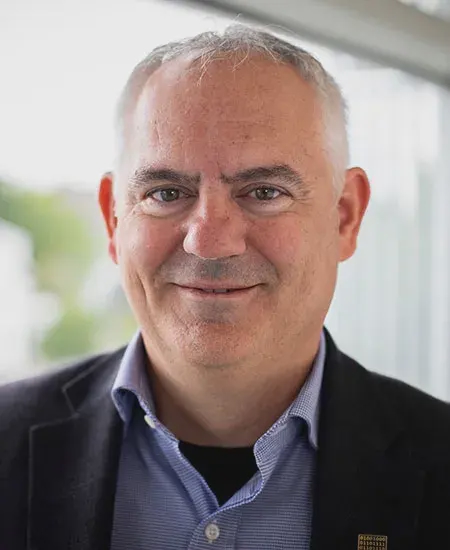
Brent Seales
Computer scientist at the University of Kentucky and co-founder of the Vesuvius Challenge, known for using AI and X-ray imaging to read the Herculaneum scrolls.
5
APPEARANCES
5
PODCASTS
Sep 17, 2026


Brent SealesGUEST
And it wasn't until we started developing this particular technology that I started searching around for, you know, likely candidates.
Brent SealesGUEST
I mean, it was formed, the library at Herculaneum was formed by the volcanic eruption of Mount Vesuvius in AD 79.
47 MINS LATER


Brent SealesGUEST
One of them is, uh, a Philodemus work with the title and author extracted from the very center of the scroll.
Brent SealesGUEST
A, a real miracle, if you will, because the title and author are written at the very, very core of the scroll.
Brent SealesGUEST
But, um, what we've discovered there is Philodemus wrote a book on gods, and it happens to be book eight.

Helen GeakeHOST
And h- how many scrolls have you got at the moment from Herculaneum that you can use this on?

Chris BarrowHOST
Also in this podcast...
Brent SealesGUEST
We're using X-rays to be able to see inside, and then software, including AI, to be able to actually read the evidence of the ink from the interior.
22 MINS LATER
Chris BarrowHOST
Brent Seales is a professor of computer science at the University of Kentucky and one of the founders of the project.
Brent SealesGUEST
You don't have just the volcanic, you know, damage, but you have aging for two thousand years, the archeology.
Brent SealesGUEST
And then the last two hundred and fifty years, I mean, bless everyone's heart, but people did the best they could at, you know, trying to hold off, and not everything got preserved.
Brent SealesGUEST
So we're operating on three or four hundred of the worst of the worst, which is why we're using X-rays to be able to see inside, and then software, including AI to be able to actually read the evidence of the ink from the interior.
Brent SealesGUEST
Um, you can map the entire internal structure using what's called X-ray tomography.


Brent SealesGUEST
Um, you can map the entire internal structure using what's called X-ray tomography.
Brent SealesGUEST
It's essentially a three-dimensional map of everything inside the scroll, but at a very, very fine resolution.
Brent SealesGUEST
And once you get that, you can see where all of the folds are, not just the outer ones, right, but the interior wraps, and then the software lets us localize those folds and unwrap them.
39:18
I mean, something's charred to a cinder a couple of weeks ago, but this is two thousand years old.
Brent SealesGUEST
I mean, you don't have just the volcanic, you know, damage, but you have aging for two thousand years, the archeology, and then the last two hundred and fifty years, I mean, bless everyone's heart, but people did the best they could at, you know, trying to hold off, and not everything got preserved.

Russell EyrigMODERATOR
Well, Brent, do you have anything else to add to what Nat said?
Brent SealesGUEST
Well, the artificial intelligence part, which Nat Field deployed at GitHub co-pilot, which was one of the first of aids that the world saw in coding anyway, right, related to this whole AI large language model surge that we now see.
Brent SealesGUEST
And so he was the right person to help me extend toward a kind of AI approach that would help us make that ink that's so hard to see more visible.
Brent SealesGUEST
And being able to use the contest to really push hard on that turned out to be a key that opened up the next phase of the project.
Brent SealesGUEST
And so AI has really been, I would call it analytical AI, not generative AI, but the ability to enhance evidence of the ink that's not visible to your naked eye, but is still there.
19 MINS LATER
