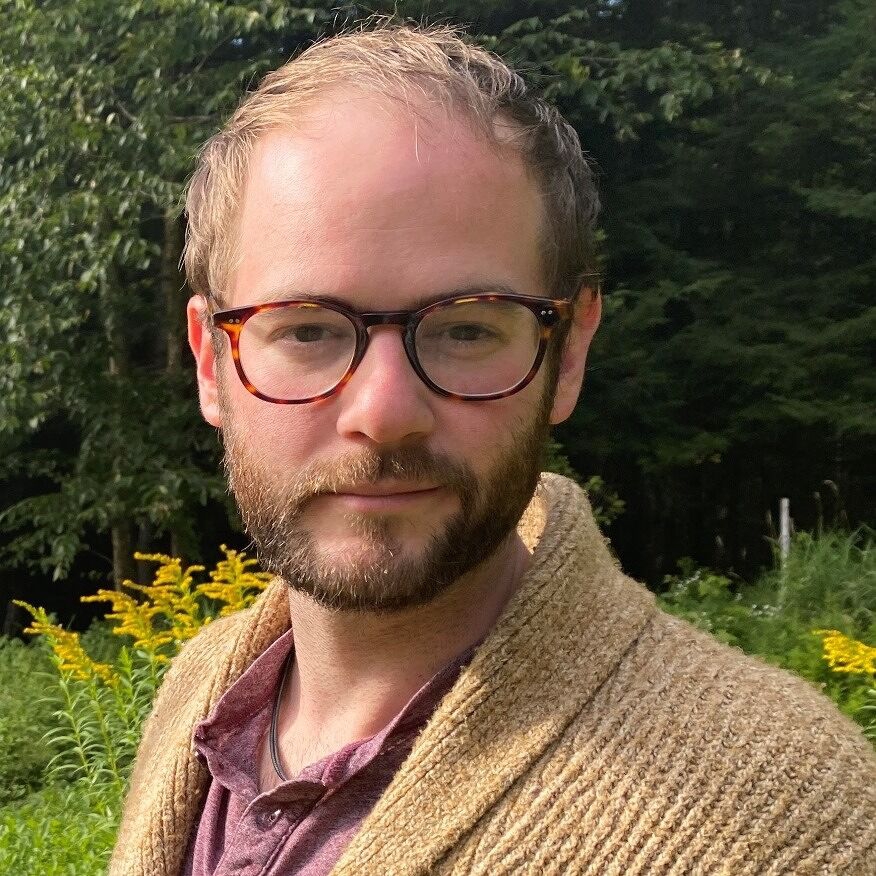
Brendan Graham Dempsey
Writer and Director of Research at the Institute of Applied Metatheory and Director of Sky Meadow Institute, author of the Metamodern Spirituality series.
7
APPEARANCES
7
PODCASTS
Oct 13, 2026


12:12
I mean, I, I do think that, um, again, i- imagine someone's like, "All right, X is the most important thing ever." Um, and then you're like, if you really take that seriously, I feel like that makes certain kinds of calls on a person.
12:27
Um, I understand a million reasons why not everyone would necessarily heed that call or feel like that's the call for them, but, like, I, I'm not the sort of person that someone would be like, "Look, this is the nature of reality, and if this is the case, you know, then all these other things follow.
12:44
Uh, so, you know, uh, do you care about that? Is that something you wanna spend time doing?" And then, like, for me, if it's like if I'm convinced by that, if that is true, then it's like, yes, then this is the thing to do.
12:57
Um, and if that thing is, you know, the world's gonna end soon and Christ is gonna come back and he's gonna rapture people in the sky and the final judgment's gonna happen, and all this kind of thing.
13:07
Like, if that's your worldview, then, you know, like, I don't know how you can kind of be like, "Yes, that's all true," and, you know, "I think about it sometimes," you know? And I...
51 MINS LATER


Pierce SalgueroHOST
And I think since the territory is so large, I think rather than me trying to introduce you, maybe you can just give us, like, you know, how do you explain yourself in, like, two or three sentences?
2:31
It's nice 'cause these days, actually, my, my job is, uh, director of research at the Institute of Applied Metatheory.
2:38
And so now, uh, I can, I can at least lead with that when people are like, "Well, what does that mean?" So the Institute of Applied Metatheory is an applied philosophy network where we take big picture models, theories of everything, integrative metatheories, uh, grand unifying theories, et cetera, and we work with those both to synthesize them into even more kind of coherent integrative frameworks, uh, but also apply them to, like, really complex problems.
3:04
And my role as a director of research has me particularly looking at worldviews and values, um, and how these develop and change.
3:15
One of our theses at the institute is that we are living in a time of meta-crisis, a kind of polycrisis that's deeply interconnected.
3:24
We're living amidst an ecological crisis, a sort of collective existential or meaning crisis, technological accelerationist crisis, institutional breakdown, you know, inequality, et cetera.
3:37
And I believe it was Edgar Morin, the metatheorist who coined the term polycrisis to talk about that.
42 MINS LATER
Pierce SalgueroHOST
And maybe just in light of what we've been talking about, can you tell us a little bit about that? About what is the value that you're finding? Like first of all, what, what exactly are you recovering, and then what is the value that you're finding of recovering these practices and ideas from your past?


Layman PascalHOST
does that tell us about how education should be? Are there conclusions about social education that we would derive from seeing it in this larger learning context?
19:58
And let me let me just put out the important context there for what that story is, because that is kind of that's what I'm trying to tell.
20:04
So before getting to some of the implications for us, like, you know, what are the dynamics? And so the kind of tale here is that, yes, the universe is an intelligence generation machine of some kind.
20:15
And, you know, Matt Segal or someone might get mad at me for using a machine metaphor, call it a dynamic flower organism that's leading to, you know, increased intelligence.
20:27
And and there seems to be and I'll try to draw on different kinds of metaphorical styles to articulate this.
18 MINS LATER
Layman PascalHOST
Yeah, what's the question here? How valid is it, in your view, to think of cultural codes as being analogous to something like the development of complexity stages within individual symbolic beings?


Mark WalshHOST
Uh, people feel everything from, uh, real, like wanting to end their own lives, right down to just low-level numbness, what's the point? How did we get here?
2:55
Long story, but I would say, in brief, I look at it as something like this.
3:00
It's sort of a three-part story, if you wanna really hyper condense it.
3:03
Um, if you go way back in human history, meaning crises weren't such a big deal.
14 MINS LATER

Mark WalshHOST
Uh, people feel everything from, uh, real, like wanting to end their own lives, right down to just low-level numbness, what's the point? How did we get here?
2:55
Long story, but I would say, in brief, I look at it as something like this.
3:00
It's sort of a three-part story, if you want to really hyper-condense it.
3:03
Um, if you go way back in human history, meaning crises weren't such a big deal.
14 MINS LATER


Ethan HsiehHOST
So without pinning it to just this, what or why am I hearing it here in your course and the comments by Michael Mascolo? What in the theory of theories am I seeing? So, in short, how does meta theory show up in small life, big picture places?
33:20
So, I guess, yeah, maybe the first thing I would say is some of this goes back to what Ethan and I were talking about at the top of the conversation around hopefully understanding how meta theory is structured.
33:33
deeply grounded in the lived day to day that we're always doing a version of trying to see the big picture.
20 MINS LATER
Ethan HsiehHOST
But I'm kind of curious, from doing the work that you're doing, at such a big picture level, how has that shifted your relationship to the sacred or your relationship to God?


Daniela BomatterHOST
what needs to be for that agency to be strong enough to actually have results?
4:28
No, that's a great question because I would say yes, yes and, or sort of a, there's a qualification here where, and I think this is actually a really important topic because it gets at some of the, that I think people experience a lot right now in terms of the whole conversation around the future that we're moving towards and what we can and cannot do or should not be doing and how to best sort of strategically navigate this.
4:55
And for me, so the way I look at it is like, yes, we do have this agency, but what we're talking about is a vast system that we're talking around moving towards, right? So we're talking about elements that are geopolitical, that are institutional, that are economic, they're cultural, right? There's all these deep intermeshed kinds of systemic forces.
5:21
And because it's such a vast set of, you know, systemic forces, even though we are individual agents with, you know, a kind of causal power, we are also, that power is incredibly kind of diffuse, right? It's sort of like, and this is just the nature of kind of zooming out to that level of analysis.
5:42
Like, you know, if I look into my backyard or, you know, as actually just happened, a tree fell on one of our buildings here at Sky Meadow.
5:50
It's like, okay, this is a huge problem, right? There's some damage done.
13 MINS LATER