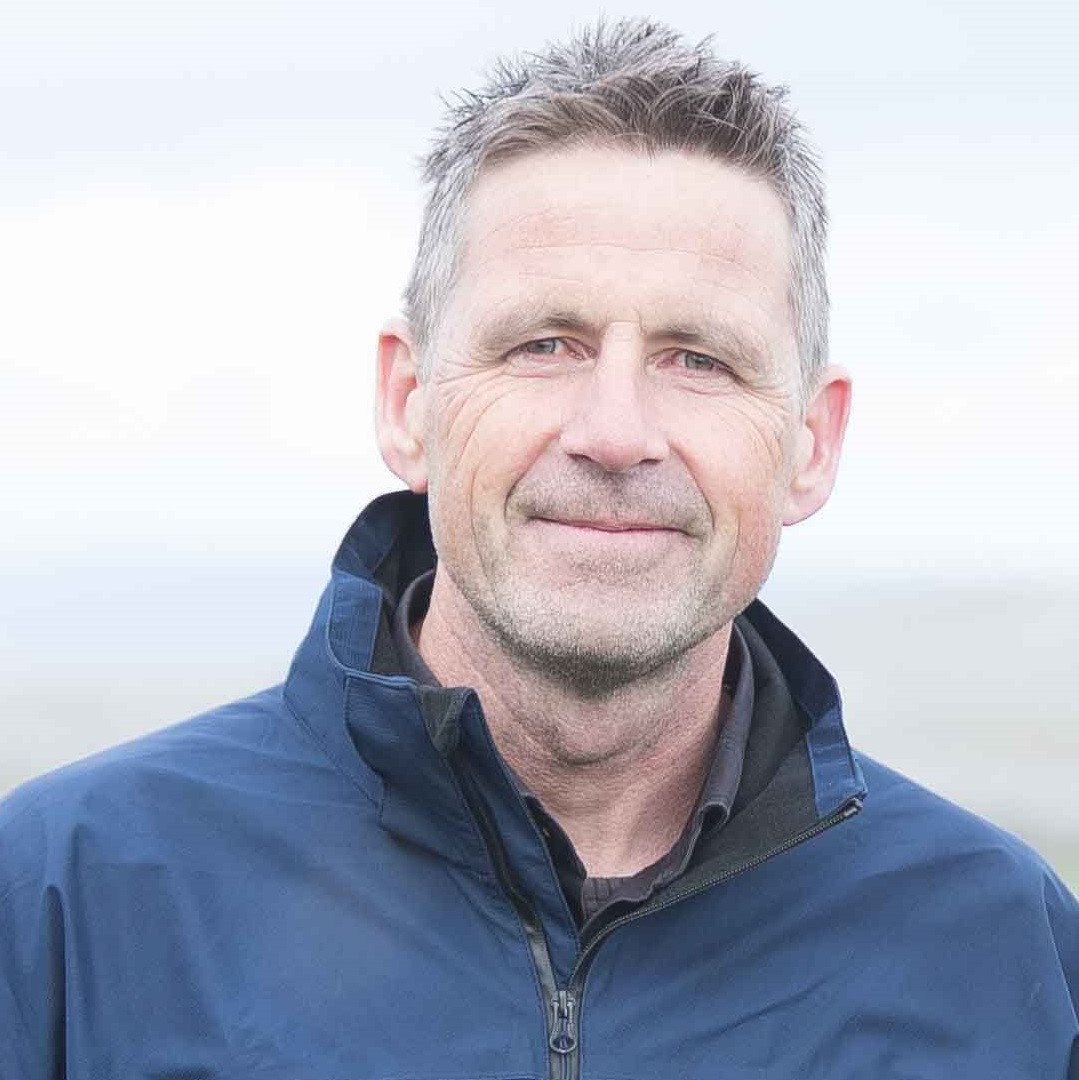
Brendan Dunford
5
APPEARANCES
3
PODCASTS
Sep 28, 2026


Daithí BrooksHOST
Can you tell us why you moved away from the action-based scheme and what you came up with instead?

Brendan DunfordGUEST
So with the Barn Life Project, which was funded by the EU Life Fund and NPWS would have led it, we were trying to build a blueprint for sustainable farming in the barn.
Brendan DunfordGUEST
So farming that would continue to produce good quality livestock, but would do so in a way that was more sympathetic to the environment, in particular the biodiversity and the water quality.
Brendan DunfordGUEST
and the landscape itself so we was quite innovative about that is that farmers were co-designing uh the program with us we were kind of asking them what were the problems what were their versions of the solutions and okay let's try them out so it was a very useful exercise in carrying out actions but led by the farmers demonstrated by the farmers and the outcomes monitored by the farmers as well.
Brendan DunfordGUEST
So that allowed us to create that kind of that blueprint, which was costless, had the full support of the farm community and was proved to deliver for the environment up to a certain point.
Brendan DunfordGUEST
But there's a really interesting piece when we transitioned then to a government-funded programme under CAP.
18 MINS LATER
Daithí BrooksHOST
So I guess, Brendan, then thinking about the idea then of Clive, obviously, as someone who has a deep connection to the land, you know, he was aware of other farming models, but he knew they wouldn't fit his model, that he had to kind of customize his own approach to his own land and that's that's kind of i guess what everyone has to do um because every farm is different in terms of where the different soil types are or the different grasslands or whatever so like this idea of stewardship um as farmers being the stewards of the land you've worked a lot with the burn bio trust um on the idea of stewardship and community stewardship particularly can you tell us some of the initiatives that you that you've run there


Brendan DunfordGUEST
I love the notion of the uplands, which are also connected to the lowlands.
Brendan DunfordGUEST
But I think diversity of approaches, so different farming systems, maybe bits of rewilding in parts, maybe bits of areas which target recreation, particularly scenic areas.
Brendan DunfordGUEST
Lots of different land uses of the uplands, also for managing for water, managing for fire, different things like that.
20:10
What opportunities are there within that to then start putting money into the uplands?
Brendan DunfordGUEST
I, I, I love the notion of the uplands, which are also connected to the lowlands.
Brendan DunfordGUEST
Most farms have some uplands, some lowlands, so it's, it's quite integrated.
Brendan DunfordGUEST
But I think diversity of approaches, so different farming systems, maybe bits of rewilding in parts, maybe bits of, you know, areas which target recreation, particularly scenic areas.
Brendan DunfordGUEST
Lots of different land uses of the uplands, also for, you know, managing for water, managing for fire, different things like that.

Ella McSweeneyHOST
What opportunities are there within that to then start putting money into the uplands?
Brendan DunfordGUEST
I love the notion of the uplands, which are also connected to the lowlands.
Brendan DunfordGUEST
But I think diversity of approaches, so different farming systems, maybe bits of rewilding in parts, maybe bits of areas which target recreation, particularly scenic areas.
Brendan DunfordGUEST
Lots of different land uses of the uplands, also for managing for water, managing for fire, different things like that.
20:10
What opportunities are there within that to then start putting money into the uplands?


Moya CannonHOST
There's a lot of talk about ecosystems and preserving ecosystems, and the humans are often cast as the baddies, but you have a whole different view.
Brendan DunfordGUEST
When you do read up about the Burren, uh, so many people have published papers and books and, uh, poetry, and whatever it is about, it's celebrating, you know, the wonder of the landscape, and it really is, uh, the most extraordinary place.
Brendan DunfordGUEST
But often people were presented as being a, a, an aside or often a threat to the archeology and the ecology of the Burren, which, you know, in fairness, it was legitimate.
Brendan DunfordGUEST
But nothing I ever read kind of told the full story of people and place and celebrates the positive role that people can have on a place.
Brendan DunfordGUEST
So I suppose when I came down here, um, as a student, I was quite open-minded about the place.
Brendan DunfordGUEST
I didn't know much about it, but I knew I knew very little, so I listened fairly carefully.