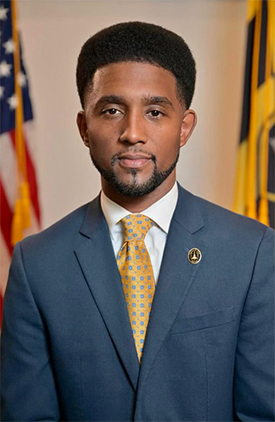
Brandon Scott
Mayor of Baltimore
23
APPEARANCES
20
PODCASTS
Sep 29, 2026


15 MINS LATER


Brandon ScottGUEST
Look, whenever Quick is bringing me out for something, I know he, I don't have to tell him.
Brandon ScottGUEST
He gonna drop a whoop beat, he know I'm coming out every single time, so that's my man.
15 MINS LATER


Brandon ScottGUEST
know if that was just like a clickbait, if that was real, or I didn't investigate it further.
Brandon ScottGUEST
But the fact that that graphic was even made, which would have been nonsense, and it's still nonsense today.
Brandon ScottGUEST
And so what I noticed from C.J. Stroud is someone who is, I think, Despite what they might want you to believe, I think he's taken in the criticism and tried to internalize it in a positive way, like not necessarily as fuel, but just to say, hey, I'm just going to focus and keep my head down and do what I need to do.
17 MINS LATER

Daniel GoteraHOST
We talked a little bit more X's and L's here and all that, but what's, what's the general vibe around the Texans heading into the season?

Brian NeimanHOST
Is that related at all to the housing story, to the division of homeownership? Can you tell us that at all? Is it any relation to that
Brandon ScottGUEST
As you all know, our response to that report has been publicly through court documents for weeks, and we've been asking the IG when it was going to be published.
Brandon ScottGUEST
First and foremost, the focus of the report where the senior official asked about the IT access did not lead to any changes to the access at that time.
11 MINS LATER
C4HOST
Can you talk about that and what the city's doing with that?


Matt BushHOST
What is next? What is there to do to keep this going and to drive the numbers down even further?
Brandon ScottGUEST
Well, we have to stick and keep with our strategy and keep with the things that are working, Matt.
Brandon ScottGUEST
And that five years ago, I just want to remind the listeners of YPR how maybe with the listeners of YPR, it was popular to have a comprehensive approach and actual plan that didn't just sit within this year to the next as we had done forever.


Brandon ScottGUEST
When I took office in 2020, we talked about we were gonna look at violence in Baltimore in a different way.
Brandon ScottGUEST
Uh, we were gonna look at it as a public health all-in approach, and not just solely putting it on the backs of our police officers.
Brandon ScottGUEST
And when you look at it the way that we've been doing it, when you have our police officers through our group violence reduction strategy focus on the small percentage of people, less than 2%, who are responsible for the overwhelming amount of violence in our city, going after those folks, but also offering people a chance to change their lives, you see this impact.
Brandon ScottGUEST
When you have us going after illegal guns coming into our city, gun traffickers, gun stores, gun companies who have been going around our laws helping to fuel this violence.
Brandon ScottGUEST
When you see those great cases that our police officers are making, hand it to our state's attorney, uh, US attorney, and our attorney general here in Baltimore, you see that.
Brandon ScottGUEST
When you see this historic, uh, investment that we've made into community violence intervention through Safe Streets, through We Are Us, all these community-based organizations who have been waiting to have the city invest in them because they are the people closest to the problem, so they're the people closest to the solution.

C4HOST
So I guess my question to you is, is it really cost effective for the city to do it this way? Will taxpayers get a return on investment from the city charging rent for this than it would have been the other way, which was BGE paying a fee and taking care of it?
Brandon ScottGUEST
Well, I just want to clear that up just so that you make sure that it's known.
Brandon ScottGUEST
The city owns the conduit, right? So the folks had to pay an amount, whether it was a rise in whoever, all of these folks that are in the conduit.
Brandon ScottGUEST
I think that's part of the issue that folks are not understanding and getting.
6 MINS LATER
Brian NeimanHOST
What is kind of the plan to deal with vacant lots as well as the issue of vacant homes?
C4HOST
What did you think about that video and the look and the search for these people?
Brandon ScottGUEST
I actually put this out myself in addition to the police department, talking about the ridiculousness of this and how somebody knows who these people are, whether they're actually, you know, children or young adults.
11 MINS LATER
Brian NeimanHOST
Talk about the significance of that, tying that in to how we keep the city cleaner.


Brandon ScottGUEST
We know when our folks come together, Reverend Sharpton, that we're going to be in the moment.
Brandon ScottGUEST
We are understanding because we've been through this before, right? We celebrate 250 years for America.


Clarence AnthonyHOST
One is Be More for Babies is one that you guys have invested, but what else have you done in your community to show that commitment to children and families?
Brandon ScottGUEST
And we've now decreased that gap between white and black babies by 48 percent in the city and brought the infant mortality rate down 39 percent overall.
11 MINS LATER
Clarence AnthonyHOST
What advice to elected officials would you have for in terms of how do they own that role as a father figure in their community? I would say lean
Brian NeimanHOST
Do you think, does there need to be a review of the criteria of eligibility? And would, you know, being on probation be one of those, hey, if you're on probation, you can't work for Safe Streets?
Brandon ScottGUEST
And I think, Brian, what we need to do is not treat people, the whole system as the problem when one person does something.
Brandon ScottGUEST
For example, we had a police officer kill his stepson and put him inside a wall, and no one asked me if we needed to review how we bring people into the police academy because that was the action of one individual.
Brandon ScottGUEST
And I think that we have a very great process with this that actually includes police and making sure this person is one of the worst kinds, right? Because when you're charged with helping to stop violence, whether you're a violence intervention worker, whether you're a police officer, whether you're someone supporting those kind of folks, for you to do it yourself makes you the worst kind, in my opinion.
Brandon ScottGUEST
So I think that we're always going to go back and look and see if there are things that we can tweak.
Brandon ScottGUEST
But we did a lot of that when I first came into office, as you guys know, based on the stuff that happened before I came into office.
16 MINS LATER
Brian NeimanHOST
Do you think that there is a disconnect, especially as an executive, versus what lawmakers in Annapolis do on a regular basis, which seems like every single year in the General Assembly, of making life harder for you and your police officers?


Brandon ScottGUEST
... that any mayor was gonna eliminate a vacant housing in Baltimore in four years, let alone eight.
Brandon ScottGUEST
And a lot, some of them, many of them before me got a lot less than even four years, right? So when you think about that, the approach for us, it has never been about the approach.
Brandon ScottGUEST
Baltimore, between our city government partnership with the state government, with our private community, with, with the folks in philanthropic and CDCs and developers, they've always had the strategy.
Brandon ScottGUEST
They always had the know-how and the do-how of taking vacants and even demolishing them, turning them to park space, getting them renovated, building a lot of housing, all of those things.
29 MINS LATER


Stan NorfleetHOST
So I'm not necessarily trying to rush or, or dismiss development, but I am asking the questions, is this about skill or do the pieces just not go together primarily and you were going against a matchup like this in the Lakers? Is that a fair question?

Brandon ScottGUEST
I mean, Emay said this last night when he was asked about this, like the questions about your team and sort of the scrutiny.
Brandon ScottGUEST
I'm paraphrasing the question, but it was essentially like the scrutiny that's going to come with how these performances have gone over these last couple of games.
13 MINS LATER

14 MINS LATER


Brandon ScottGUEST
One, first and foremost, we go and we identify those who are most likely to be the victim or perpetrator of gun violence, and we focus on them.
Brandon ScottGUEST
We give them opportunities to change their life, and if not, we remove them via law enforcement.
Brandon ScottGUEST
We're focusing on guns and the flow of guns into our city, going after gun traffickers, those who are using guns, arresting them at my direction with the police department, turning them over to our state's attorney and our attorney general.
Tim StenovecHOST
to people out there who are saying, Well, I would feel more comfortable if there were an increased law enforcement presence, and that could


Al LetsonHOST
And if those numbers hold, this would be the third consecutive year of declining gun violence in the city.
Brandon ScottGUEST
Yeah, I think that what we laid out in 2021 was that we were gonna look at, uh, gun violence in Baltimore in a different way.
Brandon ScottGUEST
For many years, we were under, uh, the zero tolerance era, where, uh, basically if you were Black and breathing outside, uh, then, then you could be arrested for basically just being there.
Brandon ScottGUEST
And when you think about Baltimore, for example, in, in, uh, 2003, when we had 91,000 arrests, we had, uh, uh, 278 homicides, right? But last year, when we had significantly fewer arrests, uh, we, we had 201 homicides, right? So, you think about 278 homicides in 2004 was 91,000 arrests in a city of 600,000 versus 201 homicides in 2024 with 17,000 arrests.
10 MINS LATER
Al LetsonHOST
Um, and so with that knowledge and what he is saying from the Oval Office, uh, in present day about Baltimore and, and threatening to come in, how are you preparing for that?


Al FrankenHOST
And, uh, you have started, in your first term, doing initiatives to bring down crime?
Brandon ScottGUEST
Uh, gun violence is the reason now that I'm even in public service, having seen someone be shot for the first time before I was even eight years old.
Brandon ScottGUEST
Uh, but when I came into this office, during the height of the pandemic, I said that we had to tackle two dueling, uh, public health issues, COVID and violent crime.We laid out our, uh, comprehensive violence prevention plan in 2021 to say that we were going to, uh, set a goal of reducing homicides by 15% from one year to the next.
Brandon ScottGUEST
Until the September of 2022 is when we saw our- our strategies be fully implemented, and they just fell off a cliff, uh, from there.
14 MINS LATER
Al FrankenHOST
Uh, what, what does that mean when you say that? And how have you achieved these, these record lows?

Brandon ScottGUEST
Uh, we, we've gotten to this point, Don, uh, through the work, through a partnership, through our comprehensive violence prevention plan, working with the community, working with law enforcement, with our investments into community violence intervention, empowering people, even some that were involved in the life of violence before to now be preventing it.
Brandon ScottGUEST
All of us working together to deal with this issue that quite frankly, uh, driven me to service.
Brandon ScottGUEST
This is a neighborhood I grew up in, and the first time I saw someone get shot was across the street when I was seven years old.
Brandon ScottGUEST
Now we know how to reduce violence in Baltimore, and the truth is, is that we're lower than we've ever been right now.

Don LemonHOST
Trump's economy is not helping in the job market area as well, which will actually help crime.


Geoff BennettHOST
And I know you say you welcome support from federal law enforcement when it's coordinated, but what's your response to what you heard there from President Trump and his threat to send National Guard troops into Baltimore? How seriously are you taking that threat?
Brandon ScottGUEST
Well, we take it very seriously, but- but first and foremost, I just think that to have the- the president of the United States, the person who's supposed to be the leader of the free world, uh, one, uh, talking about their own cities that way, but, two, important, more importantly, not acknowledging that the city of Baltimore is safer today than it has been in my lifetime, uh, because of the leadership of myself and others here from our police department, our state's attorney, our attorney general, our violence intervention workers who work ha- hard each and every day.
Brandon ScottGUEST
It's just very disrespectful and it's unfortunate, but we still welcome, uh, uh, that support if done the right way because we work with our federal law enforcement partners each and every day here in Baltimore.
Brandon ScottGUEST
And I don't, I'm not, have never been one for the political dog and pony show or the gotcha and the back and forth.
Brandon ScottGUEST
Uh, my style is to focus on what matters the most to me and that's continuing this historic reduction in violence in Baltimore.


Jason JohnsonHOST
When you hear the president routinely threaten and attack your city, whether it had to do with a bridge earlier this year or just these statements yesterday, what is your immediate reaction?
Brandon ScottGUEST
It's, it's, uh, par for the course, uh, for this president, uh, and for his administration and, quite frankly now, uh, these, uh, for, um, majority members in his party.
Brandon ScottGUEST
Uh, the president does not want to talk about the US economy that's on a roller coaster.
Brandon ScottGUEST
He does not wanna talk about, uh, the US and our security and standing in the world, so he's le- using this Jedi mind trick.
Jason JohnsonHOST
What does it mean to treat guns as a public health issue? And how does that change intervention and, and crime prevention in the city?


Brandon ScottGUEST
But I think that what, what the Democratic Party have to do is really have to stop being afraid to talk about this issue, right? Uh, uh, that...
Brandon ScottGUEST
We know the president and his folks are gonna talk about being tough on crime, but the reality is, as someone who grew up young, poor and Black in Baltimore in the '80s, in the '90s, in the early 2000s when it was the height of the tough on crime era and zero, and zero-tolerance policing, how'd that work the first time? The city didn't get safer then.
Brandon ScottGUEST
We've seen, uh, uh, the city get extremely safer, uh, by us being smart on crime, and that's what my brother and sister mayors are doing around the country, right? By leading as mayors and creating comprehensive violence prevention plans through a public health landscape.
Brandon ScottGUEST
Also making sure that we are focusing our police department on things like here in Baltimore, our group violence reduction strategy where we focus on the small amount of people who are likely to be the victim or perpetrator of gun violence, and we go to them first and say, "Hey." They actually...
5 MINS LATER


Brandon ScottGUEST
in the aftermath of Freddie Gray and the unrest is you just saw that spike just grow exponentially.
Brandon ScottGUEST
And I think even then, right, I also was leading, co-leading the 300 Men March which was at that time Baltimore's largest anti-violence, uh, community movement in the city.
Brandon ScottGUEST
It is a myriad of factors, right? And I think that we have to always be reminded of that, uh, that if you're talking about West Baltimore where Freddie Gray is from or Northwest Baltimore where I'm from or East Baltimore, uh, uh, where, uh, so many things have happened in the past, you are talking about a city in this office that I'm sitting into you talking, uh, uh, with you right now in, this is where the birthplace of redlining-...
Brandon ScottGUEST
in this office is where, uh, the first redline- racial redlining bill was signed.
13 MINS LATER

Brandon ScottGUEST
Even, uh, during Freddie Gray, right? If, if you were talking to my grandmother and her friends, you never heard, uh, of Black people who had lived in Baltimore for a long time, who have lived and experienced these things, say that we don't want any policing.
Brandon ScottGUEST
Right? My grandmother never said she didn't want any police in my neighborhood.
Brandon ScottGUEST
What she would say is that she, she wanted police in, in our neighborhood that were focusing in on who they need to be focused on, and not me or my brothers, just b- simply 'cause we were making the three-minute walk from her house to my house, right? That's the difference.

Sean RameswaramHOST
A lot of police forces in response to, you know, ACAB and, and Abolish the Police pull back.
Brandon ScottGUEST
Freddie Gray was a Baltimore thing, but the whole country went through basically the same experience five years later when George Floyd was murdered.