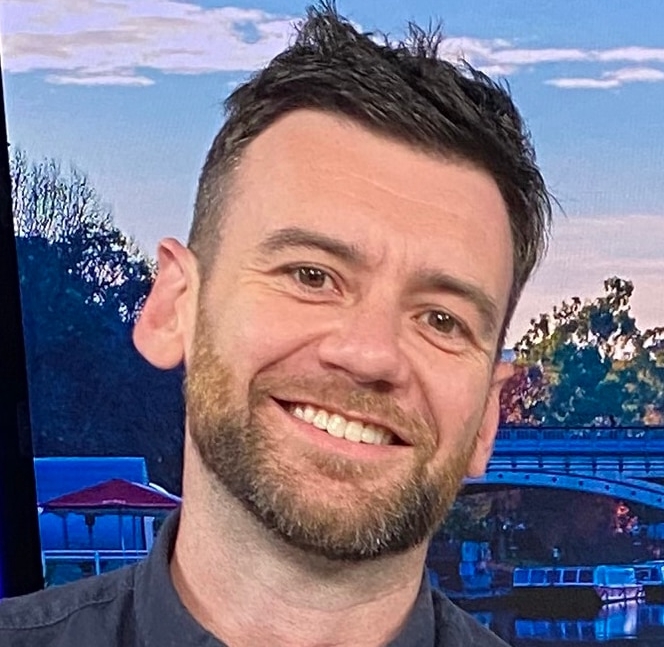
Brad Ryan
Wildlife ecologist and veterinarian (DVM, MPH) known for road-tripping to all 63 U.S. national parks with his grandmother Joy "Grandma Joy" Ryan; author of "Grandma Joy and Me."
14
APPEARANCES
14
PODCASTS
Nov 19, 2026


Amy JuravichHOST
When, when did that shift from like just doing half to becoming that we're going to do this?

Brad RyanGUEST
Well, I mean, I think at the core, you know, and I talk about it in my book, Grandma Joy and Me, that the national parks were in some ways just an arbitrary goal for us to be able to heal our broken family.
Brad RyanGUEST
I know that, especially now that we've met so many people across the country on this book tour.
Brad RyanGUEST
Generational trauma, it's a very real struggle that a lot of people are dealing with, and they don't even know how to begin healing.
7 MINS LATER
Amy JuravichHOST
Where did the idea come from that you were like, these journeys, they're definitely a book? How did that come about?

speaker_9UNKNOWN
habitats be protected?
Brad RyanGUEST
So, yeah, I think everybody that lives here knows the brook trout are spawning in that stream near some of the access that's going to be constructed.
Brad RyanGUEST
They've been working with Alaska Department of Fish and Game and going through the NEPA process there.
Brad RyanGUEST
The NEPA process will go through and identify what the environmental impacts are, and then that will push into the permits, whether it's Section 106 permits.
Steve BurnhamUNKNOWN
Which federal and land use reviews and permits apply, including possible Tongass National Forest, National Park Service, NEPA, Section 106, Section 4F, and FEMA requirements, and has the Skagway Traditional Council been consulted?


Brad RyanGUEST
You know, when you're on your normal, uh, life path, I think in America at least, we, we, we know our grandparents casually, but then we go to college, and we, we, we go off and we have our careers and our families.
Brad RyanGUEST
And I don't think most people take the time to really learn the origin story of their family and, um, and look at, for those threads that go through the generations.
Brad RyanGUEST
And when you're in a vehicle driving for, you know, we've driven over 100,000 miles at this point, but to all the US national parks we drove about 70,000.
Brad RyanGUEST
And, you know, there's really not much you can do sometimes when you're on these long stretches of, of highway, and you get hypnotized by that yellow line coming at you and, and all of these, these questions sort of, uh, come to the surface, and there's nowhere to go.
Brad RyanGUEST
We, we looked at those things that I think a lot of families choose to keep hidden because it's uncomfortable, it's traumatic.

Brad RyanGUEST
You know, when you're on your normal, uh, life path, I think in America at least, we, we, we know our grandparents casually, but then we go to college, and we, we, we go off and we have our careers and our families.
Brad RyanGUEST
And I don't think most people take the time to really learn the origin story of their family and, um, and look for those threads that go through the generations.
Brad RyanGUEST
And when you're in a vehicle driving for, you know, we've driven over 100,000 miles at this point, but to all the US national parks we drove about 70,000.
Brad RyanGUEST
And, you know, there's really not much you can do sometimes when you're on these long stretches of, of highway, and you get hypnotized by that yellow line coming at you and, and all of these, these questions sort of, uh, come to the surface.
Brad RyanGUEST
We, we looked at those things that I think a lot of families choose to keep hidden because it's uncomfortable, it's traumatic.

Brad RyanGUEST
It's, it's cornfields and a couple gas stations, churches, a Dairy Queen, and, uh, it was one traffic light for most of my life, and then it became a two traffic light town.
Brad RyanGUEST
And, you know, it was a place where I could ride my bicycle and, and play hide and seek, and catch lightning bugs, and smell the fresh mown grass with the wind chimes, uh, on the, on grandma's, uh, front porch ringing out, and she would chase me through the sheets, uh, on her, uh, where when she would hang them on the clothesline in the backyard.
Brad RyanGUEST
So it was very, for me, there was a, a side to it that was very magical and innocent and pure, and then there was this other side that, of course, um, became darker as we got older.
Brad RyanGUEST
And I think that's because, uh, there's, there's not a, there's not a space for a young gay man who doesn't know himself yet to be nurtured and to come of age in a way that's affirming.
23 MINS LATER
Peter SlinnHOST
You, you tell the story about your own experience at age 20 as well in the book.


Brad RyanGUEST
It's, it's cornfields and a couple gas stations, churches, a Dairy Queen, and, uh, it was one traffic light for most of my life, and then it became a two traffic light town, but you're in and out of it in, in less than three minutes.
Brad RyanGUEST
And, you know, it was a place where I could ride my bicycle and, and play hide and seek, and catch lightning bugs, and smell the fresh-mown grass with the wind chimes, uh, on the, on grandma's, uh, front porch ringing out, and she would chase me through the sheets, uh, on her, uh, where, when she would hang them on the clothesline in the backyard.
Brad RyanGUEST
So it was very, for me, there was a, a side to it that was very magical and innocent and pure, and then there was this other side that, of course, um, became darker as we got older, and I think that's because, uh, there's, there's not a, there's not a space for a young gay man who doesn't know himself yet to be nurtured and to come of age in a way that's affirming.
Brad RyanGUEST
And I felt that I didn't know who I was, but I knew that there were aspects to my personality and my, my overall, the way I carried myself that was very shameful to my father.
22 MINS LATER

speaker_9CORRESPONDENT
Brad, you know how to treat a woman, don't you?
Brad RyanGUEST
I, I, I will admit like when we were driving down and I was looking at her hands, I thought, "Wow, I forgot that she's an old woman," because she, her, you know, her mind and her spirit are so, are so young.
Brad RyanGUEST
We had so much fun that weekend, and she, she blew my expectations out of the water, and that's why, you know, she not only...
Brad RyanGUEST
We went down there because she had never seen a mountain, and at age 85, she not only saw her first mountain, she climbed her first mountain as well.
speaker_9CORRESPONDENT
What's been your favorite place, both of you?


Brad RyanGUEST
And that, that, that I think is what separates us from probably 99% of the country, although I hope that changes.
Brad RyanGUEST
It might actually be fun to put my grandparent in the passenger seat and learn their life story.
Brad RyanGUEST
I might, maybe I might just learn something about myself in the process, and I, I almost guarantee that you will.
6 MINS LATER

Rick ClemonsHOST
What brought you to this moment where you decided this book has to get written?
Brad RyanGUEST
One key piece of information is that when my estrangement with my father began, so then began my estrangement from Grandma Joy.
Brad RyanGUEST
And so there was a fight that happened at our home and it led to a physical assault.
Brad RyanGUEST
My father grabbed my arm, gripped it strongly enough to leave a bruise, raised his fist at me.
Brad RyanGUEST
I wriggled free from him, but Grandma Joy was just standing there, shell-shocked on the sidelines, not saying anything.
16 MINS LATER
Rick ClemonsHOST
what was one of your favorite moments for you? Not necessarily, maybe something grandma did, but something for you that in the midst of this whole experience that you, a favorite moment where you started to really see yourself in a whole

Jennifer D. RobertsMODERATOR
So talk a little bit about that point.
Brad RyanGUEST
And then we made our way through Colorado and stopped at Great Sand Dunes National Park and Preserve.
44 MINS LATER
speaker_11AUDIENCE
And I wanted to just hear a little bit about that from your perspective.


Brad RyanGUEST
down that road with my coworker? or do I want to go down that road with my grandmother who's 85 years old? No, I think I would be better served by not risking the vulnerability of that disclosure and being rejected.
Brad RyanGUEST
And I was content to not have it, but she was astute enough to understand that there were a lot of rocks that pressing down on my chest at that particular moment in my life with everything that I was going through with David Hilton's suicide, processing that.
5 MINS LATER

Brad RyanGUEST
Yeah, and so it took time, and I thought, honestly, she remembers it maybe a little differently, but for me, it was awkward, and it was clear to me that there were deep wounds that needed tending.
Brad RyanGUEST
And so we went to Blue Rock State Park, which is our local state park, where she would take me when I was a young boy and dream together and lift up rocks to see what creatures were underneath, and I would pick them up with my net and put them in my cool whip bowl.
Brad RyanGUEST
And that warm, fuzzy nostalgia is what prompted me to say, hey, let's go down to Blue Rock and take some hikes.
Brad RyanGUEST
And then one day, walking along a creek bed and a beaver jumped into the water and scared us.
20 MINS LATER

Janine PettitHOST
So if you had a takeaway of what grandma has brought to you, like what lesson in life has she taught you that that'll outlive her and, you know, the next generations?

JeremyHOST
Tell us as much or as little as you want to tell us to just set the stage for this journey.
Brad RyanGUEST
Well, it's... from a little town called duncan falls ohio it's the southeastern part of the state appalachian foothills my grandmother grew up on a farm her father refurbished a chicken coop and that was their house so very humble roots hard-working farming people and also very rooted in like little league baseball and all things sports and whatnot.
Brad RyanGUEST
But also, you know, there was that part of the family that I did not connect to or that aspect of the family, not, not an athlete, not a, not a deer hunter.
Brad RyanGUEST
uh, by any stretch of the imagination, but there was also this love of the outdoors and nature.
Brad RyanGUEST
And that was one thing that I did connect with my father on who's grandma joy's eldest son.
Brad RyanGUEST
And it's the thing that it's the, the, the really the link between, um, the past and the present, because when I was in vet school years later and was in a mental health crisis, it was nature that I had been missing.
39 MINS LATER
JeremyHOST
Now, number one, a little bit of a surprise, but go ahead and take us to Alaska for number one.

Brad RyanGUEST
And because of my parents' divorce and the divide that happened in my family, which I think a lot of people can relate to when there's a contentious divorce, uh, my father was in my life until I was 20 years old and I was in college.
Brad RyanGUEST
There was a fight that happened that I detail in the book that led to this 10-year estrangement with my grandmother in particular.
Brad RyanGUEST
And when we were reconnecting after I hiked the Appalachian Trail, we were walking around our little state park near our hometown, and we were just discussing some of the things that had happened in those 10 years.
Brad RyanGUEST
And you can't just pick up where you left off after a decade, so I was just trying to, you know, give her a sense of how I had changed.
Brad RyanGUEST
And one of the biggest things that I did that transformed my life was to hike the Appalachian Trail from Georgia to Maine in 2009.
Brad RyanGUEST
And just in that conversation about the mountains, she just kind of casually revealed that she loved ...
28 MINS LATER