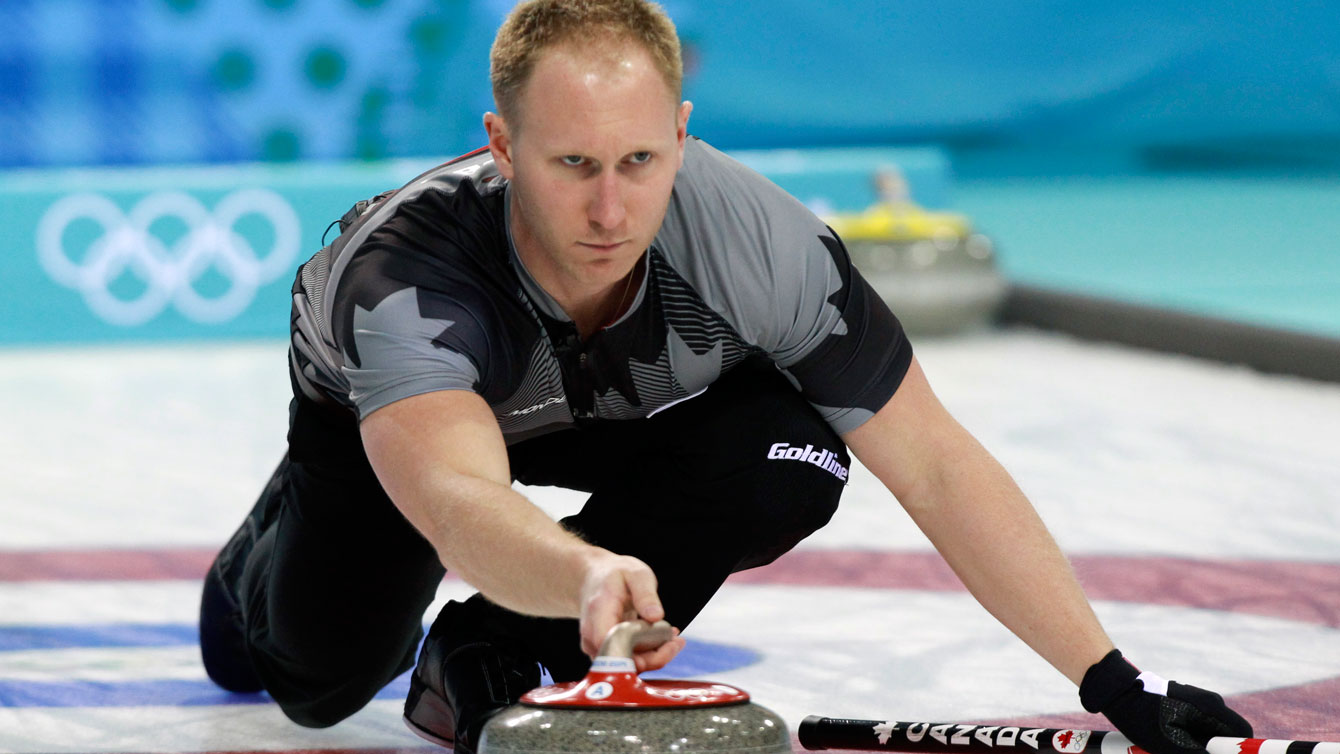
Brad Jacobs
Canadian curler
14
APPEARANCES
13
PODCASTS
Aug 27, 2026


Eli GrossHOST
So let's start with an out-of-consensus call that you made, and it actually worked out.

Brad JacobsGUEST
Well, first thing that pops right into my head is one that you advised me on when you were a transportation banker.
11 MINS LATER


Larissa LoganHOST
What kind of workings do you do to get comfortable around whether... what that timeframe looks like?
Brad JacobsGUEST
I guess we are in a fortunate position with 65 cafes, literally from Whangarei to Invercargill, that w- that we have a pretty good read on what's happening right around the country, and we're tracking our franchisees' financial performance regularly on a, on a monthly and quarterly basis.
Brad JacobsGUEST
So we're looking at our cost of goods in particular, um, you know, very regularly.
Brad JacobsGUEST
We're talking to franchisees very regularly about, uh, you know, where their profitability is at, but more importantly, where they believe their customer sentiment is at, and what they, what they, they do or don't believe that we can pass on.
Brad JacobsGUEST
So we're not trying to make that decision, you know, sitting in an office in Parnell, uh, for the whole of the country.
Brad JacobsGUEST
We're fortunate that we can talk to the, to the franchisees that are spread right around the country.
Brad JacobsGUEST
But at the end of the day, it's, it's about maintaining the profitability of the franchisees, um, but also finding that balance.
16 MINS LATER
Larissa LoganHOST
How important is it for an SME business owner to negotiate good terms up front?


Brad JacobsGUEST
It's, uh, back when we won the first medal, and we have the medals here, uh, on display, um, back when we won the first medal, our team was very much known for our, our physical fitness, and there were, um, you know, a few athletes here and there on, on teams, um, maybe not like a whole complete men's or women's team kind of like ours back then that was in the shape that we were in.
Brad JacobsGUEST
We took that side of the sport very seriously, and I think what that did, um, you know, we were a younger team back then.
Brad JacobsGUEST
So we're all in our late 20s, and, uh, I think we did a lot to influence the younger generation, um, with how we approached the game, how we played the game, uh, the things that we did off the ice.
30 MINS LATER


36 MINS LATER


Brad JacobsGUEST
So oxytocin gets secreted, right? So if you hug someone, they say six seconds or longer, it has to be consensual, obviously, um, then you get this release of oxytocin, and everything settles down.
Brad JacobsGUEST
And your nervous system settles, and there's a sense of safety, sense of connection, sense of being seen.
Brad JacobsGUEST
And what happens is your nervous system results in increased heart rate variability, re- reduction in resting heart rate.
23 MINS LATER


Craig FullerHOST
But then how do you sort of filter? What's the primary filtering mechanism? Is it talent? Is it unit economics? Is it market? How do you think about what is the single most important thing that you're focused on as a business decision when you go to look at M&A transactions?
Brad JacobsGUEST
But first and foremost is, how does this company make money? What do you have to believe in order to believe this company is going to get better and better over time? So one of the reasons I picked building products distribution is I really do believe that in five years and in 10 years from now, there's gonna be a lot more demand for building products than there is right now.
Brad JacobsGUEST
You got population growth, the industry is underbuilt, there's a four million unit shortage of housing.
Brad JacobsGUEST
The buildings that are out there, both commercial and residential, very old, 40, 50, 60 years old.
6 MINS LATER
Craig FullerHOST
In terms of the businesses that you have built, XPO, RXO, GXO, which of those businesses do you think is best positioned to take advantage of the AI revolution that's taking place across freight?


Tracy AllowayHOST
But what exactly is, I guess, the low-hanging fruit in this particular deal? Like, what is it that you're able to do, uh, from day one versus what you're able to do in like a year or two?
Brad JacobsGUEST
Well, the first thing that we do when we go in to buy a company, whether it's TopBuild or anybody else, is we meet with as many people as we can, and we, we ask them to just step back, get out of their normal comfort zone, and think about what would be the-Perfect circumstances and tools and techniques and repositioning of the company to grow even faster.
Brad JacobsGUEST
Where's their, where are their pain points? Where are things that are holding them back? And we collaboratively put together a business plan.
Brad JacobsGUEST
Now, I already know, like with every other acquisition we've done, ever, technology's gonna be the first thing.
Brad JacobsGUEST
They've gotta get the latest technology, the greatest warehouse management systems, which we'll bring to the table, the greatest TMS, transportation management systems, the greatest ERP, the, which is also using a, um, an, a CRM that's AI generated to empower the sales force to get productivity up.
14 MINS LATER


Sara EisenMODERATOR
What is the key to that?
Brad JacobsGUEST
So if you look through the middle part of the book, the second section of the book, it's the playbook.
Brad JacobsGUEST
Because in the waste business, in the construction equipment rental business, in the transportation business, in the warehouse business, in this business, it's pretty much the same playbook.
Brad JacobsGUEST
And the playbook starts with, how do you make money on this? How does the business actually make money? Where's the alpha here? What can we control that makes a lot of money, that gets us a leg up on the competition, that makes the customer choose us instead of all the choices they got? Then design an org chart from scratch that matches that.
Brad JacobsGUEST
And we always find the org chart is messed up like a hundred times out of a hundred.
Brad JacobsGUEST
And particularly when we buy companies that were roll-ups that were buying built up by buying other companies, because many, if not, most people do MNA serially.
9 MINS LATER
Sara EisenMODERATOR
I don't know a single CEO that does that.


25 MINS LATER

25 MINS LATER


Brad JacobsGUEST
Most companies have a meeting where someone's up there and they've got a PowerPoint or they've got a speech they've prepared and people are sort of semi-listening to the speech.
Brad JacobsGUEST
Torture, going back to what I was saying before, when you get my age, you only have 5,000 to 7,000 days left.
Brad JacobsGUEST
You want to have every minute of that something exciting, something valuable, something rewarding.
11 MINS LATER
Brad JacobsGUEST
It's a mistake for me if I would go into a company that I bought with final conclusions before I have the, the information.
Brad JacobsGUEST
And most of the time, you can pare back the headcount, mostly in the mid and upper, not in the, in the field.
Brad JacobsGUEST
The field often is understaffed 'cause companies do these RIFs, they do these reductions in force, which basically is a HR-speak for firing people, and th- they bear the brunt of the cutbacks.
16 MINS LATER


Jim CramerHOST
Will people who are, say, so-called stuck in their homes be natural clients? They're contractors.
Brad JacobsGUEST
So the big driving trend for building products distribution as a whole, not just roofing, is that there's a big shortage of housing, like four million units short just here in the United States.
Brad JacobsGUEST
One of the few things that both Democrats and Republicans agree on is we're going to solve this housing shortage.
Brad JacobsGUEST
I mean, when people of my age were kids, if you had a house that was 10 years old, it's like, hey, you got an old house.
