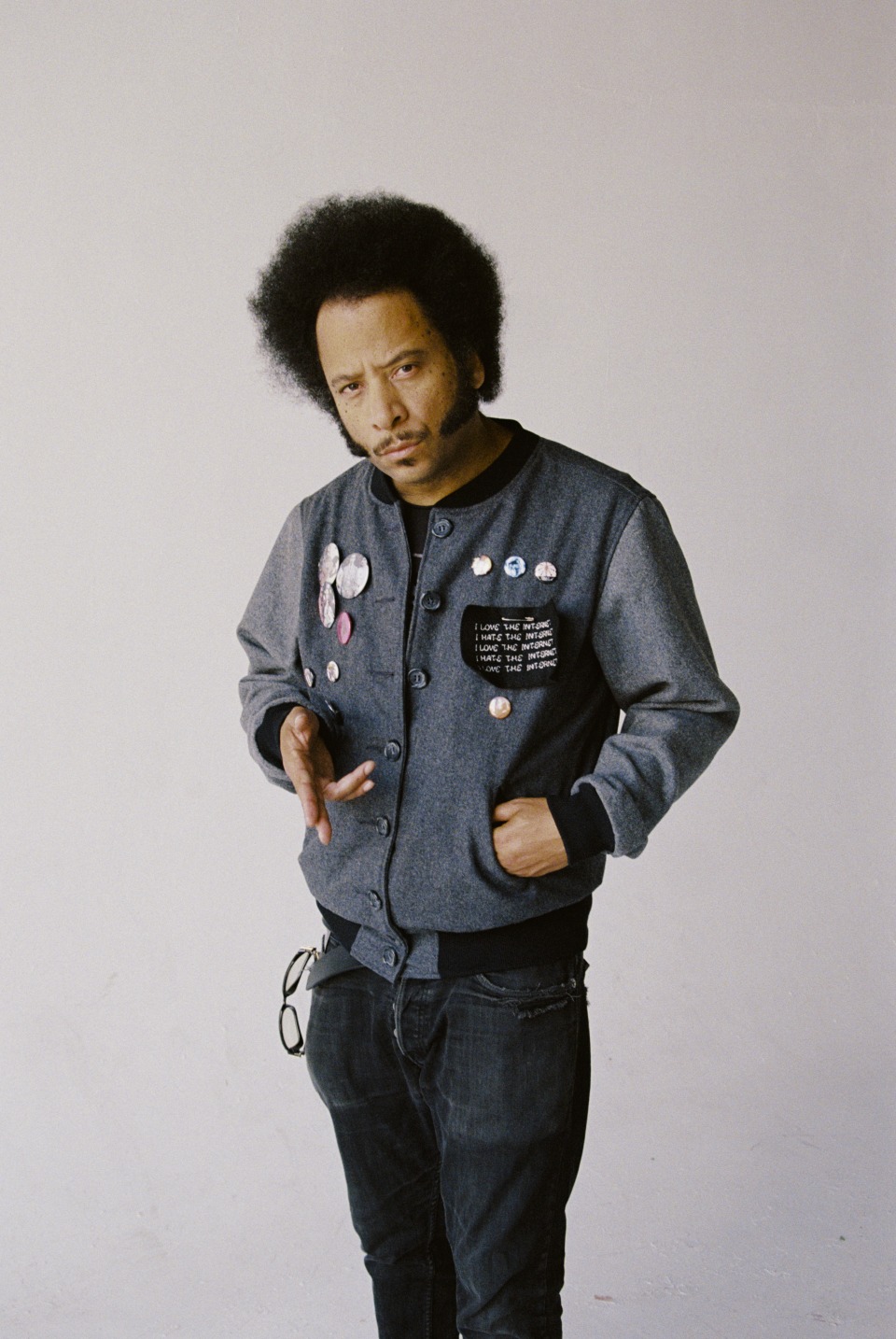
Boots Riley
American rapper and songwriter
20
APPEARANCES
16
PODCASTS
Nov 3, 2026


Amon WarmannHOST
Would you say that this film has come out or come around at the right time for you, given who you are as a filmmaker now, but also given the world that this film is being released into? Like, how different do you think this film looks and feels and has received 5, 10, 15 years ago compared to now?
Boots RileyGUEST
I'm not necessarily ever trying to look for the right time to put, it's more about what I want to happen from the film and what, you know, what I wanted to cause people to do.
Boots RileyGUEST
So, yeah, I think, I don't know, five, you know, Sorry to Bother You came out eight years ago.
Boots RileyGUEST
And, you know, from that, we saw people, dozens of people hit me saying, hey, you know, we used it to to show to people and got them to vote to strike at our job.
12 MINS LATER


Aaron BastaniHOST
What's it like working in Hollywood and being an avowed communist? How do people react to your politics in that way?

Boots RileyGUEST
I've never not engaged in communities where the other people weren't communists.
8 MINS LATER

Boots RileyGUEST
Well, you know, what was interesting is, you know, Kiki is known for a more broader comedy that she does.
Boots RileyGUEST
And meeting with her, I saw, like, so much about her that she was still hilarious, but a lot more nuanced than usually gets shown.
8:12
We're talking a little bit about wanting audiences to see films in this way and keep seeing them in the theatre.


Boots RileyGUEST
from?Uh, you know, like I, I came up around folks that were organizers, right? That means they weren't ...
Boots RileyGUEST
It wasn't the idea of radicals that are like, "Oh, I'm the person that, you know, is antisocial." It was the people that were, like, really good at making friends and getting people [laughs] to do stuff, and all those people were also really funny, and it's because they were able to see the ironies in life and exaggerate them for the, for a joke.
Boots RileyGUEST
And not that my film is exaggerated, but it's the contradictions that are highlighted and exaggerated.
Boots RileyGUEST
People might go on strike because the boss is unfairly stealing their wages, right? They're stealing at least parts of their labor value, but that's legal.
Boots RileyGUEST
And if you go on strike, the police are going to, even though you're being stolen from, come and beat you.

Boots RileyGUEST
Right? So it, [clears throat] the, the visual stimulation that we're getting is also, uh, I would say also music and sound effects are part of that stimulation, and I'm trying to take people through visceral experiences that, that are, uh, analogous to the emotional experiences folks are going through.
Boots RileyGUEST
And it, I want, if, if I have the camera pushing a character back with things whizzing by us, that's because that's part of the idea.
Boots RileyGUEST
And, and again, like, when I'm writing it, I'm just being honest with myself about how, how I feel these, uh, these personal things connect with these larger things.
9 MINS LATER

CarlosAUDIENCE
would have done this or blah, blah, blah.
Boots RileyGUEST
But they are so out there in the stratosphere that you just have, even for me as an artist, I just have to just let it happen and watch and be there.
Boots RileyGUEST
And that is Walter Murch, who's the person that created the term sound designer.
23 MINS LATER

Alexis MadrigalHOST
Camilo on the Discord writes for me Lakeith Stanfield stole the show he is incredible what I thought was fascinating was that his enormous presence barely moved the plot forward at all his biggest contribution was opening a door I love that the women remain the heroes of the movie and don't end up needing this dude's help really at all despite palpable presence

AngeHOST
So can you give us a little preview of... your childhood and what drew you to to your voice as an artist as an activist etc
Boots RileyGUEST
and and I wasn't meaning that because I you know if people haven't seen it by now you know whatever it's four four weekends in so I don't mind spoilers but uh perfect I'm just kidding but um Let's see, when I was 12, I wanted to be Prince, but I didn't want to practice as much as it would take to do that.
Boots RileyGUEST
Maybe I was having a 12-year-old psychotic episode because I was like... really into comic books and I decided I was going to be a superhero.
Boots RileyGUEST
I decided I was going to, I was doing gymnastics and martial arts and I was going to heighten my senses and like fight crime.
24 MINS LATER
ErinHOST
It's just for our own private collection.

speaker_15UNKNOWN
[laughs]
Boots RileyGUEST
And, and when he, you know, when he sent me the, the script to Get Out when he was like, "Yeah, I wanna play the lead," and so he was like, "I just wanna show you how we're on the same page." Uh, but, uh, the, the, the things are intentional, but everything kind of works a- as you're going.
Boots RileyGUEST
You're, it's, it's, it's an, it's an improv thing, and all those things are intentional.
Boots RileyGUEST
So we originally, we, we lost our location for the fashion show, which was this big brutalist thing, and, um, and that was a last minute put together that, that, uh, uh, my production designer, Christopher Glass, came up with.
Boots RileyGUEST
It's like, "Here's how we can do it," and he drew that and that, that, that, that came, like, last while we were already making the movie, you know? [laughs] Um, so, uh, yeah, and, and, and you know, so I could be like, "Yeah, well, that's why." You know, yeah, we, we, we, we had that in there from the beginning, but that was last.
Boots RileyGUEST
But, but, uh, uh, you know, I'm always thinking about people I know, and, uh, the, the community that, um, I'm talking to has to do, has a lot to do with, uh, where I was at certain times.
Boots RileyGUEST
And so I'm talking about a group of Black women and their connection not only to the immediate world around them, but the connection of that world to our larger world.
speaker_16UNKNOWN
Mm-hmm


Boots RileyGUEST
Especially, you know, in, in the Black community, we'll, we'll be looking for examples of someone who has made it and been successful, and that's because you also are thinking about, I, I would love to have a life where I'm not worried about paying the rent

Keke PalmerGUEST
if that's what you are perceiving them as, that's what the, what it gets compressed to
Boots RileyGUEST
You know, we're in-A world where the, where the whole working class is being exploited and there is a tendency to say it has nothing to do with capitalism, it has something to do with Black folks or people of color.


Andy CohenHOST
So if we have any hesitations on what her thoughts might be on the drama going down in the Bravo verse, she's about to spell it out for us loud and clear with a round of...
Boots RileyGUEST
Right? So it [clears throat] the, the visual stimulation that we're getting is also, I would say also music and sound effects are part of that stimulation, and I'm trying to take people through visceral experiences that, that are, ah, analogous to the emotional experiences folks are going through.
Boots RileyGUEST
We're exposing contradictions, and i- I want if, if I have the camera pushing a character back with things whizzing by us, that's because that's part of the idea.
Boots RileyGUEST
And, and again, like when I'm writing it, I'm just being honest with myself about how, how I feel these, ah, these personal things connect with these larger things.
Boots RileyGUEST
So, ah, we are, you know, we're, we're talking about here, um, we're talking about the large contradiction of, you know, boosters are, are not outside of capitalism.
8 MINS LATER

Alison StewartHOST
How would you describe Christie Smith? She's played by Demi Moore, we should say.
Boots RileyGUEST
Right? So it, the, the visual stimulation that we're getting is also, I would say also music and sound effects are part of that stimulation, and I'm trying to take people through visceral experiences that, that are, uh, analogous to the emotional experiences folks are going through.
Boots RileyGUEST
If, if I have the camera pushing a character back with things whizzing by us, that's because that's part of the idea.
Boots RileyGUEST
And, and again, like, when I'm writing it, I'm just being honest with myself about how, how I feel these, uh, these personal things connect with these larger things.
14 MINS LATER

Boots RileyGUEST
Because, you know, uh, because I, I, I do think that, uh, you know, she's one of our, our, our...
Boots RileyGUEST
But, but she, uh, is really, uh, putting herself out there and, um, looking to do good work.

Boots RileyGUEST
They have a prime minister that's as right wing or maybe more right wing than Donald Trump, if that's possible, and, um, and she was totally on, is totally on board with Israel and the genocide that they're, uh, committing and the US is committing with them.
Boots RileyGUEST
But they had a general strike, and they shut down the ports, shut down all this trade, and they forced her to send out the navy to protect the flotilla to Gaza.
14 MINS LATER
Boots RileyGUEST
... that, yeah, like, she do- does some stuff on there that I've never seen her do, right? I saw it in things like Pimp and, uh, a few things.


Boots RileyGUEST
They turned back and they separated Rossi Hawkins and her kids from the police.
Boots RileyGUEST
And by the end of the night, the police car or cars were turned over and the police ran out on foot without their weapons.
Boots RileyGUEST
So people are telling us about this excitedly, as happens if like 50 people are telling you a story, there's going to be differences and all that sort of stuff.
10 MINS LATER


Tonya MosleyHOST
And he's making the argument again in his latest film, I Love Boosters, which was first a love song he wrote 20 years ago about shoplifters, or boosters as they're called.
Boots RileyGUEST
[singing] A booster is a person who jacks from the retail and sells it in the hood for dirt cheap resale.
Boots RileyGUEST
Then in high school, Langston Anderson would cap 'cause my jacket didn't have a brand name on the back.
20 MINS LATER

speaker_24UNKNOWN
[cheering]
Boots RileyGUEST
One, one, one that uses the withholding of labor as a, as a tactic and strategy to be able to have policy change.
Boots RileyGUEST
We have a world in which, uh, you have the US and Israel saying, "How dare you say that we're committing genocide," and they are.
Boots RileyGUEST
We're about to commit genocide on some mother[beep] tomorrow," right? And they can do that and just play in our face because they know we feel powerless, and that feeling of powerlessness is a material one.
Boots RileyGUEST
Until we have that kind of movement where we can shut down profit, where we can, uh, do the, the things that we, uh, that, that, that, that affect power, then we're gonna be powerless.
6 MINS LATER

Boots RileyGUEST
It's funny because online there's this whole debate about where that term came from.
Boots RileyGUEST
There's people in New York saying, "We came up with the term." There's people in, obviously in the Bay Area saying, "We came up with the term." And there's people in Chicago saying, "No, no, boosters, we did that," and such and such.
Boots RileyGUEST
So there's this whole debate and, um, you know, obviously I came, come from the Bay Area, so I'm gonna, you know, uh, shoot shots on, on, on that behalf.
19 MINS LATER

Boots RileyGUEST
Yeah, on Pick a Bigger Weapon, I have this song that basically comes from a lifetime of experience of trying to get the hook up.
Boots RileyGUEST
And meaning, it also comes from the fact that we get advertised all of these things that look amazing or we're told look amazing, or that we're told we need, we're told that it's gonna make us happy or whatever.
Boots RileyGUEST
And so there becomes this underground economy, which is how people get some of the means to express themselves, which is fashion is one way.
Boots RileyGUEST
But I wanted to, And at the time when I made it, and it's still even now, maybe it's been an uptick in it, people involved in that underground economy are really being villainized, right? Obviously, what they're doing is technically illegal, but there's a different thing that happens when people are being villainized, which is to say, this is the bane of humanity and this is what's wrong with the world.
9 MINS LATER

David FearHOST
What kind of communication was going on about this, or did they just... hand you a score and be like, what do you think?


Jesse ThornHOST
like, I mean this very sincerely, some of the greatest story songs in hip-hop history, Me and Jesus the Pimp and Fat Cat's Bigger Fish and some of the truly the best narratives ever put on a hip-hop record.
Boots RileyGUEST
And, you know, I can say thank you not because I think it's genius, but I just put a lot of work into those.
Boots RileyGUEST
Me and Jesus the Pimp in the 79 Granada last night probably took me eight months to write.
Jesse ThornHOST
You are there to find out what someone needs and try and figure out how to get it to them.