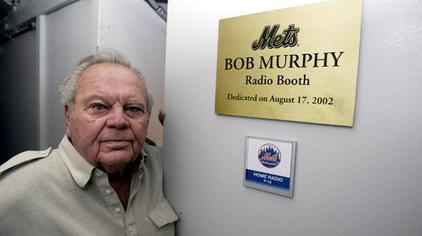
Bob Murphy
American sports commentator
10
APPEARANCES
9
PODCASTS
Oct 16, 2026

AdamHOST
I am the everyman.

Bob MurphyGUEST
So [sighs] s- old school Keynesianism, what was sometimes called hydraulic Keynesianism that had its heyday, like, in the '50s and '60s, let's say, um, if people have heard of ISLM, like, that's partly what that means, and the idea was, hey, we gotta, um, ensure there's adequate aggregate demand to provide full employment.
Bob MurphyGUEST
And so the problem when there's a downturn is there's not enough spending, and so that's why, oh, the g- you know, the central bank should cut interest rates to goose spending 'cause, you know, all other things equal, the lower the interest rate, and more people borrow and invest, and consumers spend more on consumption.
Bob MurphyGUEST
But oh, if the interest rate gets too low, it gets to zero and still that's not enough, then you're in a liquidity trap, but then the, the federal government comes in and runs a budget deficit, right? So that's, like, old school Keynesianism.
10 MINS LATER
AdamHOST
Mm-hmm.

Andy BarronNARRATOR
On deck, Fidrich takes a memorable road trip to Tigertown and rises rapidly through the minor leagues en route to the majors.

Bob MurphyGUEST
There were two carpools of people, me, Wayne, Billy, and Fid, and we took him to lakeland
Andy BarronNARRATOR
Longtime friend Bob Murphy, who goes by Piggy, remembers it well.


Bob MurphyGUEST
So right, it was like back during the financial crisis in the wake of that the Fed set up, um, like swap lines and stuff with the ECB, the European Central Bank, where, you know, they could post euros and y- and get dollar ba- treasury backing and stuff like that.
Bob MurphyGUEST
And so that was the way we were putting out fires in Europe is this, yeah, 'cause everyone rushed to the dollar, right? Everyone's freaking out.
Bob MurphyGUEST
They want dollars, um, and, and treasuries in terms of assets, right? 'Cause even, like, money market funds and stuff were in question September 2008, like one of them broke the buck is the expression.
Bob MurphyGUEST
That's why they, if you remember, they ro- they raised the, uh, FDIC insurance from 100,000 to 250K.
37 MINS LATER

Andy BarronNARRATOR
Longtime friend Bob Murphy, goes by Piggy, remembers it well.
speaker_2UNKNOWN
vacation.
Bob MurphyGUEST
And I think he got there, he was two earlier, and they weren't going to let him in.

Bob MurphyGUEST
I did notice when you try to pin down like for the question, I'm sure it comes up a lot on your show is like, oh, is Bitcoin money? And so if I just try to do a real mechanically and say, well, is it a medium exchange? Clearly it is.
Bob MurphyGUEST
Lots of people sell, you know, real goods for portions of or multiple units of Bitcoins.
Bob MurphyGUEST
Not because they're going to eat the Bitcoins or use it to produce something physically, but because they're just going to trade it away.
Bob MurphyGUEST
So clearly it's a medium of exchange, but then you say, is it commonly accepted? And you're right, that's a little bit odd because in one sense, there's millions of people around the world who accept it.

Robert BreedloveHOST
So you get into this other debate about, well, is it market money or political money? So I don't know if you...


David RandHOST
So what do you think? What's the rationale you'd use to try to deduce what that would mean for us?
46 MINS LATER
David RandHOST
Like what is the place that they're going to go and get to? And does that concern justify government spending through a UBI?

Bob MurphyGUEST
[chuckles] So here, and I don't by any means claim to have, you know, deep knowledge on this, but I, I thought, you know, this is something I do wanna keep tabs on.
Bob MurphyGUEST
So he, just for people who don't know, he had been on the board of governors from oh six to eleven and notice that includes, of course, the financial crisis and then all the rounds of QE and everything that immediately followed.
Bob MurphyGUEST
And so it's not merely like a, like a hatchet job, but like everyone kind of concedes that, oh yes, the function of Warsh at the time... 'Cause he, he's not an academic.
Bob MurphyGUEST
He's been in like a position at the Hoover Institution and he's done like monetary stuff at MIT and whatnot, but his degree, he actually has a JD from Harvard Law School, all right? So he's not like a trained economist.
12 MINS LATER

Tom WoodsHOST
To what extent is that true? And then secondly, w- what do you think we can expect in terms of price inflation in the next couple of years? I mean, it's been trickier to predict that than you would think it would be.

Bob MurphyGUEST
Okay, so there – I do feel for people cause there I was actually, that was tongue in cheek.
21 MINS LATER
Robert BreedloveGUEST
It doesn't mean they're going to predict precisely when it's going to happen, which is obviously different than, hey, if I throw a softball, at 10 meters per second this direction of this parabola it's going to land here at that time you know that's a much more precise process so is that is that the core theme is like we just need to get a little more humility in our predictive our appreciation of the predictive power of certain sciences

speaker_4HOST
They might not be the public facing party, personalities they usually kick that to the academics it seems like bernanke or something like that
Bob MurphyGUEST
can i chime in on this so two points one is it's not like ben bernanke now can't get a speaking engagement anywhere people will say it's a good thing we had him at the helm when this global financial crisis hit because he was an expert in the great depression and it would have been worse than the 30s had he not been at the helm so there's that element where it's like, oh, it's a good thing he was there.
Bob MurphyGUEST
But in terms of just give one element of why I don't just think he's a true believer because the world's so complicated, it's hard to falsify your beliefs in the social sciences.
Bob MurphyGUEST
For example, based on his work, there were a lot of guys, another school of thought is called the market monetarists.
Bob MurphyGUEST
They were very surprised over 2008, September's when Lehman goes down and AIG and all that.
Bob MurphyGUEST
They had statutory authority to do it, but they pulled it forward to accelerate it.
speaker_3MODERATOR
Bob, do you agree with the characterization of this complex shifting to be this financial political complex? Like, do you think that is a fair assessment of what's happening to the financial system and why economists have such a hard time actually proposing models that work?

14:43

So how do you see this balance between, like, who is controlling the market and is the Fed now working for, you know, the executive branch via the market dynamic?
Bob MurphyGUEST
And I would say for your viewers who haven't seen it, Besson, he, this was, I'm trying to remember the exact, it was definitely last year at some point, but he had this document that he put out where he was like challenging, or he was saying we need to restore the independence of the Fed and in the sense that they need to return to their original calling and that they have too much discretion right now in the sense of they're being able to deviate from these things.
Bob MurphyGUEST
And it was a very well-written document and they made a lot of plausible points.
Bob MurphyGUEST
So, I mean, cynics just dismissed it and said, oh, he's just doing that because the Trump administration wants to tighten the screw.
Bob MurphyGUEST
But regardless of the motivation, what they produced was a very coherent, reasonable critique of Fed policy.
8 MINS LATER
23:36
And so how do you as an economist look at the role of stable coins and maybe the pros and cons of them moving forward?