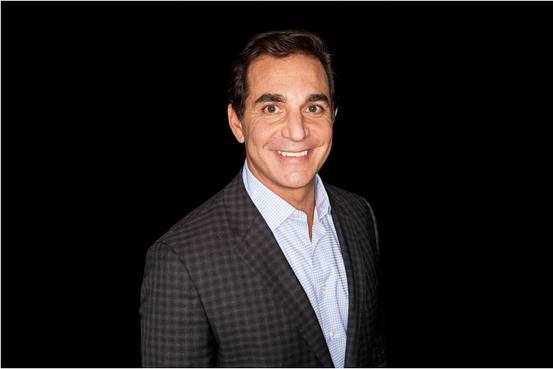
Bob Lord
American business professional and former CEO of Razorfish
5
APPEARANCES
4
PODCASTS
Nov 15, 2026


Dave BittnerHOST
What are those incentives today and how do we go about making them better for everyone?

Bob LordGUEST
And so one of the things I just want to echo what Lauren said, which is that when we had really great and productive conversations with the software companies It was really clear how much they wanted to do more, but there were these incentives that just were not fully aligned for that.
Bob LordGUEST
You know, one of the interesting things is customers don't actually know how to ask for security.
Bob LordGUEST
There was a analyst report that the headline was something like customers asking for more security in their products.
6 MINS LATER
Lauren ZabierekGUEST
I just think that there wasn't really a common language to help to amplify that demand signal.
Dave BittnerHOST
When you talk about preventable harm from insecure software, what does that look like in practice? Are there any examples you can share?
Bob LordGUEST
Yeah, so one of the things that we'll be doing at SSI is really trying to make some of these concepts a little bit more commonly understood.
Bob LordGUEST
There are a number of topics that are secret not because anybody's attempting to keep them secret, but just because the incentives don't reward people really talking about these.
Bob LordGUEST
So, for example, if you go back to a paper written in 2007 called Unforgivable Vulnerabilities, it's written by the MITRE Corporation, and if you know their work, you know that they're not... prone to hyperbole or click-baity articles.
Bob LordGUEST
And so you have to ask yourself, what would cause them to say that certain classes of coding error are unforgivable? And so they came up with a methodology and ran the world of 2007 through this methodology.
Bob LordGUEST
What were they? Cross-site scripting, SQL injection, path to reversal, classic buffer overflow, things like that.
Dave BittnerHOST
What are those incentives today and how do we go about making them better for everyone?


Kerry ParkerHOST
Like, what do you like about DEF CON? I don't know how often you make it out here, but, like, what did you learn this year that you didn't know?
Bob LordGUEST
One of the big problems was that they used to have, in this massive area, they used to try to have five or six different main stages.


Bob LordGUEST
I'll send you the link if you don't have it handy and you put that in the show notes.
Bob LordGUEST
But yeah, so there was a presentation at the DEF CON security conference in 2011, I believe.
Bob LordGUEST
And some researchers were able to take advantage of the fact that USB is used for both data transfer as well as for charging.
Bob LordGUEST
And so the idea was to create a charging station that would, in fact, charge your phone, but it would also try to steal data off your phone.
14 MINS LATER

Dana KaufmanHOST
Do you see that us getting rid of these hack laws is a step towards a less noisy security story?

Bob LordGUEST
If you look at the amount of wealth that is passing from households in this high echelon, this top 0.1%, households with over $50 million of wealth, and you try to estimate if their wealth was all subject to estate and gift tax, how much revenue there would be versus how much revenue actually is collected, I'd say we lose more than 80% of the potential revenue.
Sally HershipsNARRATOR
So when an ordinary American says, "Why should I care? If somebody makes a lot of money, why shouldn't they do it their way?"
Bob LordGUEST
I think what you say is, "Do you wanna live in a democracy?" Because if you concentrate that much wealth in a relative handful of, of families, you're concentrating that much power.
Bob LordGUEST
[pensive music] Elon Musk put $270 million into Trump's campaign, bought himself a position early on in Trump's administration, and the $270 million that Musk invested really in that campaign was 0.1% of his wealth, yet his wealth grows that much in a matter of days.
Bob LordGUEST
So it was a really, really modest expenditure for him, and yet he could really overwhelm the campaign finance system that way.
Bob LordGUEST
And it becomes this vicious cycle where, I mean, once they have the ability to buy political power, they can create more wealth, and they can use that additional wealth to get more political power.