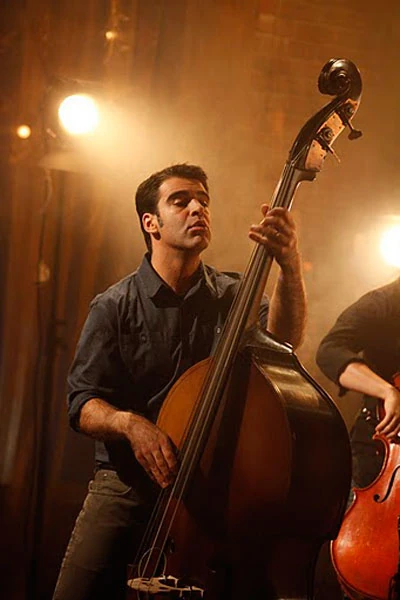
Bob Crawford
Bassist
15
APPEARANCES
15
PODCASTS
Aug 26, 2026


Bob CrawfordGUEST
Like, her, her Q- Q- QScore, her Q rating, i- uh, w- is better than anyone else's.
Bob CrawfordGUEST
That's the, that measure that, that people used to use in the media that determined who was the most likable, h-how much were you liked, and she's liked on the right, and she's liked on the left.
Bob CrawfordGUEST
And, uh, I think, you know, for me, uh, the, uh, Trump lowering the flags and honoring her-


Bob CrawfordGUEST
So back in this day, we didn't, uh, reach out to our politicians by going on their website and filling out a form.
Bob CrawfordGUEST
To petition the government for a redress of grievances, you literally sent a petition to your congressman, and congressmen would literally read a petition from, uh, a Mr. Inskeep in my district.
Bob CrawfordGUEST
And so while Adams didn't agree with the abolitionists and their tactics, he nonetheless felt it was his job as a congressman to read their petitions and have their voices heard.
Bob CrawfordGUEST
They wanna stop him, because what happens here in these years is you have the Nat Turner uprising.


Bob CrawfordGUEST
And what this period has shown us, and I really believe this period starts in the '90s, um, that history doesn't stop.
Bob CrawfordGUEST
It doesn't stop, and there have been other hinge points where everything kinda breaks down and reconstitutes.
Bob CrawfordGUEST
And so, and why, John? Because history doesn't repeat, humanity doesn't change.
14 MINS LATER

Lindsay CormackGUEST
That whenever any Form of Government becomes destructive of these ends, it is the Right of the People to alter or to abolish it, and to institute new Government, laying its foundation on such principles and organizing its powers in such form, as to them shall seem most likely to effect their Safety and Happiness.
Bob CrawfordGUEST
Prudence, indeed, will dictate that Governments long established should not be changed for light and transient causes; and accordingly all experience hath shown that mankind are more disposed to suffer, while evils are sufferable, than to right themselves by abolishing the forms to which they are accustomed.
6 MINS LATER

Colleen ShoganGUEST
We, therefore, the representatives of the United States of America in General Congress assembled, appealing to the Supreme Judge of the world for the rectitude of our intentions, do in the name and by the authority of the good people of these colonies solemnly publish and declare that these united colonies are, and of right ought to be, free and independent states.
Bob CrawfordGUEST
That they are absolved from all allegiance to the British crown, and that all political connection between them and the state of Great Britain is and ought to be totally dissolved, and that as free and independent states they have full power to levy war, conclude peace, contract alliances, establish commerce, and to do all other acts and things which independent states may of right do.
Bob CrawfordGUEST
And for the support of this declaration, with a firm reliance on the protection of divine providence, we mutually pledge to each other our lives, our fortunes, and our sacred honor.


Bob CrawfordGUEST
Um, I think that really it's human nature doesn't change is kind of the secret to this whole thing.
Bob CrawfordGUEST
But Adams, appointed to his first diplomatic post by George Washington, serves in the diplomatic corps under his father's administration.
12 MINS LATER
19:39
Tell us about his emotional isolation, and tell us about his relationship with his dad and how it impacted all of this.


Bob CrawfordGUEST
So it's funny you say that because early in his congressional career, you know, nullification, the nullification issue is is like right.
21 MINS LATER


Bob CrawfordGUEST
In 1820, he is serving as Monroe's Secretary of State and the nation is in the midst of the Missouri crisis.
Bob CrawfordGUEST
Well, that Missouri territory had long been populated by southerners and their enslaved property.
Bob CrawfordGUEST
And it seemed like a foregone conclusion, I think, for most until James Talmadge, a one-term backbench New York Congressman places these amendments, attaches these amendments to the Missouri statehood bill, and they are essentially to emancipate all enslaved people over a period of time.
Bob CrawfordGUEST
In return, if Missouri comes into the Union, it ultimately will have to be a free state.
6 MINS LATER

Bob CrawfordGUEST
In 1820, he is serving as Monroe's Secretary of State and the nation is in the midst of the Missouri crisis.
Bob CrawfordGUEST
Well, that Missouri territory had long been populated by southerners and their enslaved property.
Bob CrawfordGUEST
And it seemed like a foregone conclusion, I think, for most until James Talmadge, a one-term backbench New York Congressman places these amendments, attaches these amendments to the Missouri statehood bill, and they are essentially to emancipate all enslaved people over a period of time.
Bob CrawfordGUEST
In return, if Missouri comes into the Union, it ultimately will have to be a free state.
6 MINS LATER

Bob CrawfordGUEST
In 1820, he is serving as Monroe's Secretary of State and the nation is in the midst of the Missouri crisis.
Bob CrawfordGUEST
Well, that Missouri territory had long been populated by southerners and their enslaved property.
Bob CrawfordGUEST
And it seemed like a foregone conclusion, I think, for most until James Talmadge, a one-term backbench New York Congressman places these amendments, attaches these amendments to the Missouri statehood bill, and they are essentially to emancipate all enslaved people over a period of time.
Bob CrawfordGUEST
In return, if Missouri comes into the Union, it ultimately will have to be a free state.
6 MINS LATER


Bob CrawfordGUEST
Yeah, we all do, right? And so his early life, seven years old, he's an eyewitness to the Battle of Bunker Hill.
Bob CrawfordGUEST
They walk about a mile to a nearby overlook from their home at, at the time it was Braintree.

Brian LambHOST
So when did you first find a historical figure that you respected and you wanted to know more of, and what did you do about it?
Bob CrawfordGUEST
Well, so this, like, I didn't re- I read a good bit, um, out of high school, but it wasn't till we started traveling in the band, you know, in 2002 and '3, '4, where, um, it, reading became a habit because you have many hoursjust of, of, of driving and of sitting.
Bob CrawfordGUEST
And, um, during, this is very specific, during the war in Iraq, um, David McCullough, that was the time period when David McCullough put out that John Adams in the 1776 book.
Bob CrawfordGUEST
And I think it was when he was touring, uh, doing the, the media circuit for 1776, I, I began to see him on television every ti- like every time I turned him on tele- turned on television, he was there.
11 MINS LATER


Jonah GoldbergHOST
So why don't you explain what the corrupt bargain was and, um, and whether you think it in fact happened.
Bob CrawfordGUEST
Um, Andrew Jackson wins a plurality of the electoral vote and a plurality of the popular vote.
Bob CrawfordGUEST
And again, you got four guys standing here for office, and based on the 12th Amendment, the top three go to an election in the hou- in the, in Congress, where...
19 MINS LATER


Bob CrawfordGUEST
Like, one of, one of my things I say, uh, is like, history, people are like, "Well, history repeats.
Bob CrawfordGUEST
Those who don't learn are doomed to repeat it," or, "History doesn't repeat, it rhymes," um, which is attributed to Twain.


Bob CrawfordGUEST
[chuckles] New-- I think it is the oddest, most remarkable election in our history.
Bob CrawfordGUEST
And there's a couple others probably in the 1870s and '80s we could talk about as well.
Bob CrawfordGUEST
But 1824, Monroe is finishing up his second term as president, and his presidency's defined by this phrase, the era of good feelings.
Bob CrawfordGUEST
There was only the Democratic-Republicans, and that was the party of Monroe, and it became the party of John Quincy Adams.
12 MINS LATER


Gilbert CruzHOST
It's, it's early days of the band, and you are in the back with a giant history tome.
Bob CrawfordGUEST
The nation, the United States is, is in, uh, fighting the wars in Iraq and Afghanistan.
Bob CrawfordGUEST
I think he considered himself just a writer, but we, we consider him a historian, uh, put out these books, this John Adams biography and this book about the year 1776, ri- in that same time period.
24 MINS LATER
Gilbert CruzHOST
Um, what are some presidential biographies that you think everyone should read?