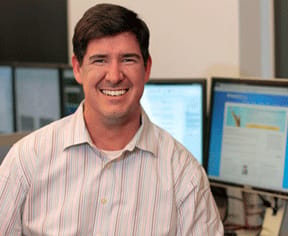
Bill Mann
16
APPEARANCES
10
PODCASTS
Oct 15, 2026


Caroline WoodsHOST
How do you distinguish between a temporarily beaten down AI stock and one that might never recover?

Bill MannGUEST
I think that one of the key ways to do it is to look at the companies that seem foundational.
Bill MannGUEST
They are involved in the build-out, for example, and I don't really see that as being something that is going to change.
Bill MannGUEST
There are other components of the market where, again, you're starting to see these companies take huge amounts of debt on.
Bill MannGUEST
So they might be foundational companies, but they also might be creating a mismatch for themselves.
Bill MannGUEST
And there I'm thinking about the metas of the world and the alphabets of the world, which are great companies and I have no problem having exposure to them.
6 MINS LATER

Bill MannGUEST
So we can think about the Noah principle as being, uh, you know, going back to the Old Testament, Noah at one point had to build an ark, right? And you know, the, we...
Bill MannGUEST
I believe that, you know, most people, you know, are familiar with the story of Noah, but Noah went through a period of time where he was building this large boat and looked like an idiot, right? Why are you building a boat, Noah? Right? W- what, what is it that you're going to do? How is it that you're going to collect two of everything w- you know, when, look, it's sunny out.
Bill MannGUEST
When we think about investing, uh, o- one of the, you know, o- one of the key elements that is, that is simply true is that people have a very, very hard time preparing for, in a really principled way, the upcoming flood, right? We can talk about AI now, right? Right now we know that there are a lot of people who believe that the AI's in a bubble.
Bill MannGUEST
There are all of these things that we, you know, that, that we can worry about, and at some point the market will decide to worry about it.
9 MINS LATER
Ben CarlsonHOST
Like, if, if this AI stuff does kind of cool down and we start to see consumer staples or these more defensive names actually start working, like, how painful is the process of getting from here to there?

Bill MannGUEST
And so we mixed up a lot of different blends and, and, sent them out for people to try.
Bill MannGUEST
And, you know, we weren't trying to build a Tony's type seasoning, which is good.
22 MINS LATER
Anthony LujanHOST
Um, but yeah, Bill, go ahead and tell people where they can purchase these and where they can follow you if they have some followup questions.

AmyADVERTISER
You're listening to BQN: Assimilate the Audio
22 MINS LATER

Bill MannGUEST
Like, there's, there, there are episodes of this, like, subgenre that I really like.
Bill MannGUEST
I, I was impressed by how much it committed to the bit and went for just all-out e- embrace of the, of the horror kind of construct.

Bill MannGUEST
And I'm going to pick one thing specifically for secondary systems in a second, but like I'm watching Deep Space Nine right now and seeing Jeffrey Combs as, brunt and way in it really kind of almost i think it's taken for granted like how different these characters are and how different shran is from that stuff like it's not just that he plays different characters and puts different makeup on like he embodies these completely radically different flavors of characters that are pretty well cut like they're three-dimensional and interesting and they kind of define um particularly way in and shran they're like the kind of stand-in for this whole Like they kind of embody the face of a whole society kind of.
Bill MannGUEST
And the amount of work that he does to like lift the Andorians into some of Enterprise's best stuff is like immediately on display in the Andorian incident.
33 MINS LATER

Alex PerryHOST
Like, as you look across these five episodes and sort of think about that, like, entire Star Trek story, what do you think these five add to that sort of overall story? narrative? Are there ways they connect to other Star Trek? Are there things they set up? Are there things they pay off? Like, what resonates with you as you're sort of thinking about these five episodes and the franchise as a whole?

JeremyHOST
Okay.
Bill MannGUEST
We are actually somewhat agnostic as to whether a company retains their capital or they pay it out in the form of a dividend or a share buyback.
Bill MannGUEST
All told, what we want to see is good capital decisions, right? I believe that if you've got a company that's paying a high dividend but they're poor at managing capital otherwise, that's not that helpful.
Bill MannGUEST
Now, if you've got a company that's retaining all of their capital, and are bad at managing it, you'd rather have the capital being paid out.
Bill MannGUEST
Our preference is not towards dividends, but it is also not towards bad management of capital or hoarding of capital, which a lot of companies do.
Bill MannGUEST
So for us, our preference is for share reductions to happen, which comes in the form of there's tax advantages for a share reduction.
JeremyHOST
Can you talk about that one a little bit? What kind of holdings you have?


Bill MannGUEST
I've never found evidence that the story was true, but David, you are not alone in suggesting its truth many times.
Bill MannGUEST
And there are studies that show that people who trade the most perform the least well.
Bill MannGUEST
But I am here to tell you that we do have an anecdote in the form of this campfire story because my father bought these shares directly from IBM, so they were not in a brokerage account.
Bill MannGUEST
From 1983 until the end of 2024 when another Bill Mann, me, received a letter from IBM saying-
Ben CarlsonHOST
How do you explain the difference between that? Because again, I think part of the reason there aren't many people allocating momentum is because they just don't understand how it works in practice.
Bill MannGUEST
Well, yeah, and I love the way that you put that because it almost feeds to what we think is our worst basic instinct when it comes to investing is that, are we performance chasing? And you go back to your basic finance classes and they will tell you that one of the worst things that you can do is to performance chase.
Bill MannGUEST
If you are a fundamental-based investor, obviously value is a very, very clear story how you go about investing.
Bill MannGUEST
What a momentum factor is suggesting is that you are letting some of that control go in terms of what you believe the market ought to do.
Bill MannGUEST
So in some ways, it's just the reality that at some point, different sectors are going to work.
Ben CarlsonHOST
So how long do you hope to let these things run for? What's your ideal holding period for your momentum strategy?
Ben CarlsonHOST
Could it be that these smaller mid-size companies actually gain most of the efficiencies without having to have a big cost outlay in terms of their R&D for it?
Bill MannGUEST
It's so funny, Ben, thinking of these companies that are, that, that are fantastic at generating returns on equity as being the risk assets because of the investment, you know, the investment that they have to make to build out something that doesn't yet exist.
Bill MannGUEST
Um, so I think in some ways looking at what's happened, say, you know, from about mid- you know, the, the middle of 2025 in the markets till now is that we're seeing sort of a recognition, uh, that the Mag Seven and the top 10% and, you know, and, and the AI companies had such a large component of, you know, of, of, of, of the economy and of the market that there's really only two ways that you're going to be able to revert that.


Steve SedgwickHOST
What about the rest of the U.S., though, and the bottom leg of that K that people keep telling me about?
Bill MannGUEST
We see, for example, the amount of layoffs and job reductions here in the U.S. is at a record for 2025.
Bill MannGUEST
And even though that's not showing up in the top line number, again, that's being- by very few things and so when the Fed got together the other day and you saw you saw comments there there were Fed governors who were who were looking for a larger cut and some who didn't want any at all and- we're hearing from the comments even more- division within the Fed and it just has to do with the fact that there is so there are so few things that are driving- growth- so.
Bill MannGUEST
We at Motley Fool Asset Management don't tend to get too excited about one-day responses, but it would be kind of a Goldilocks response for the Federal Reserve for the NASDAQ prices to be coming down a little bit while the remainder of the market, starting with material stocks, are going the opposite direction.
Steve SedgwickHOST
Does that story represent anything bigger? You talked about the 7 versus the 497.


Ricky MulveyHOST
As you look back on the first half of the year, any broad reflections on stocks and the market reaching record highs?
Bill MannGUEST
Ricky, I would say that one of the most interesting things that's happened in 2025 is that all of the asset classes within the biggest asset classes in the U.S. have sort of congregated.
Bill MannGUEST
I saw something really interesting the other day that showed that the highest and lowest yield amongst the five major U.S. asset classes is now less than 1%.
Bill MannGUEST
So, U.S. corporates are yielding about 5.2% all the way down to three-month treasury bills that are about 4.3%.
Bill MannGUEST
I don't want to dwell too much on things that have never happened before, but this has not happened before.
Bill MannGUEST
It really speaks to the fact that all of the asset classes in the U.S. seem to be focusing on what is going to happen with the statecraft in this country, that they are staying at a single point and wondering what's going to happen.
9 MINS LATER
Ricky MulveyHOST
What is that deficit spending for people like me? And is that important for investors to pay attention to?
Bill MannGUEST
And it suggests to me that he believes in his bench, because he is very tightly tied to, his financial success is still tied very tightly to MercadoLibre.
11 MINS LATER

Dylan LewisHOST
Aside from that similarity, Bill, any things that stick out to you as you stack these results together?
Dylan LewisHOST
When you look at what they were talking about with the quarter and what they were forecasting out, what are you seeing?
Bill MannGUEST
For the life of me, I can't really figure out how DoorDash's shares are up and the business is up when every restaurant that I'm tracking is down.
Bill MannGUEST
It feels like this is a symbiotic relationship between the two, but maybe it's not.
Bill MannGUEST
They do give average ticket size information, but I'd love to know what the spread of that is, because I actually have this pet theory that people are much more inflation agnostic than they let on by virtue of the fact that so many people do things like order coffee and use DoorDash and order smoothies and use DoorDash.
20 MINS LATER

Bill MannGUEST
And we can see from the success of a platform like Reddit, since it's become public, if you've got a bunch of users like that, that's a huge value, that's a huge part of the battle.
5 MINS LATER


Mark ThompsonHOST
Give us a sense, us dirty Americans, about what's happening in Canada, if you would, please.
Bill MannGUEST
And there is a, as you know... an anti-incumbent wave sweeping the globe, not just Canada.
Mark ThompsonHOST
No, no, I was just going to ask, I mean, because I think we think of our government and their government, Canada, is a very different one, right? It's a parliamentary government, is it not? I mean, so he has to form coalitions almost by definition, right?
Bill MannGUEST
This one is so much more boring, but it does, in fact, fall from the fact that Microsoft has invested in OpenAI when OpenAI was and is a nonprofit.
Bill MannGUEST
And so you have to put some definition that is a little bit different than what you would have with a for-profit company investing in a for-profit company.
Bill MannGUEST
And so They apparently did like a little Yalta conference to decide that it's $100 billion in profits, which sounds like a long way away because OpenAI is expected to accumulate losses of about $44 billion between 2023 and 2028.
8 MINS LATER
Dylan LewisHOST
Bill, Carter is known for so many things, but this week you wanted to zoom in on a very specific part of his legacy.