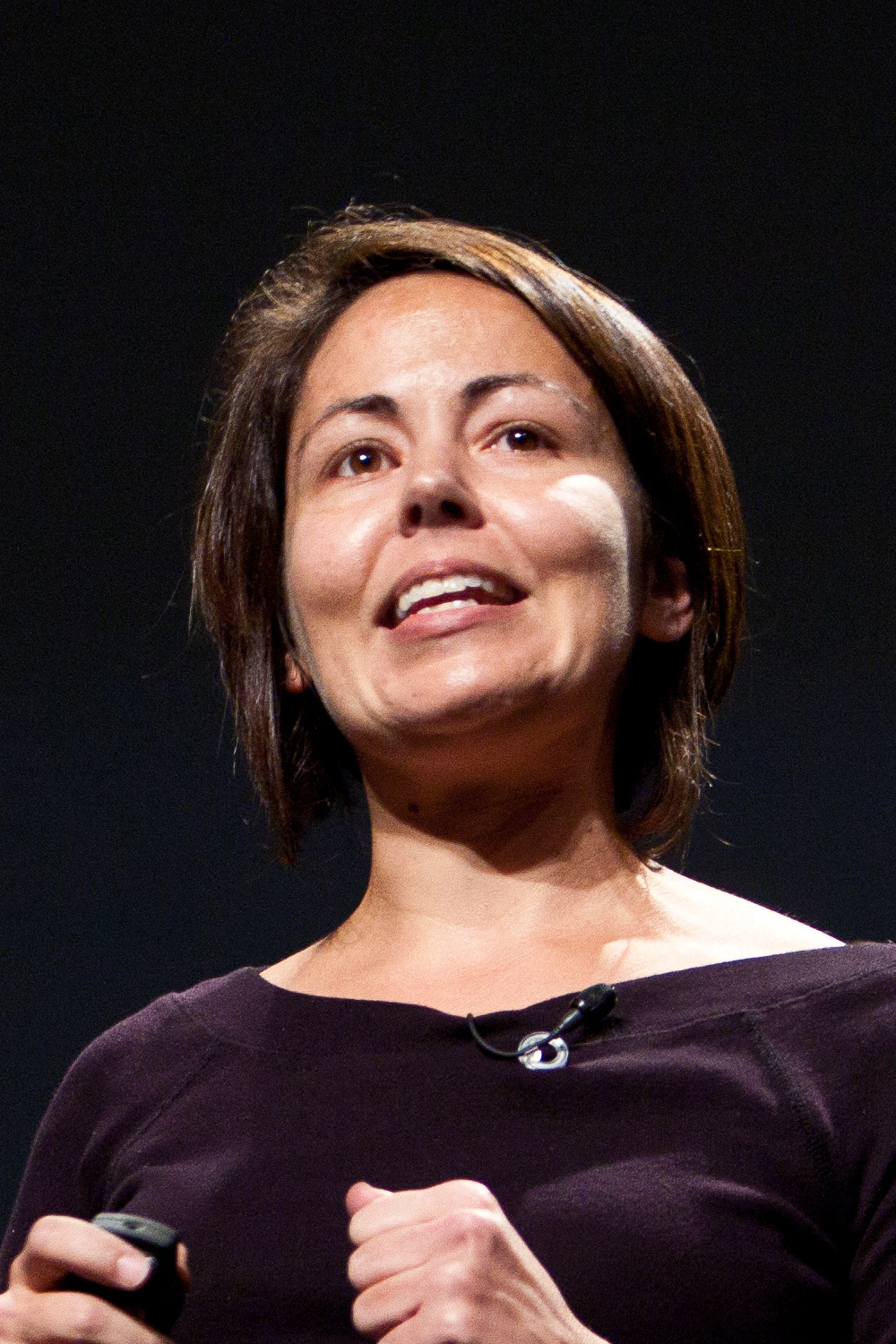
Beth Shapiro
American evolutionary biologist
5
APPEARANCES
5
PODCASTS
Oct 19, 2026


Beth ShapiroGUEST
Well, I'm going to start by pushing back a little bit that this was started by Jurassic Park.
Beth ShapiroGUEST
In fact, when Michael Crichton published the first book, the Jurassic Park book, he thanked Alan Wilson and the Extinct Species Study Group at UC Berkeley for giving him the inspiration to write Jurassic Park.
Beth ShapiroGUEST
So in fact, it was the very early work in the field of ancient DNA that inspired Jurassic Park and not the other way around.
Beth ShapiroGUEST
But, you know, it is true that as soon as people became aware that we could extract DNA from things that were no longer alive, and that first paper that was published was a collaboration from really the lab that was the The father of the father lab, I guess, because it was Alan Wilson's lab of everything that came after that.
29 MINS LATER

Cory SmithHOST
How do you then release these modified organisms into the wild to help aid them and make them more resistant?


Beth ShapiroGUEST
As soon as an organism dies, the DNA in its cells starts getting chopped up into smaller and smaller and smaller fragments until eventually there's nothing left.


Laurie McGrawHOST
But what happened? How did that lead to impossible science? I'm missing the connect.
Beth ShapiroGUEST
So I had an opportunity at the end of my freshman year to go on a this really amazing class.
Beth ShapiroGUEST
It actually meant so much to me that I ended up teaching something really similar at Santa Cruz when I moved there.
9 MINS LATER
Laurie McGrawHOST
Like, what is happening? I know it's a big question, but it is a well-known, exciting, exciting story.


Beth ShapiroGUEST
You should, you should look it up and read the, the whole story, because it, it involved these two guys, um, one, one of them was the guy who was the inspiration for the Boy Scouts of America, and another guy was like a con man who had worked as a pimp and a journalist and all these other things.
Beth ShapiroGUEST
And they had actually been employed during the Boer Wars to kill each other, but they came together on part of this congressman's team.
44 MINS LATER

Rob SteinCORRESPONDENT
But they wanted to make sure that the genes they had identified were really responsible for the traits that they wanted. They couldn't just, you know, try to engineer Asian elephants with genes they thought might control those traits because it would be unethical given the fact that Asian elephants are endangered.
Beth ShapiroGUEST
Here's a difference in a letter in a long string of As and Cs and Gs and Ts and a genome of a mammoth that we've gotten out of a bone that was preserved in the permafrost in Siberia. It's hard to test that in an elephant because an elephant is pregnant for 22 months, and then it takes another decade to 14 years for that elephant to be able to have a baby.
Beth ShapiroGUEST
With a mouse model, we can really rapidly test these hypotheses and learn whether this change might be responsible for making the animal woolly, and now I can add that to the list of things that I want to change when I'm editing that elephant cell-