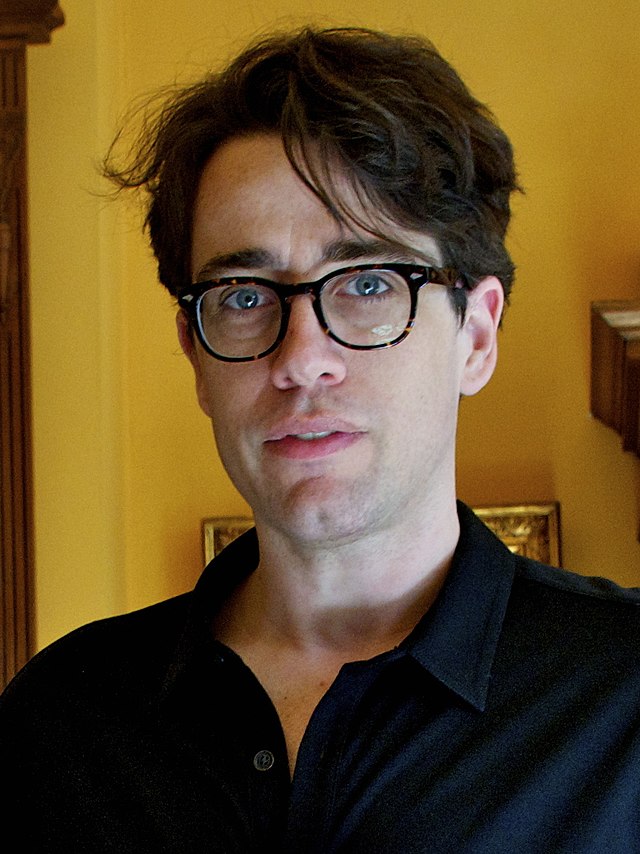
Benjamin Moser
American writer and translator
14
APPEARANCES
14
PODCASTS
Oct 19, 2026


Benjamin MoserGUEST
And there's a moment where they say, well, what about sayonara? And he thinks about it and he comes up with this fake Greek etymology for that.
19 MINS LATER


Benjamin MoserGUEST
Like, it's like almost like a translation of the same book, you know? They were the same book basically.
Benjamin MoserGUEST
In this book, I really wanted to get away from the pretty stereotypical European American Ashkenazic reform perspective that a lot of Jewish history is told from, and try to talk about how this was a question that different people answered in, in different, uh, in different places and in different times.
9 MINS LATER

Benjamin MoserGUEST
And I think that Zionism has always relied on what Hannah Arendt calls speech rules.
Benjamin MoserGUEST
We're called even Hannah Arendt was called a Nazi and Golden who's at the end of my book was called a capo.
6 MINS LATER

Cenk UygurHOST
How about leadership? Is there any hope there or are they lockstep with the Zionists?


Benjamin MoserGUEST
And so when I write about anti-Zionist Jews, I'm writing about a tradition that goes back further among Jews than Zionism.
Benjamin MoserGUEST
Uh, it was about the end of the world and, and the second coming of Christ, and all this kind of fantasy that, that Christian evangelicals had in the 18th and 19th century.
Benjamin MoserGUEST
Modern Jewish Zionism really begins with Theodor Herzl in 1896 when he publishes this pamphlet called The Jewish State, and I had never read this book.
Benjamin MoserGUEST
Uh, my grandfather brought a copy of it out of Nazi Germany when he escaped in 1938, and I was very moved by it.
Benjamin MoserGUEST
It seemed like a sort of nice idea, sort of what you are citing in that definition.
7 MINS LATER


Ted RallHOST
And you talk about if you can, I mean, I was blown away, pun intended, by your discussion about what happened to the Baghdadi Jews, that community of over 100,000 people.
Benjamin MoserGUEST
Well, I mean, the thing about it is that the Jews are both an ethnicity and a religious group.
Benjamin MoserGUEST
So, you know, in some parts of the world, like, and I'm sitting here in Brooklyn, New York, and believe me, I'm white.
Benjamin MoserGUEST
You know what I mean? Like, nobody's like, if I was living in Poland in the 19th century, well, then no, right? Like, the Jews are seen as this separate thing.
21 MINS LATER

Benjamin MoserGUEST
They knew who supported racism, and I grew up being taught to hate anything that smacked of racism.
Benjamin MoserGUEST
And so they were sort of vaguely proud, quote-unquote proud of Israel in the way that a lot of Americans were, and I'm sure Canadians as well.
Benjamin MoserGUEST
Um, they wished it would get better, but I think it's important to say about my upbringing is I lived in a time, I was brought up in a time when we thought that things were getting better.
35 MINS LATER


Benjamin MoserGUEST
But like you realize like how deeply like the Jews were just thinking about the Jews.
Benjamin MoserGUEST
He prays at the Western Wall and he has this kind of, he's very religious as well.
18 MINS LATER

11 MINS LATER


Benjamin MoserGUEST
I was, I would've been, if someone said, "You wanna go to Israel for free this summer?" I would've said, "Hell yeah," you know, but I didn't.
Benjamin MoserGUEST
I was talking to an older friend the other day about when he first learned the word Nakba, and he said, "Oh, I must have been in my 50s." Like, we just, this vocabulary just wasn't presented to us.
12 MINS LATER


Benjamin MoserGUEST
Well, are you glad that we have the Declaration of Independence that says life, liberty and the pursuit of happiness? Are you glad that we have the First Amendment? Are you glad we, you know, freedom of religion and freedom of speech? And, you know, so people, I think that you can have both of those ideas in your head.
Benjamin MoserGUEST
Like we are a flawed society, definitely nobody's going to, I mean, God knows not today, nobody's going to think everything's great.
Benjamin MoserGUEST
But, you know, you can look at it from a reformist view, like a liberal view where you think, okay, well, yeah, like I wish Roe versus Wade would come back.
6 MINS LATER
25:27
So can you talk about your inclusion of Arendt? It's such an interesting chapter because it felt like a foreshadow for a lot of the tactics we see today.


Ben MoserGUEST
to it? So I knew very vaguely that my grandparents had left Beth Israel, which is the oldest synagogue in Texas.
Ben MoserGUEST
And in 1943, the synagogue splits in two, one of which becomes Emmanuel, which is on Sunset Boulevard right across from Rice University, which is the synagogue I grew up in, and one of which is Beth Israel, which still exists.
Ben MoserGUEST
And I knew that my grandparents had left because they were Zionists, but I didn't know much more than that.

Michael HaggertyCORRESPONDENT
What does that cost him? What happens in his congregation? What happens in Houston in the wake of that?


Benjamin MoserGUEST
um, And they go in and they discover something completely by accident that's, you know, usually it's the origin of his fortune or it's the story of what happened to his first wife or, you know, some kind of.
Benjamin MoserGUEST
I expected, again, as I said, like about Susan Sondheim, like Susan Sondheim was a pretty well-known, nightmare in certain ways you know she was rude to the waiter and she was she had all these broken relationships and all this kind of stuff but like everyone kind of knew that you know like i'm like a new york person like i know the stories and there's a lot of divas walking around the city you know it's not like it's not like she was the only one but like But Herzl really, but she doesn't seem crazy.
Benjamin MoserGUEST
You know, she seems just like kind of, she gets in a bad mood and she kind of growls at people.
7 MINS LATER

Matt RogersADVERTISER
Kewpie, the original Japanese mayonnaise.
Benjamin MoserGUEST
And throughout the 19th century, the Jews do pretty well in Europe, actually.
Benjamin MoserGUEST
And they are allowed to integrate, and they're allowed to go to universities, they're allowed to enter professions, they're allowed to live in other neighborhoods.
Benjamin MoserGUEST
I mean, there's a difference between views that some people, like the rabbi at the beginning of the book, he says, we're not trying to be like other people.
22 MINS LATER

18:02

Could you talk about him, maybe, and any others that you would like to give our audience as examples of people who not only spoke in these terms very bravely, but did so knowing that it could very well cost them their lives?
Benjamin MoserGUEST
And he's somebody who, if you know about Dutch literature and Dutch culture, you know him.
Benjamin MoserGUEST
I mean, it's not exactly a household name, but, you know, he was very famous because he was the author of the first gay book.
Benjamin MoserGUEST
novel in Dutch, which he published in 1901, which is a fascinating novel because it's also, it feels like it's Brooklyn in 98.
7 MINS LATER
25:25
So I want to give you as much space and time as you want to unpack whatever you want about the Hannah Arendt chapter, but I would really appreciate it if you talked precisely about this idea of which Jews got to go where and which Jews were not allowed, right?