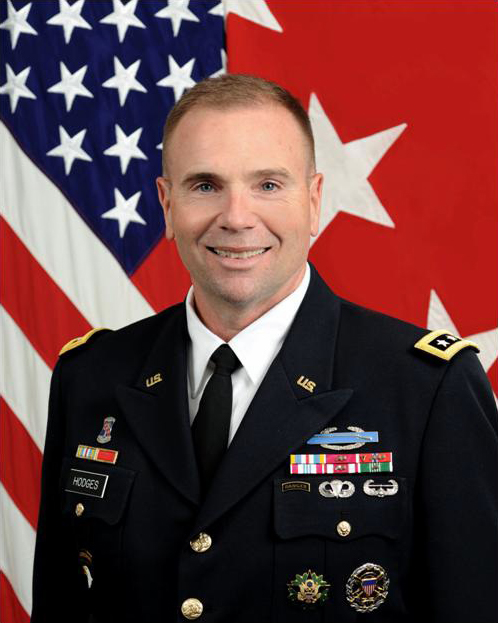
Ben Hodges
Retired United States Army officer
55
APPEARANCES
30
PODCASTS
Oct 20, 2026


Ben HodgesGUEST
Anybody that thought President Trump was ever seriously going to help Ukraine was naive or allowed themselves to be fooled.
Ben HodgesGUEST
really seriously contemplated helping Ukraine defeat Russia or even do anything more than surrender what they demanded.
Ben HodgesGUEST
And if you go back to the opening week of this Trump administration, Secretary Rubio, his opening comment about how they were going to end the war in the first 24 hours, Rubio said Ukraine is going to have to give up some land.
12 MINS LATER

Mario NawfalHOST
I feel like we're in a position where the biggest loser out of the Europeans turning on Russia without America's support would be the Europeans that are already in a really bad position economically.


John BruniHOST
Now tell me what I'm committing my country to." What military outcome would you ask that leader to pursue?
Ben HodgesGUEST
Well, President Zelensky himself said winning equals total restoration of Ukraine sovereignty.
Ben HodgesGUEST
That means no Russian soldiers still inside Ukraine, still occupying Ukrainian territory, still, uh, holding a gun to the heads of Ukrainian civilians, and yes, of course, that includes Crimea.
Ben HodgesGUEST
Now, um, there are other aspects of it that would include, um, holding, uh, Russians accountable for their war crimes, anyone that was responsible for the murder of civilians, for example, uh, or in the, in the chain of command of the people launching missiles against, uh, civilian infrastructure.
Ben HodgesGUEST
It would also mean bringing back the 20,000 Ukrainian children who have been kidnapped and dispersed around Russia, and then it would, it would have to include something about, um, not reparations, but something to help pay for the reconstruction of all the damage in Ukraine.
Ben HodgesGUEST
But that's, that's the end state and, and I think actually those four things almost nobody in Europe, no leader says, "Uh, that's not really important." Um, everybody knows those are important.
21 MINS LATER


Maddie HaleHOST
But are we now entering a dangerous new phase of this war or is hitting Russia's energy industry exactly what Ukraine should be doing?
Ben HodgesGUEST
They just don't have enough scale or capacity yet to hammer away at Russia's oil and gas export industry to achieve the decisive effect that's needed.
Ben HodgesGUEST
I think the United States has, we're down real close to zero credibility now in Ukraine, at least this administration is.
Ben HodgesGUEST
They don't do, they haven't delivered hardly anything since the Trump administration came into office and all the pressure is on Ukraine to please stop attacking Russia's diesel.
7 MINS LATER


Ben HodgesGUEST
have But on the other hand, there clearly is an innovation ethic on the Russian side where they're able to do things.
Ben HodgesGUEST
Who can come up with this thing and then who can counter it? And then who can counter the counter? And so there's a little bit of a lag between both sides, but I mean, I think most Ukrainian soldiers would tell you that, okay, wow, the Russians have got this thing that we can't stop.
Ben HodgesGUEST
But I remember even when I was a young officer a very long time ago in West Germany in the Cold War, The Soviets had much, much better electronic warfare capabilities than we did to jam, to intercept and so on.
7 MINS LATER


Jonathan FinkHOST
Why has the world, and not just the world, why is the Western alliance not mobilized in that same way and why are we not seeing the global character of this war and threat?
Ben HodgesGUEST
Well, I'm afraid that part of the problem is that the President of the United States is much more interested in being dear friends with Vladimir Putin and Xi Jinping and Kim Jong-un than he is with the Prime Minister of Canada or the leaders of NATO countries.
Ben HodgesGUEST
And it's embarrassing for me as an American that our government, our administration is taking the approach it is towards this global threat.
7 MINS LATER
Jonathan FinkHOST
It seems to me month by month, Russia is becoming more of a malignant threat to Europe, to NATO and to our eastern border.

2:42

I feel there's a lot of debate in our community about whether or not these attacks are really just about Ukraine and getting Europe to stand down its support for Ukraine, or if Russia has broader ambitions with what it's doing?
Ben HodgesGUEST
Not war like what they see in Ukraine, but nonetheless, the use of everything except tanks and Iskander missiles against European countries.
18 MINS LATER

Jim TownsendHOST
And so what do you think about what Shawshank said about maybe that's a vulnerability we can put some pressure on?
Ben HodgesGUEST
Uh, and that's gonna affect not only them of course, but the rest of the, the world markets.
Ben HodgesGUEST
But the thing is, the Saudis have an enormous amount of military capability, at least in terms of equipment, that they have bought from the United States.
Ben HodgesGUEST
Um, now is we're gonna find out if they know how to use it, if they have forces that are properly trained and can push back what the Houthis, uh, are doing in Yemen.

Kristen HolmesCORRESPONDENT
[whoosh] General Hodges, what stands out from that, aside from the fact that I know you've never heard a commander say any such thing?
Ben HodgesGUEST
Yeah, I don't know any commander that's never been worried about does he have enough resources.


Jason PackHOST
Was it, in your experience, being used to do missions which were not appropriate for it?
Ben HodgesGUEST
This is a very, very good question, and not one that's easily answered, of course.
Ben HodgesGUEST
I think that the key, and I'm going to sound a little bit like a scratched record, but if you don't get the strategic objective right, it's almost impossible to get the policy right, because the policies are what you do that you implement to achieve the objective.
Ben HodgesGUEST
The objective was very clear, make sure that Afghanistan cannot be a base for training or launching future attacks by al-Qaeda against the United States or our allies.
Ben HodgesGUEST
If we'd have left after the first six, eight months, we would not even be talking about it on this podcast.
7 MINS LATER


Pyotr KurzinHOST
So as someone who's based in Germany and has a lot of experience there from a military standpoint, how do you feel about that in the bigger scheme of things right now?
Ben HodgesGUEST
Well, you know, my friends and neighbors are very concerned about what's happened because it feels like a part of Germany is drifting back towards the past.
Ben HodgesGUEST
They all... you know, everybody my age and younger grew up in a system during the Cold War and an education system that talked about the bad, the evils of communism and Russian alignment and the good things about a liberal democratic society.
Ben HodgesGUEST
What they can't, and they're trying to understand how did it happen? What caused this? And part of it, of course, was concern over excessive influx of migrants.
Ben HodgesGUEST
But I don't know how valid that is because actually the parts of Germany, the Bundesländer, the states that have the lowest numbers of immigrants are the former East German countries, States like Sachsen-Anhalt.
8 MINS LATER


Philip IngramHOST
Do you think Europe is properly stepping up? And do you think it is coming together from a political perspective, which was always a real difficulty in trying to coordinate things? You must have seen that whenever you were commanding US forces across Europe and the frustration that there would have been in dealing with different European countries and different European leaders and their attitudes to defence and to the military?
Ben HodgesGUEST
In most countries, people have awakened political leadership, awakened to the realization that we're going to have to invest more into defense and all aspects of defense because of what Russia is doing.
22 MINS LATER
Maddie HaleHOST
Did it seem like any sort of progress was made? Was anything, did anything come from it?
Ben HodgesGUEST
We've got – the United States has two negotiators that are – neither of whom are professional diplomats.
18 MINS LATER
Maddie HaleHOST
What goes through your mind when you see an American president treating an ally worse than Vladimir Putin?

Erin BurnettHOST
General Hodges, may I start with you? Do you agree with Senator Tillis, who has come out and obviously speaking so bluntly here, saying that Defense Secretary Hegseth needs to go?
Ben HodgesGUEST
Well, I have to say I'm glad that members of the Congress, people like Senator Tillis, are finally speaking out.
Ben HodgesGUEST
They have constitutional responsibility for oversight, Article 1, Section 8 of the Constitution.
Ben HodgesGUEST
And the Senate Armed Services Committee has pretty much stood by while so much damage has been done to our military, to include the hollowing out of Army leadership.
Ben HodgesGUEST
And the picture you showed of all those generals and admirals who have been sent off by the Secretary of Defense, you talk about some of the most tough war fighters, lethal people like C.D. Donahue and Randy George and Jim Bingus.

Kailey LeinzHOST
Is this a step backward or could this be an isolated skirmish and the status quo continue from here?
Ben HodgesGUEST
I am pretty sure, though, that the IRGC still has more launchers and mines and other weapons that are in varying levels of capability that are hidden.
Ben HodgesGUEST
And so this will go on for quite some time as CENTCOM continues to look for these things.
Ben HodgesGUEST
And there's pressure on the U.S. government because of our own approaching midterm elections.
Ben HodgesGUEST
And perhaps after November and after we know the results, then maybe the pressure will will seem much less.
Kailey LeinzHOST
How do you interpret that visit and that messaging? General, is this about to be a breaking point for Russia?
Ben HodgesGUEST
Well, you know, there was a, a couple of quotes that came from Lavrov that came out over the weekend where he, he b- he did everything except say, "Yes, of course, that drone in Leipzig was from us," because he talked about we are going to destroy all the things that support Ukraine in this war.
Ben HodgesGUEST
I mean, those are the words of Lavrov, and, and the, the drone that failed to go off there in Leipzig, of course, was very close to one of these big, gigantic Antonovs that was loaded with ammunition going to Ukraine.
Ben HodgesGUEST
So, um, I, I think that the alliance has a role here i, is, in terms of being a, uh, um, framework and, and, um, a platform for discussing how, how do we respond, but the nations still have to respond.
12 MINS LATER
Jonathan FinkHOST
I, I, I don't wanna be, you know, too negative here, but are these lessons being learned? Are they starting to be incorporated? Because we now have ample evidence that the traditional way of doing things, um, is simply not viable in the drone age.

Lex LusiakHOST
If a ceasefire eventually holds there, what does a battle-hardened military, specifically one with combat experience, look like when it turns its attention north towards the Baltics?
Ben HodgesGUEST
Well, this is a great question because everybody in Europe is speculating about what comes next.
Ben HodgesGUEST
And obviously, a lot of what comes next will depend on how does the war in Ukraine end.
Ben HodgesGUEST
If, in my view, if Ukraine is successful, defeats Russia, Russia is forced to move back to live inside their own borders.
Ben HodgesGUEST
including, of course, Crimea returning to Ukrainian sovereignty, then I think Russia will be so battered and there will be political things happening that would affect any potential situation further Russian aggression, let's say, against Baltic countries.
Ben HodgesGUEST
If Ukraine fails, that will only be because Europe, the U.S. and Canada and others failed to help Ukraine.
Ben HodgesGUEST
And I think that emboldens Russia because then they will look across and see a NATO perhaps or a coalition that is not not together and not ready to defend.
Lex LusiakHOST
Can you explain this idea to the audience? And does this skepticism hold in the same way in the Baltics, say where Article 5 is supposedly a tripwire? Or do you think the proximity to NATO's actual borders changes Moscow's calculus?


Fareed ZakariaHOST
Give me a, first a sense of bottom line, what is the state of the war right now? I don't wanna make it something as simple as who is winning, but what does it look like to you?
Ben HodgesGUEST
Well, Fareed, uh, it's clear that the Russians can no longer, uh, conquer territory.
Ben HodgesGUEST
Uh, but the one thing the Ukrainians have not been able to stop is Russia's relentless, uh, missile attacks against Ukrainian cities.
Ben HodgesGUEST
Uh, there's just, they don't have enough of the air, air and missile defense capabilities.
Ben HodgesGUEST
And Russia has decided to, to try and put pressure on Ukraine by just attacking cities and destroying the, the power grid.


Pamela BrownHOST
What would Egypt getting involved mean for Iran and for the overall war right now?
Ben HodgesGUEST
Well, I think that, uh, Iran realizes that the United States, uh, has reached the limits of what it can achieve with military power alone, and I think Iran has also decided that it's in their interest to have some sort of a controlled confrontation versus a ceasefire.
Ben HodgesGUEST
And so by striking, uh, if it was Iran that struck Damietta, or one of their proxies, what they're doing, of course, is spreading the potential economic impact of this war, which would raise pressure on the Trump administration.
Ben HodgesGUEST
Well, of course you're, you're asking me to try and provide a logical analysis of, of a strategy that is, uh, makes no sense, of what the administration has been doing thus far.
Ben HodgesGUEST
And I think honestly at this point, uh, the administration is gonna have to seriously consider, uh, a restart.
Ben HodgesGUEST
I mean, to back away from this, maybe even take the temporary loss, uh, or the embarrassment and start over.

Ben HodgesGUEST
Well, Erin, that's a very strange choice of words to say that we were somehow surprised while we've been at war with Iran now for several months, and certainly all of our air defenders and Air Force have been watching for just this kinda thing.
Ben HodgesGUEST
But it also reminds us that Iran still has a lot of capability despite Secretary Hegseth and others claiming that Iran has been obliterated.
Ben HodgesGUEST
And then it also makes you wonder why the Pentagon is characterizing or categorizing casualties that happened in Jordan before as if that's not connected to the war.
Erin BurnettHOST
What do you think about the commander in chief's... m- m- how he's handling it and, and, and his understanding frankly of the reality of the war?
Ben HodgesGUEST
Well, uh, obviously what he's saying is disconnected from the reality of what's happening in, in the strait.
Erin BurnettHOST
General Ben Hodges, so, you know, in the, in the context of what Kevin's reporting, right, Trump talking about opening the, the skies, the gates, I'm sorry, opening the gates of hell, even as he calls the war a, quote, unquote, "skirmish." Okay? And, uh, so, so what do you think is really happening here?
Ben HodgesGUEST
They're, they're trying to create a narrative that minimi- that would minimize voter concerns.
Ben HodgesGUEST
But the fact is, because the administration, the president and the secretary of defense specifically, have trouble being truthful and explaining what is going on, and also they cannot articulate why, then you end up with, uh, movie language like, uh, gates of hell versus clearly articulated strategic end state.
Ben HodgesGUEST
Now, I mean, no serious person listening to that believes that the president heard that from these soldiers.
Ben HodgesGUEST
Well, first of all, I, I don't think it's a testosterone deficiency that causes, causes us to be stuck, uh, in the Strait of Hormuz right now, why we have not been more successful there.
Ben HodgesGUEST
And I, I think, um, you can see where this is going, this idea of looking or measuring for sufficient testosterone.
Ben HodgesGUEST
Uh, the women and men of the US Armed Forces that are so effective at their jobs, um, is- don't need [laughs] testosterone supplements to be better.
Erin BurnettHOST
There, there's a lot of reporting on this, that the President of the United States would still be saying maybe this was just AI.

Thomas SmallHOST
Why, why do you say it's not gonna happen? You know, why do you say that that fear was over, over-exaggerated?
Ben HodgesGUEST
over-exaggerated?You know, the, uh, the Soviet Union lost a war in Afghanistan despite having thousands of nuclear weapons.
Ben HodgesGUEST
So you have to think about what kind of nuclear weapons are we talking about? Why would they use a nuclear weapon? What would they expect to achieve for the use of a nuclear weapon? And the fact is, for Russia, the only real benefit of their nuclear weapons is the threat that they might use one, because just like you described your own feelings about it, they know that many people in the West are terrified of the possibility of a nuclear conflict.
Ben HodgesGUEST
So the Russians about every two weeks would send Medvedev out there or somebody to talk about, "We're gonna nuke Warsaw," or, "We're gonna nuke London," or, "We may have to use a nuclear weapon," and that's just to get us, uh, anxious about it.
Ben HodgesGUEST
But when you start thinking about why, I mean, what, what benefit would there be to Russia if they actually used a nuclear weapon? Of course, you have strategic nuclear weapons, the big ones that are aimed at, you know, Washington, DC, New York, uh, major targets across the United States, the intercontinental ballistic missiles.
18 MINS LATER
Thomas SmallHOST
What specific decisions would make this summit most consequential for the Ukrainian war, for the battlefield there in Ukraine? What do you think has to happen in terms of air defense, ammunition, long-range strike, you know, industrial production, all this stuff, to change the trajectory of the war rather than keep things on the way they've been, just kind of helping Ukraine endure the war, but actually to change the, the, the trajectory?


Andrew NeilHOST
I- if Europe had to do a lot more of the heavy lifting, and I think it does include actual heavy lifting, what, what would the big, uh, gaps that Europe would have to fill without America?
Ben HodgesGUEST
So of course, thank goodness you've got Ukraine that's out there providing a, a shield and, and, and time for the rest of Europe, and hopefully, um, Ukraine becomes a part of the alliance.
Ben HodgesGUEST
But at least for now, uh, you've got Ukraine, and you have to factor that into the calculations.
Ben HodgesGUEST
The gaps that are out there, the one that has always worried me the most is, uh, air and missile defense.
Ben HodgesGUEST
I mean, we cannot even scrape together, um, a handful of Patriots to provide to Ukraine.
Ben HodgesGUEST
So you got Russian ballistic missiles slamming into apartment buildings every night in Kyiv and other major cities.
Ben HodgesGUEST
There is not enough integrated air and missile defense to protect all of our critical infrastructure, airports, seaports, and so on.
7 MINS LATER

Ben HodgesGUEST
Uh, I would, I would tell you, uh, Nick, that the alliance is still the best defensive alliance in the history of the world.
Ben HodgesGUEST
Uh, we have had big debates and arguments between, uh, members of the alliance since its beginning in nineteen forty-nine.
Ben HodgesGUEST
What I do worry about is the fact that the American president continues to undermine the cohesion of the alliance.
Ben HodgesGUEST
This, this Greenland situation has done more damage to, uh, our relationship with our European friends and with Canada than almost any other thing in the last twenty or thirty years, uh, because people are, are really considering, wow, the American president might actually use force to seize territory of an ally.
Ben HodgesGUEST
But if you put that aside, the fact is, um, the, uh, defense spending that's gone up, the readiness levels, the work that's been done by all the members, training exercises, we're in a much better place than we were even five years ago.

Nick FerrariHOST
Uh, how do you view the Ukraine conflict? How do you view the resilience shown by the Ukrainians? Should NATO be doing more?


Dominik PreslHOST
Would you mind sharing what is now your sort of big picture view of the war at the moment? How do you see the situation and what are maybe some of the important things happening that people should be aware of?
Ben HodgesGUEST
So I think there's probably three or four, uh, major points that, uh, I would want to emphasize.
Ben HodgesGUEST
Number one, it's, it's clear that the momentum has shifted somehow to the advantage of Ukraine.
Ben HodgesGUEST
Uh, but the, it-- I think it's become increasingly clear that there's no way that Russia can actually defeat Ukraine.
Ben HodgesGUEST
That this is, this momentum has shifted in part because of the enormous casualties that, uh, Ukraine has inflicted on Russia.
Dominik PreslHOST
What, what's your explanation for what has actually changed that made this possible? What, what is different now maybe compared to a year ago?


Mike BakerHOST
Am I wrong in thinking that this feels like we might be getting somewhere at this point after all these years?
Ben HodgesGUEST
Um, you know, it's, we're not, we're not getting close to the end, uh, but it does feel like, well, in so many different ways that the momentum has, has shifted.
Ben HodgesGUEST
The obvious, uh, things are, of course, in Crimea, uh, the, the way the Ukrainians have isolated the peninsula and they're making that place untenable for Russian forces.
Ben HodgesGUEST
And now you've got, um, thousands of Russians who are down there for their annual summer holiday are trying to get the hell out of there, uh, and partly because there's no gas, but also because it, it's pretty dangerous there now.
Ben HodgesGUEST
Um, so that, that's a indicator, and that's not something that, uh, Putin will be able to ignore.
Ben HodgesGUEST
Uh, the, the increasingly effective long-range precision strikes that the Ukrainians are launching against Russia's oil and gas infrastructure has not only resulted in gasoline shortages and very, very long queues at gas stations, but it also bites into Russia's ability to finance the war if they're not able to export as much oil and gas to China and India and other customers.
11 MINS LATER
Mike BakerHOST
Uh, have you seen any indications that they are building up towards another mobilization, or do they seem to be able to, um, maintain their manpower concerns despite the, the, the casualties that they're suffering on a monthly basis?
Scroll for more appearances