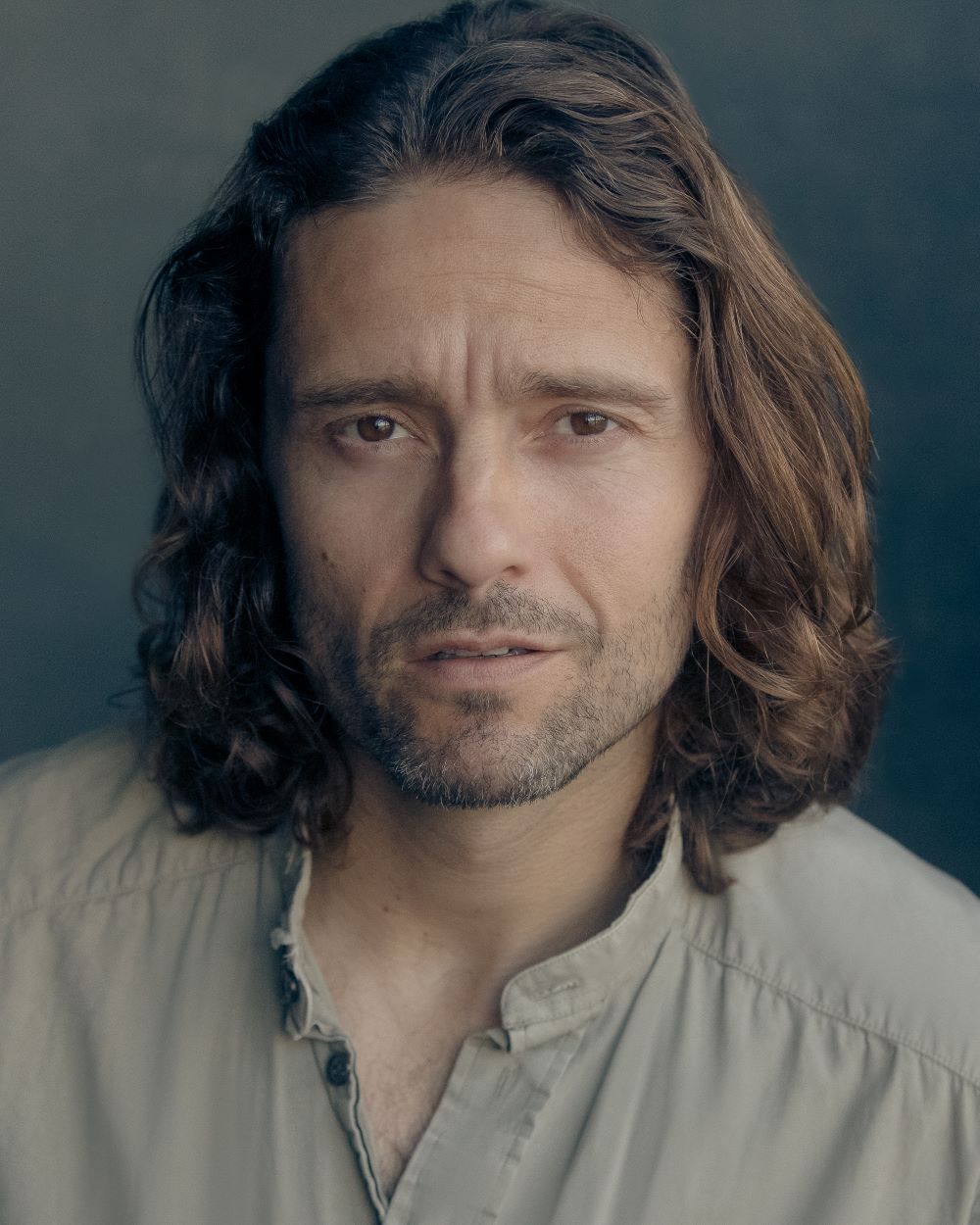
Ben Freeman
Actor
13
APPEARANCES
11
PODCASTS
Jun 20, 2026


Margo PattersonHOST
Could you talk about what's involved in this change and why opponents believe it's a change for the worse, one that hands over US military sovereignty to a foreign state?
Ben FreemanGUEST
It's important right off the top for everyone to recognize that e- even though this is a law that's being considered right now in both the House and the Senate in the US, this is Netanyahu's plan.
Ben FreemanGUEST
He literally wrote a letter to the US Congress calling this, quote, "my plan." Now, you might be asking yourself, why would Netanyahu wanna shut off this aid pipeline right now under this memorandum of understanding? Israel gets $3.8 billion in military assistance from the US every year.
Ben FreemanGUEST
A lot of that goes back to US defense firms, but some of it stays there in Israel.
Ben FreemanGUEST
So why would Netanyahu wanna cut that off? The simple answer is that he's reading the US public opinion polls that show over and over again that the American public has cratering levels of trust and support for his government and Israel.
Margo PattersonHOST
Can you explain why it will be very difficult for the United States to pull back or change its relationship with Israel if the integration of the two military establishments go forward?


Ben FreemanGUEST
You know, a lot of this lobbying industry, it's happening at happy hours, you know, and it's happening at casual dinners.
Ben FreemanGUEST
And I think, you know, it's happening at events that like any of your listeners, you know, might have gone to and wouldn't think were, you know, completely unsavory.
Ben FreemanGUEST
So the like nefarious side of like outright bribery that, you know, that's not where the system is right now.
Ben FreemanGUEST
But the reason it's not in that kind of super nefarious place is because corruption has become just perfectly legal in many cases.
12 MINS LATER

Hannah HayesHOST
Ben, could you walk our listeners through what that looks like? Who's funding the think tanks? Who's showing up on the news? How should people think about the information they're getting on on topics like foreign policy?


Kelley VlahosHOST
I would gather that is your assessment on why this is all happening at this very moment?
Ben FreemanGUEST
And I think it's important for all of your viewers to understand that Netanyahu has described this in a public letter that he sent to a member of the U.S. Congress.
Ben FreemanGUEST
This is the prime minister of a foreign country saying, here's what he wants U.S. foreign policy to be.
15 MINS LATER
Kelley VlahosHOST
Can you talk a little bit about how that reality has changed after October 7th?


Ben FreemanGUEST
But yeah, what we're talking about here, it's called Section 224 of the National Defense Authorization Act.
Ben FreemanGUEST
And basically, it's buried, and there's four pages in this gigantic 500-page bill.


Ben FreemanGUEST
[laughs] Um, but yeah, what, what, what, what we're talking about here, it's, it's called Section 224 of the, of the National Defense Authorization Act.


Ben FreemanGUEST
We've we've heard, you know, the vote certainly didn't go the right way in in the House committee.
Ben FreemanGUEST
But we've heard both from Representative Massey and from Representative Khanna that they're going to introduce an amendment in the House to then to strip it out there when it goes for a full House vote.
Ben FreemanGUEST
And we hope, you know, we'll get a more reasonable public debate and we'll get a recorded vote on this.
9 MINS LATER

Ben FreemanGUEST
I mean, and, and the bill we're talking about here, it is the National Defense Authorization Act, but i- it's the Defense Policy bill.

Sam SederHOST
And so how do they get the, the money? So these things are integratedIf we, is the idea if, like, we give money for Boeing to develop, uh, a fighter jet or something, Israel's, um, uh, defense industry is also, has part of that contract? I mean, how, how would it work in practice?

Natali MorrisHOST
So they're fine to sort of give military and digital support, informational support, but not really boots on the ground, so why are we doing this?

Ben FreemanGUEST
You know, I wrote an article for Responsible Statecraft on this this past Friday, which fortunately folks like, uh, Massie, Marjorie Taylor Greene, Ro Khanna eventually, there's bipartisan outrage over this now, uh, 'cause the- the rationale doesn't make sense.
Ben FreemanGUEST
You know, as you mentioned, you know, Israel hasn't committed boots on the ground with us.


14:49

What Trump means when he says we have an armada in the sea off the coast of Iran? I mean, how many ships are we talking about, and what does that cost? Or is that just unknowable because he just used a, a, a term that's not easily definable other than an accumulation of a lot of ships, armada?
Ben FreemanGUEST
No clue what he means by armada, but y-y-you know, I can tell you, w-we have a carrier strike group there.
Ben FreemanGUEST
And so y-you know, that includes, of course, the, uh, uh, aircraft carrier itself, includes all the aircraft, uh, that, that are on that aircraft carrier, and it also includes, you know, uh, sometimes over a dozen support ships and other support vessels, um, destroyers, amphibious ships, you know, i- all kinds of smaller ships that, that offer additional support to it.
Ben FreemanGUEST
You're talking about tens of billions of dollars of military equipment that's there to, to face a country in Iran, uh, that doesn't spend that much money on its entire [chuckles] military in a, in a given year.
Ben FreemanGUEST
So y-yeah, no, you know, the military overmatch is, uh, is, is just extraordinary.

Ben FreemanGUEST
Howard Buck McKeon, he's a former congressman from California, and he rose up the ranks and became the chairman of the House Armed Services Committee.
Ben FreemanGUEST
And for your listeners, the House Armed Services Committee is a very, very powerful committee when it comes to the U.S. military.
Ben FreemanGUEST
Every year, the House Armed Services Committee is responsible for creating what's known as the National Defense Authorization Act, which is better known as the Defense Policy Bill.
Ben FreemanGUEST
So if you want any policies changed at the Department of Defense, And this can include policies like, you know, buying up new weapons systems, you know, authorizing DOD to purchase some, you know, great new pathbreaking technology.
Ben FreemanGUEST
All of that stuff is going to happen through the Armed Services Committees, through that National Defense Authorization Act.

Brian LambHOST
And then another fellow worked as a legislative affairs, I don't understand this, you can maybe fill in the blanks, for Lieutenant Colonel Oliver North, who never was ever elected to anything, but Anyway, how much of this is going on throughout the town of Washington, D.C.?

Ben FreemanGUEST
I mean, it sounds like the Roman Empire, no? Uh, I live in Florida and we call that piracy.
Ben FreemanGUEST
Um, (laughs) it hasn't worked historically and y- you know, it's not gonna work that way now.
Ben FreemanGUEST
I'm, I'm, I'm, I mean, what we're seeing here with Venezuela, uh, y- you know, that's what it is at the end of the day, pre- the President's justification for a foreign war is effectively that we're, we're gonna take their leader, we're gonna run the country so we can steal their stuff.
Ben FreemanGUEST
Um, that just historically hasn't worked for us, it hasn't worked for a lot of countries then that have tried that and it's not gonna work for Venezuela.
Ben FreemanGUEST
And, and, and to this $1.5 trillion budget that he's talking about, I, I, I think it's important, and in no disrespect to Tucker on this, but I think it's important to put that $500 billion in perspective, that's more than any country on the planet's military budget, then that's more than China, Russia and Iran spend on their militaries combined.
Natali MorrisHOST
So that does not account, account for another half a trillion dollars, by any stretch.

Emma VigelandHOST
W- I, well, I mean, because that seems to be the e- I guess what I'm asking is, like, where's the easiest place to cut in terms of the various, um, uh, stakeholders that, uh, that are making money off of this?
Ben FreemanGUEST
I, I, I, I, I love the, the, the overseas bases as a good first place to start.
Ben FreemanGUEST
Because, uh, you, you know, look, at the end of the day, uh, overseas bases are more expensive than US, U- US military bases here in the US.
Ben FreemanGUEST
It costs a lot of money to get people over there, it costs a lot of money to get things over there.
Ben FreemanGUEST
And there's no constituency over there that's voting for Congress that benefits from those bases.
Ben FreemanGUEST
Like, like we were talking about earlier, you, you, you try to cut a base in, anywhere in the US and the two senators from that state and the local representatives, th- they're gonna raise hell about it because they don't want to lose the jobs and all the economy that surrounds those base.
10 MINS LATER

Sam SederHOST
I'm curious as to your perspective o- on that across the sort of, the spectrum of, of different possible alliances.

Ben FreemanGUEST
I'll tell you, Newt, to be perfectly candid, this book began by ruining a perfectly good day on a boat.
Ben FreemanGUEST
You see, Bill came down to Florida where I live on vacation and he was on this beautiful boat ride.
Ben FreemanGUEST
And the book I wanted Bill to write, which he has ultimately very kindly roped me into writing with him, the reason I thought this book had to be written was that the military industrial complex of today was just a fundamentally different beast than in Eisenhower's time.
13 MINS LATER

William HartungGUEST
So that's a little bit independent on the money, and I think it's a piece of it.