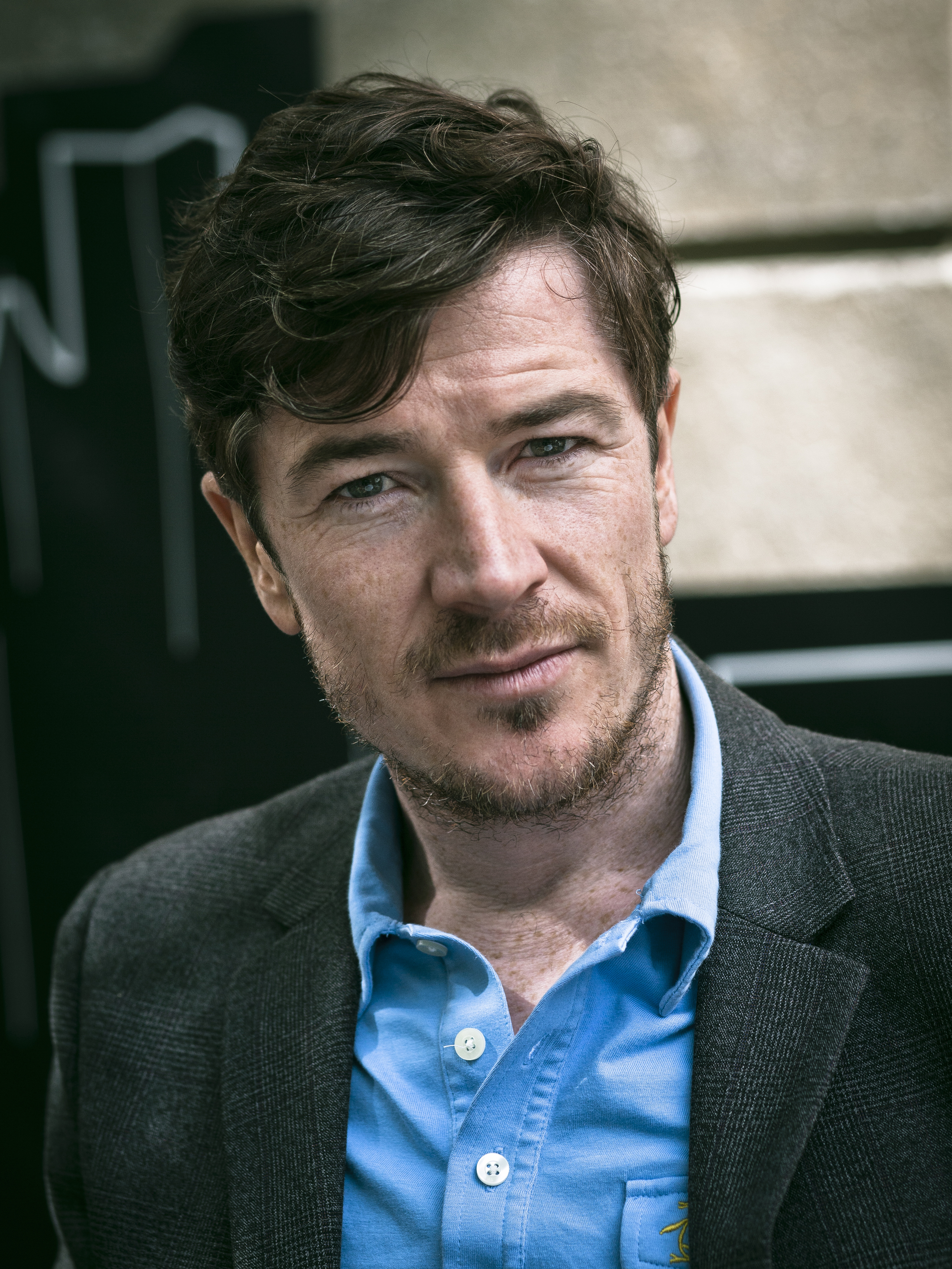
Barry Ward
Irish actor
17
APPEARANCES
8
PODCASTS
Sep 10, 2026


Barry WardGUEST
This is an issue I've been talking about for a long time and I think there are two real issues for me in terms of inheritance tax or capital acquisition tax.
Barry WardGUEST
The first is that it has not kept pace with the cost of things, particularly property.
Barry WardGUEST
The reality is that there are parts of Ireland, particularly my constituency in Dun Laoghaire, where a million euro is not an unrealistic price for a family home.
Barry WardGUEST
If one child in the family inherits that home, they'll have a tax bill of nearly €200,000 even with the €400,000 tax bound there.
6 MINS LATER
Barry WardGUEST
I mean, I've seen it on airplanes certainly, but not on buses or, or trains in Ireland.


Mary MoynihanHOST
What are you working on and how can ordinary citizens get involved in this presidency that we're currently holding?

Barry WardGUEST
Yeah, so as you know, we have a six month presidency of the Council of the European Union.
Barry WardGUEST
And that involves an enormous amount of responsibility for Ireland and a huge weight of responsibility as well.
Barry WardGUEST
I think there's a great expectation and that other european countries have on us to deliver so cyprus who are before us is a they're much smaller much less experienced in the way of european politics only a member since 2004 whereas we've been there since 1973 for over 50 years and then they also had attacks from iran during their presidency which discovered their ability to do a lot of things following us will be lithuania and greece both again much more recent members not so much greece but lithuania only georgia 2004 and then next year you're looking at a situation where the political balance in europe could dramatically change with presidential election in france the legislative elections in spain and italy and places like that so we don't know what the landscape will be like next year so there's a huge pressure now to finish some of the the work program that we have to do during our presidency And what it means is not that we get to make decisions, but that we are the honest broker that chairs the meetings.
Mary MoynihanHOST
So how do you respond to the criticism that economic priorities within the EU and even in Ireland can sometimes take precedence over human rights, social protections, workers' rights and environmental responsibilities? What should be done to ensure human rights and the well-being of citizens remain at the centre of economic decision making in the EU or indeed in Ireland?


Barry WardGUEST
Well, I, I do think that the department has gone the wrong way about it, and the minister has made a mistake in this regard.
Barry WardGUEST
He has identified that reforms are required in the legal aid system, and nobody has any difficulty with that.
Barry WardGUEST
But instead of addressing concerns that he's expressed in places like the Justice Committee and the Dáil, he has, in fact, overhauled the entire system to, as you set out, make sure that solicitors are only paid a flat fee irrespective of how long the case takes, how complex it is, how many appearances are involved.
Barry WardGUEST
And there's a fundamental unfairness in that that's going to drive solicitors out of criminal law and is going to ch- force them to cherry-pick cases that are going to be less cumbersome and less expensive for them to carry out.
Barry WardGUEST
But we already see the fact that solicitors have responded to this by going on strike.

Barry WardGUEST
So if you go to the end of the East Pier, for example, there are historic toilets there that have been there since I've been around.
Barry WardGUEST
So they go back to the 80s and 70s, but they're closed and have been closed for decades.
Barry WardGUEST
certainly 20 years as long as I've been in politics, the reason they aren't connected is back in the day the waste flowed straight into the sea and obviously that's not allowed to happen anymore.
Barry WardGUEST
They're not plugged into the main sewerage system and it's taking time for the council to connect them and there isn't even a plan for that yet.
6 MINS LATER

Andrea GilliganHOST
The email is lunchtimelive at newstalk.com. Barry, will you just clarify one thing? do businesses have to allow legally people use their


Vladimir DuthiersCORRESPONDENT
Lieutenant Ward decided he had to interview Jimmy Ray, and it turned out that Jimmy Ray had been holding on to some key information all these years.
Barry WardGUEST
Jimmy Ray Barnes did tell me that Reginald Reed offered him $50,000 to, quote-unquote, "knock off his wife." [suspenseful music]
Barry WardGUEST
A couple of weeks later, grand jury in Tangipahoa Parish returned second-degree murder indictments for both Reginald Reed and Jimmy Ray Barnes.
Barry WardGUEST
I knocked on the door, identified who I was, and that I had an arrest warrant for him for the murder of his wife.

speaker_0HOST
Um, Barry Ward, uh, the incentives for buying EVs being improved here, but nonetheless, there'll still be a large financial burden on anyone seeking to buy a new car.
Barry WardGUEST
That's the reality, but what this scheme is trying to do is reduce that burden and make it more affordable to people because we have a target of increasing the number of electric vehicles on the road for a whole host of reasons, not least of which obviously reduces emissions from cars.
Barry WardGUEST
But also, as we move towards increasing our d- um, re- renewable electricity, for example, uh, if the wind blows at night and people aren't using as much electricity, when people are charging their cars at night, it also acts as essentially a national battery network.
Barry WardGUEST
So there's lots of good reasons for improving the number of EVs on the roads, and it benefits us all.
Barry WardGUEST
This scheme is about addressing the fact that people are saying that they have difficulty, and we are specifically targeting two things.
Barry WardGUEST
Firstly, cars that are 13 years or older, so generally cars that are less efficient, that are bigger polluters, and it only, people only qualify for the extra grant if they are trading in or, or scrapping a 13-year-old car.
speaker_0HOST
That's a sizable cohort, uh, of the population who opt to buy a used car for reasons presumably of affordability.

Anton SavageHOST
They have with big estimation marks, we're hiring, which would suggest they're struggling to get enough people to drive the buses they have already, never mind have them on standby.
Barry WardGUEST
Yeah, no, and I'm not saying that it'd be easy, but it's something that we should be striving for.
Barry WardGUEST
I welcome the fact that Bus O'Clea and the NTA generally are recruiting and they should be doing that all the time.
Barry WardGUEST
If they're having trouble, then maybe they need to change the terms and conditions.
Barry WardGUEST
What I'm talking about is the people who live in my area, who are in contact with my office, and I know myself because I've experienced it.
Barry WardGUEST
When you're standing at the bus stop and you know that the bus that's three minutes away is going to get you to work on time and then it doesn't turn up, and the next bus is full, now you know you're gonna be late for work.
speaker_0HOST
Wouldn't that be a way around it?
Barry WardGUEST
First of all, it's not the case of the government in that instance said that the FAI could not fulfill or should not fulfill its, its fixture with Yugoslavia, and the fixture was ultimately fulfilled at a later date, so it is different in that regard.
Barry WardGUEST
Now, don't get me wrong, I don't approve of Israel's involvement in this competition any more than Aodán or anybody else does, and I do praise and acknowledge what the FAI has done in bringing its motion to UEFA last year to have them excluded from the competition.
Barry WardGUEST
And Aodán is right, the FAI is in an, is in a very difficult position because that motion was unsuccessful.
Barry WardGUEST
UEFA didn't take the action that it should have taken at international level to exclude Israel.
speaker_0HOST
But boycotting this match would be self-defeating.

Barry WardGUEST
I do know, speaking to family, there are people who are from the country who want to live in the country and they have the right to do that.
Barry WardGUEST
And at the moment, not only are there lots of restrictions, but there are inconsistencies around the country.
Barry WardGUEST
So depending on which local authority you're living within, there can be different rules, different restrictions, different permissions given.
Barry WardGUEST
So this is as much an attempt to unify that and have a broad national approach as it is to loosen the restrictions in some areas.
Barry WardGUEST
So, for example, what's called ribbon development or development behind houses hasn't been allowed in a lot of areas yet.
10 MINS LATER


Cormac Ó hEadhraHOST
But we were told and the families were told, Barry, that this would be sorted out last year.
Barry WardGUEST
I know speaking to principals in my own area, they are doing their level best to make the provision where it's required and to get the resources available.
Barry WardGUEST
I would be surprised, any of the teachers I've spoken to or the principals, I'd be very surprised if an email like that was sent
Cormac Ó hEadhraHOST
take this bit by bit, right? I mean, isn't that a devastating critique, what Ruth Coppinger puts up there? We have a country with 320,000 households struggling to pay energy bills, effectively subsidising data centres for multimillionaires.
Barry WardGUEST
She seems to start from the premise that these 875 jobs that he referred to are from the data centre industry.
Barry WardGUEST
What he said is that we have an economy that has a substantial iron in the fire of the tech industry.
13 MINS LATER

Anton SavageHOST
And presumably that is going to come more and more into sharp focus because we have transitioned from being one of the most significant net recipients of EU money into one of the most per capita significant net contributors to the European
Barry WardGUEST
But if you look back to the 80s and 90s, the structural funds, the investment infrastructure that occurred here in Ireland was enormous.
Barry WardGUEST
Certainly infrastructure deficits, no doubt about that, but our road network, for example, was largely paid for through EU structural funds.
Anton SavageHOST
How often do you see member state commissioners from other member states appear on media across the rest of the union? How often do you see members of the European Parliament engaging in public debate in member states? How often do you see any kind of communications engagement that would be the norm for domestic government?

Anton SavageHOST
If you had started there, you could have avoided the use of the public order unit and the defence forces.
Barry WardGUEST
Well, firstly, I don't think I got the letter that Michael's talking about, but I'm not really worried about that.
Barry WardGUEST
The government is working with all the sectoral groups representing the various groups that Michael has talked about.

Barry WardGUEST
We have a two-year-old, so we're not in the position where she'd be going to the toilet on her own.
Barry WardGUEST
But if nappies need to be changed, there isn't always a facility available with the view to the fact that the dad might be changing the nappy, even though dads all over Ireland change nappies all the time.
Barry WardGUEST
I usually ask a member of staff to supervise that, which might sound silly, but I think it's important.
Andrea GilliganHOST
the baby changing facilities, just for the sake of argument here, are in the ladies, can somebody, can John and all the others getting in touch by text, can they use the accessible toilet then?
Andrea GilliganHOST
Why is it important to know that, you know, Andrea Gilligan was highly involved in the local GAA or was a big contributor to tidy towns in her community or ran the local Scouts Club or whatever? Why does that matter?
Barry WardGUEST
Well, one of the principles of sentencing is that the court is sentencing not just for the offence, but for the person who committed the offence.
Barry WardGUEST
So, for example, if Andrea Gilligan was up for burglary, let's say, and had 40 previous burglary convictions, that's a huge factor that's going to mean that the sentence is much harsher than it might be if it was her first time.
Barry WardGUEST
Or if, for example, that Andrea had particular things going on in her life at that time that might mitigate the sentence, that might explain why she behaved in that way, might explain why it was an aberration.
Barry WardGUEST
But it's also important to remember that judges, if they're dealing with serious offences, and we know the law has changed in relation to sexual offences from the Criminal Law Sexual Offence and Human Trafficking Act in 2023, they can now question those references and cross-examine the person who's given the reference since July of last year.
6 MINS LATER
Andrea GilliganHOST
Do we have enough supports for Miriam and I suppose plenty others out there too?
22:17
Lieutenant Ward decided he had to interview Jimmy Ray and it turned out that Jimmy Ray had been holding on to some key information all these years.
Barry WardGUEST
Jimmy Ray Barnes did tell me that Reginald Reed offered him $50,000 to, quote-unquote, "knock off" his wife.
Barry WardGUEST
A couple weeks later, grand jury in Tangipahoa Parish returned second-degree murder indictments for both Reginald Reed and Jimmy Ray Barnes.
Barry WardGUEST
I knocked on the door, identified who I was and that I had an arrest warrant for him for the murder of his wife.