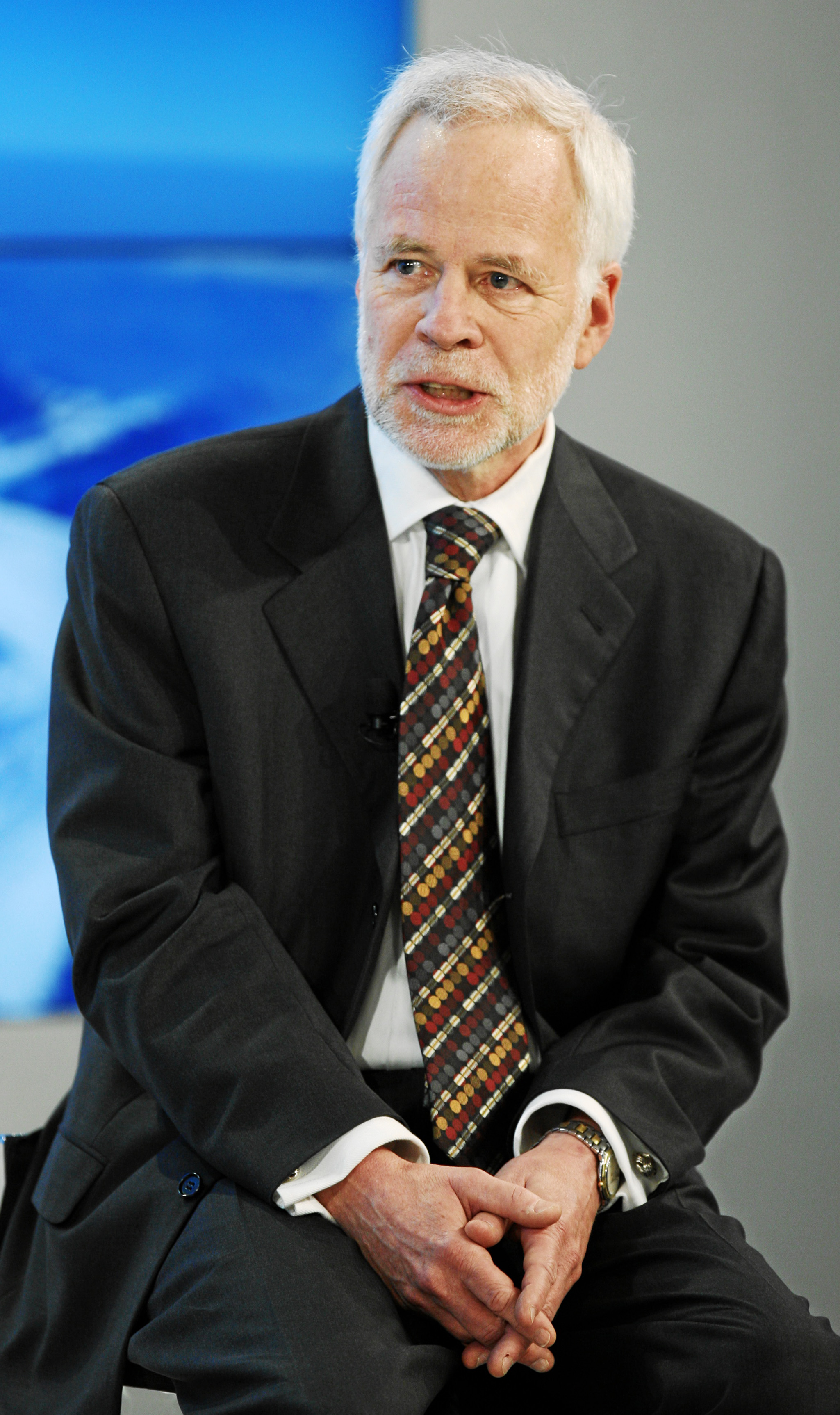
Barry Eichengreen
American economist
26
APPEARANCES
24
PODCASTS
Sep 20, 2026


Andrew HorowitzHOST
Was there something out there before it was – the dollar was at the center of it?
Barry EichengreenGUEST
So in the period of the Roman Republic – Roman gold and silver coins circulated everywhere from Scotland in the northwest of Europe into the Middle East, into Asia, into what today we would call Persia, Afghanistan, India.
Barry EichengreenGUEST
They have even been found in Japan, although they probably got to Japan at a later date.
Barry EichengreenGUEST
The Romans paid their legions in these silver coins that came into local circulation everywhere.
Barry EichengreenGUEST
Julius Caesar, when he crossed the Rubicon with his troops, carried a mobile mint.
9 MINS LATER
Andrew HorowitzHOST
But is this fragmentation of the global monetary system going to be, in your opinion, in a number of years too, is it going to be something that's going to be resolved towards a more unified global monetary system? And is that actually a good thing? I don't think it's going to

Jeremy SzafronHOST
What did each of them miss, and is anyone making the same mistakes right now?

Barry EichengreenGUEST
Well, what happened in the 1930s was that the US suffered three serious banking crises, which was, uh, uh, uh, enough to lead, uh, central banks around the world to liquidate their dollar reserves.
Barry EichengreenGUEST
So the fact that this didn't happen again after 2007, 2008, the subprime pri- crisis and the global financial crisis, uh, was due to the fact that, uh, the Fed had learned that lesson of history, and it intervened to stabilize US financial markets and the dollar.
Barry EichengreenGUEST
The price of that, of course, was quantitative easing and, and near zero interest rates for a long time, and those near, near zero interest rates were another reason I think we saw emerging market central banks looking to alternatives to, uh, foreign exchange reserves and, and, and, and looking toward gold.
Barry EichengreenGUEST
In terms, uh, uh, of my late great friend Charlie Kindleberger declaring the dollar dead in, uh, in, in the 1970s, again, I think, uh, what, uh, Kindleberger had grown up with, uh, uh, the Bretton Woods system.
Barry EichengreenGUEST
I think m- m- many people who, uh, had, had done so, uh, failed to fully understand that we could have a world, uh, of flexible exchange rates and inflation targeting central banks.
Barry EichengreenGUEST
Central banks only discovered how to, uh, target inflation starting at the end of the 1980s.
7 MINS LATER


Jon HartleyHOST
I'm just curious, what do you think are the, the main, uh, determinants of, uh, what sustains the international economic order and what causes one to break down?
Barry EichengreenGUEST
I see more evidence, I think, than you do, John, of, uh, the erosion of dollar dominance, not only the decline in the dollar's share of global reserves from more than seventy percent at the turn of the century to less than sixty percent now, but also the fact that, uh, uh, in, in- increasingly US-- uh, foreigners are reluctant to hold US Treasuries, and the share of US Treasuries held abroad has been going down slowly but steadily over the last decade.
Barry EichengreenGUEST
Finally, uh, the US Treasury's borrowing advantage, the convenience yield of the dollar that foreigners are willing to finance US budget deficits and debt at a lower interest rate than would be ava- available otherwise because the dollar is so convenient to hold and use by entities around the world.
Barry EichengreenGUEST
Bringing us to your question, uh, uh, of what the-- might the sources of that be.
Barry EichengreenGUEST
Um, in the abstract, I would point to, uh, three sources of, uh, the centrality of, uh, of an international reserve currency.
11 MINS LATER
Jon HartleyHOST
I'm curious, you know, what you make of the growing public debt burden, uh, across, uh, a-across advanced economies and, and at, you know, what point do you think, uh, you know, sovereign debt crises become apparent, and, uh, what might this all mean for reserve currencies, if anything?

Jon HartleyHOST
And at what point do you think sovereign debt crises become apparent? And what might this all mean for reserve currencies, if anything?
Barry EichengreenGUEST
The argument of the book was that throughout history, public debt has been an important tool for states, kingdoms, governments to use in a crisis, in an all hands on deck emergency.
Barry EichengreenGUEST
We issued debt during financial crises, presumably in order to prevent the financial system from collapsing.
7 MINS LATER

Barry EichengreenGUEST
David, as you imply, part of the fun of writing this book was to go back and read and learn about the relevant literature in archaeology and numismatics, because those are the sources on which one draws when one tries to write that very early monetary and financial history.
Barry EichengreenGUEST
remark I would make to preface my response to you is that one thing historians have to do is to try to resist cramming each and every case into the same straitjacket.
Barry EichengreenGUEST
So there isn't necessarily a uniformly applicable answer to your question.
Barry EichengreenGUEST
which is I think the ingredients for successful international currency status are size, stability, liquidity, and security.
Barry EichengreenGUEST
That currency that's widely used across borders tends to be the currency of a state kingdom or to provoke, Brendan, a little bit, empire that is engaged in a lot of cross-border transactions.
26 MINS LATER

David BeckworthHOST
Is the dollar truly an exorbitant privilege because there's contested claims about it? And could it also be a burden? What do you think?


Javier MejiaHOST
What are they, um, about, and how they could help us think about this, uh, very long history of international currencies.
Barry EichengreenGUEST
When I, um, talk about this issue to an audience of economists, I typically say the economic preconditions for international currency status will be obvious to us all.
Barry EichengreenGUEST
Uh, uh, currencies that are widely used for cross-border transactions tend to be the currencies of countries that have strong economies, engage in a lot of trade, and also eventually engage in, in a lot of foreign lending and/or borrowing.
Barry EichengreenGUEST
Uh, I'm conscious that my host on this podcast is a political scientist, so I can't say the political preconditions, on the other hand, are not so widely appreciated.
Barry EichengreenGUEST
Um, but those, uh, polit-political preconditions are both domestic and, and international.
Barry EichengreenGUEST
Domestically, uh, uh, leading international currencies tend to be the currencies of political democracies and republics because of the prevalence in such polities of political checks and balances, rule of law, control of corruption, investor rights, which make for, uh, stable rules of the game, if you will, and for currencies that tend to hold their value over time.
Barry EichengreenGUEST
And internationally, uh, leading international currencies tend to be the currencies of countries that have strong militaries, so they can, uh, defend their borders and maybe expand their domains, and countries that forge durable political alliances.
24 MINS LATER

Barry EichengreenGUEST
... used that very phrase, "The dollar is dead as an international currency," in 1976 after the Nixon Shock of 1971 when Nixon, uh, suspended the convertibility of dollars into gold at a fixed price of, of $35 an ounce.
Barry EichengreenGUEST
And Kindleberger turned out to be about half a century Premature in making that, that assertion exactly half a century ago it turns out.
Barry EichengreenGUEST
Uh, I do think this time is different because we are- the, the world has learned something new about, uh, the United States, uh, in particular.
Barry EichengreenGUEST
The, uh, there- economists have long been concerned about US finances and about the US, uh, budget deficit and the growth of US debts, and so forth and so on.
Barry EichengreenGUEST
But what we've learned is that US institutions are not as robust and reliable as we thought.
Barry EichengreenGUEST
That rule of law, control of corruption, we have massive corruption at the top now in the United States.
34 MINS LATER

Anupam ManurHOST
Um, please elaborate this for me, talk me-- take me through the different policies and what is really eroding trust in the US dollar.


Barry EichengreenGUEST
Uh, the, the fun part for the presenter is to hear your pre-presentation presentation.
Barry EichengreenGUEST
Um, thought the, the poll was, uh, especially useful in that it indicated there was no consensus on any of these questions other than that there will be serious debt management challenges for many countries going forward.
Barry EichengreenGUEST
Uh, the more provocative version is here, and I should emphasize that the book is, uh, co-authored with Asmaa Elganany, who's at the IMF, Rui Esteves, who's at the Graduate Institute in Geneva, and Chris Michener, um, who's at Santa Clara University.
17 MINS LATER
David BeckworthHOST
So tell us, and I believe you have two different dates, but when did the dollar become the dominant reserve currency of the world?
Barry EichengreenGUEST
First, immediately after World War I, because the British economy and the pound sterling were, were challenged as a result of the war.
Barry EichengreenGUEST
Britain came out of the war weaker and more financially indebted, whereas the US established the Fed in 1913, partly with the objective of fostering wider international use of US currency.
Barry EichengreenGUEST
So US exporters and importers had to source trade credit before World War I by asking their bank to contact a correspondent bank in London and get that trade credit from the London bank in pound sterling, because that's what importers and exporters around the world re- required.
Barry EichengreenGUEST
Americans like Paul Warburg, the German-American banker, who was o- one of the architects of the Fed, thought this was risky and, a- and a burden on US exporters and investors.
Barry EichengreenGUEST
So the Fed came along and backstopped, fostered a market in, in dollar-denominated trade credits in the 1920s.


Barry EichengreenGUEST
The only liquid asset available after World War II was U.S. Treasury bonds.
Barry EichengreenGUEST
The United States only had so much gold in the vaults of Fort Knox, so the claims of foreign central banks and governments on the United States logically expanded over time.
Barry EichengreenGUEST
If foreign central banks and governments realized that there was only so much US gold to go around, they would queue up to redeem their claims before other central banks and governments did.

Charmaine CozierHOST
They kept their central banks and currencies separate.
Barry EichengreenGUEST
But it was really problems with the small change, if you will, that led to the monetary unions, that there were different coins that weighed different amounts, that contained different amounts of precious metal, and when they circulated side by side in a non-standardized form, that could create all kinds of confusion where people would be trying to get rid of the less than full-bodied coins and try to acquire, to hoard the more valuable versions.
Barry EichengreenGUEST
So everybody had to basically put the coins under a microscope before deciding to buy or sell them.
Charmaine CozierHOST
Are there any historical currencies that had the same status that the dollar does now?
Barry EichengreenGUEST
So before the dollar, there was the pound sterling, which was the currency in which a majority of the world's trade and payments were denominated and executed in the 19th century.
Barry EichengreenGUEST
And to an extent before that, there was the Dutch guilder in the 17th and 18th centuries.


Barry EichengreenGUEST
here.If I can follow up, I agree with almost everything Lucrezia has just said.
Barry EichengreenGUEST
The other source of doubts about the dollar is derived from questions about whether the US is a reliable alliance partner, and if it's not no longer a reliable alliance partner, Europe's dependence on the dollar is problematic, and that becomes a very strong argument for fostering cross-border use of the euro by Europe itself.
Barry EichengreenGUEST
And derivative of that would be greater cross-border use of the euro by Europe's commercial and financial partners around the world.
Barry EichengreenGUEST
What's striking against that backgr-background is that the euro has made zero progress as a global currency in terms of gaining global market share over the twenty-five years plus of its existence.
Barry EichengreenGUEST
It's pretty much right where it was in 1999, and Lucrezia pointed to a number of the, uh, uh, of the obstacles that need to be overcome if the currency is going to be successfully internationalized.
8 MINS LATER

Rebecca ChristieHOST
Um, yeah, let's start there, and then I wanna go back even further and have you tell us a little bit about Croesus and the founding of money.


David LinHOST
Can you just comment on these two episodes, the Iran war breaking out and why the dollar fell last year, and why perhaps there was a difference in perception of dollar strength and dollar safe haven statuses in these two instances?
Barry EichengreenGUEST
So we've learned that the dollar's safe haven status is, is m- more fragile than we thought previously.
Barry EichengreenGUEST
Uh, markets had taken for granted that when volatility spikes, uh, the dollar strengthens because the market and US Treasuries is the single largest, most liquid market in the world, and the US government reliably stands behind them.
Barry EichengreenGUEST
Um, after Liberation Day, April 2nd, 2025, uh, volatility did spike, but the dollar weakened rather than strengthening because o- of, of uncertainty about the, uh, stance, direction, competence of US economic policy.
Barry EichengreenGUEST
After, uh, six months where the dollar kind of went haywire, the traditional safe haven relationship weakly reasserted itself.
Barry EichengreenGUEST
When the VIX or another measure o- of financial volatility went up, the dollar strengthened at the same time.
Barry EichengreenGUEST
So, uh, th- there was growing uncertainty, if you will, about the durability of that safe haven character of the dollar.
David LinHOST
What are some of the patterns you've recognized in the fall, rise and fall of currencies? In other words, what have historically contributed to the rise of demand for an international currency, and what have been the primary drivers of the fall or the decline in usage of these currencies?

DavidHOST
So can you talk about how a currency becomes an international currency? So every empire maybe has their own form of, of currency or money, but what are the preconditions that are necessary for it to launch into something that is more internationally used?
Barry EichengreenGUEST
One set that international monetary specialists, economists have been talking about and studying for many years, and a, and, and another set of preconditions that we're only now really beginning to understand.
Barry EichengreenGUEST
So the first familiar set of preconditions has to do with com-commer-- economic, commercial, and financial prowess, if you will.
Barry EichengreenGUEST
If country or kingdom or state does a lot of trade with the rest of the world, with other countries, kingdoms, or states, tho-those others will encounter its currency and coin.
Barry EichengreenGUEST
They will probably want to acquire some of it to, to ease their trade with the country in question.
Barry EichengreenGUEST
So having a strong economy that trades a lot with the rest of the world means that the rest of the world comes into contact with your currency.
51 MINS LATER
DavidHOST
W-what would it take, do you think, for Bitcoin to compete with or replace gold as a hard money? And can you imagine a scenario where that actually happens in the future?

Barry EichengreenGUEST
You're right about how long it persisted and how long it circulated in the United States.
Barry EichengreenGUEST
We celebrate Alexander Hamilton, who established a mint in the 1790s, We celebrate him because of a famous musical, among other things.
Barry EichengreenGUEST
There wasn't enough precious metal in the United States before discoveries of gold in California and silver in Nevada in the 60s.
Barry EichengreenGUEST
So Spanish silver pieces of eight were still widely used and they had an imprint on the front of a pillar with kind of a snake woven around it in the shape of the present-day dollar sign, so our dollar does owe also its symbolic form to Spanish silver.
Caleb ZakarinHOST
But how did London really build itself up and what allowed them to essentially control, be the mantle for the global reserve currency for so long?

Barry EichengreenGUEST
You're right about how long it persisted and how long it circulated in the United States.
Barry EichengreenGUEST
We celebrate Alexander Hamilton, who established a mint in the 1790s, We celebrate him because of a famous musical, among other things.
Barry EichengreenGUEST
There wasn't enough precious metal in the United States before discoveries of gold in California and silver in Nevada in the 60s.
Barry EichengreenGUEST
So Spanish silver pieces of eight were still widely used and they had an imprint on the front of a pillar with kind of a snake woven around it in the shape of the present-day dollar sign, so our dollar does owe also its symbolic form to Spanish silver.
Caleb ZakarinHOST
But how did London really build itself up and what allowed them to essentially control, be the mantle for the global reserve currency for so long?


Tom KeeneHOST
and crisis barry i want to talk about the book briefly we'll do it again here as we get to the summer down at the bottom i mean come on you're stealing from rogoff of harvard barry your last chapter our currency our problem ken said our currency your problem tell us why the dollar right now is our currency our problem
Barry EichengreenGUEST
I think the dollar's fate will be determined in the United States by threats to the Fed, exploding public debts, questions about the rule of law, and weakening alliances with partners who hold and use our currency because they trust us.
Barry EichengreenGUEST
I think Ken took it from John Connolly, Richard Nixon's Treasury Secretary.
Paul SweeneyHOST
How does that factor into your economic outlook, whether it means higher inflation, maybe slower growth resulting from some of this geopolitics? How do you factor that in, or do you look past it?
Barry EichengreenGUEST
Well, the one reassuring observation is that dollar safe haven status has kind of mildly reasserted itself.
Barry EichengreenGUEST
In the first two days of the month after the war broke out at the end of February, the dollar jumped up.

Tom KeeneHOST
Ken said, "Our currency, your problem." Tell us why the dollar right now is our currency, our problem.
Barry EichengreenGUEST
I think the dollar's, uh, fate will be determined in, in, in the United States by, uh, threats to the Fed, uh, exploding public debts, questions about the rule of law, and, uh, weakening alliances with, uh, partners who hold and use our currency because they trust us.
Tom KeeneHOST
So if someone, if it's my book of the summer, and, say, Alicia Levine went to me a- and she said to me, "I need a book for my brats to read," I mean, why should a 22-year-old kid, after Golden Fetters and all your other work, why should they read Money Beyond Borders?
Barry EichengreenGUEST
Uh, the book goes back, um, gulp, 2,500 years to the, um, advent of coinage, to the cross-border use of Greek and Roman coins, to the use of, uh, the coins of the Byzantine Empire all around the Mediterranean into Asia.

10:08

How important do you think, looking at that sweep of history, how important do you think innovation is in terms of a currency rising up and replacing others? To what extent is there an element of just finding a better way of doing things than the previous one?
Barry EichengreenGUEST
Yeah, I think this theme about the importance of innovation, let me say first that The idea that we're living through such a period of relatively rapid financial innovation was one of my motivations for looking back at the longer sweep of history along with questions about the future of the dollar, but all the way back to ancient Lydia.
Barry EichengreenGUEST
with the invention of coinage, you see the importance of financial innovation.
Barry EichengreenGUEST
If you look to the use throughout Europe and beyond of Florentine florin in the 13th, 14th, 15th century, A big part of that was the development of international banking by the Florentines.
Barry EichengreenGUEST
So ability to transfer funds denominated in their currency, the floor and across borders without requiring the actual movement of coin or bullion, lumps of precious metal.
8 MINS LATER


Demetri KofinasHOST
So how did it become this real powerhouse of international commerce and currency?
Barry EichengreenGUEST
Someone asked me recently which historical case study in the book is most surprising, and I would answer Florence for the reasons you describe.
Barry EichengreenGUEST
It's a small city-state nestled in the hills of Tuscany that d- does not have direct access to the sea except insofar as it is able to annex or, or get rights to use the port of Pisa.
Barry EichengreenGUEST
It doesn't have the economic scale of the other l-larger empires that we've talked about in the last few minutes.
Barry EichengreenGUEST
So it's the r-rise of Florence and of the florin starts with Florentine wool merchants.
Barry EichengreenGUEST
The one thing Florence does have is a lot of free-flowing water, so they could build a, a wool cleaning, weaving, finishing industry on the basis of that water power, and they travel far and wide in order to source the raw wool for that textile finishing industry.
8 MINS LATER

Barry EichengreenGUEST
I do worry about a proliferation of currencies and quasi-currencies that may not be interoperable and interchangeable, and that may end up trading at different prices.
Barry EichengreenGUEST
So an analogy would be every dollar bill might not be worth a dollar, depending on The number imprinted on the front, the Federal Reserve Bank that had happened to issue it.
Barry EichengreenGUEST
I think there is a lot of history suggesting that private monies, which is what we're talking about here, do not always function perfectly.
Barry EichengreenGUEST
So what's at risk is what economists refer to as the singleness of money, that every dollar bill is worth a dollar so that you don't have to scrutinize it.
Barry EichengreenGUEST
If you have to scrutinize it, all kinds of additional costs, inefficiencies, and risks can be introduced into the payment system.

Allison NathanHOST
Can you go into some details about when this has failed, the episodes that you are concerned about repeating?

5:10

Explain to us how Roman gods, Mars and Mercury, can help explain how reserve currencies get to be reserve currencies and how the dollar's been so dominant for so long.
Barry EichengreenGUEST
So the Mars and Mercury reference is designed to alert listeners to the fact that there are really two sets of factors that influence the attractions of a currency globally.
Barry EichengreenGUEST
So the dollar rose to prominence after World War II when the U.S. became the largest economy in the world, the leading trader.
Barry EichengreenGUEST
But at the same time, geopolitical factors, international relations, alliance politics matter for the tendency of central banks and governments to hold and use currencies.
Barry EichengreenGUEST
So in the 1960s, the West German government and the Japanese government, which relied on the United States, for their defense were willing to support the dollar through tough times if you look today you find that the central banks of south korea and japan hold more dollars as reserves than their trade relations and financial relations with the united states would lead you to expect so there are worries about the fact that the u.s share in the global economy has been declining gradually over time.
5 MINS LATER
11:37
And maybe it's not unreasonable for the US to want countries to kind of pay in one way or another to continue to have a global reserve currency.


Barry EichengreenGUEST
We've had a Wild West of currency before in the United States, uh, the free banking era from the mid-1830s through the early 1860s.
Barry EichengreenGUEST
Un- under that system, every bank, Meghna's bank and Zeke's bank, could issue their own dollar notes, and they were supposed to back them with gold in the same way that stable coin issuers today might back their coins with actual treasury bills.
Barry EichengreenGUEST
But the backing was sometimes less than met the eye, so that different dollar bills issued by different banks created at different prices, and that put at risk what economists refer to as the singleness of money, that every dollar bill is equally good as every other dollar bill.
Barry EichengreenGUEST
Um, if all of a sudden that is no longer the case, um, people will be reluctant to use the currency in transactions or they'll have to keep a big telephone book under the counter of the, the corner store and look up the value of Zeke's dollar versus Meghna's dollar.
Damian SassowerHOST
Just how much longer can it continue to do that? And what other currency might serve that role if the dollar is no longer, as you rightly point out, the world's reserve currency?
Barry EichengreenGUEST
We're accelerating toward the cliff where the appetite for U.S. Treasuries abroad begins to dry up.
Barry EichengreenGUEST
I think we're already seeing hints of that in financial markets, at which point there will be a reluctance to acquire and hold and use dollars by central banks and other investors around the world.
Barry EichengreenGUEST
But the answer to your second question, Damian, who can step up to provide that international liquidity, if not the United States.
Barry EichengreenGUEST
The answer for the moment is no one that there aren't enough high quality euro securities available to the rest of the world.
Barry EichengreenGUEST
China is still a small player financially, despite all the chatter about its growing role.
Barry EichengreenGUEST
Non-traditional reserve currencies like the Aussie dollar and the Canadian dollar are too small to make a difference.

Greg RosalskyHOST
It's called the flight to safety, and the dollar gets stronger instead of collapsing.
Barry EichengreenGUEST
It strengthened because everybody rushed into dollars, valuing their liquidity and safety.
Barry EichengreenGUEST
Number three, the US government can borrow at lower interest rates than otherwise.

Mary ChildsHOST
So we asked Barry, how bad is this? Like, if you subtract the downside from the upside, what does that leave us with? Like, a lot of privilege left over or none?
Scroll for more appearances